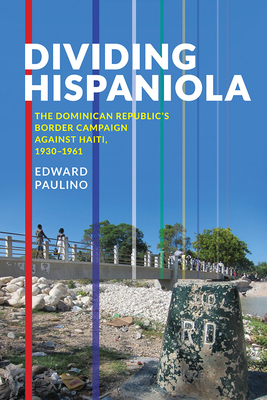
Dividing Hispaniola : The Dominican Republic's Border Campaign against Haiti, 1930-1961
Book Details
Format
Paperback / softback
Book Series
Pitt Latin American Series
ISBN-10
0822963795
ISBN-13
9780822963790
Publisher
University of Pittsburgh Press
Imprint
University of Pittsburgh Press
Country of Manufacture
US
Country of Publication
GB
Publication Date
Jan 25th, 2016
Print length
304 Pages
Weight
438 grams
Dimensions
15.40 x 23.00 x 2.20 cms
KSh 9,250.00
Temporarily out of stock, due soon
0 in stock
Delivery Location
Delivery fee: Select location
Secure
Quality
Fast
A study of Dominican dictator Rafael Trujillo's scheme, during the mid-twentieth century, to create and reinforce a buffer zone on the border between the Dominican Republic and Haiti through the establishment of state institutions and an ideological campaign against what was considered an encroaching black, inferior, and bellicose Haitian state.
The island of Hispaniola is split by a border that divides the Dominican Republic and Haiti. This border has been historically contested and largely porous. Dividing Hispaniola is a study of Dominican dictator Rafael Trujillo's scheme, during the mid-twentieth century, to create and reinforce a buffer zone on this border through the establishment of state institutions and an ideological campaign against what was considered an encroaching black, inferior, and bellicose Haitian state. The success of this program relied on convincing Dominicans that regardless of their actual color, whiteness was synonymous with Dominican cultural identity. Paulino examines the campaign against Haiti as the construct of a fractured urban intellectual minority, bolstered by international politics and U.S. imperialism. This minority included a diverse set of individuals and institutions that employed anti-Haitian rhetoric for their own benefit (i.e., sugar manufacturers and border officials.) Yet, in reality, these same actors had no interest in establishing an impermeable border. Paulino further demonstrates that Dominican attitudes of admiration and solidarity toward Haitians as well as extensive intermixture around the border region were commonplace. In sum his study argues against the notion that anti-Haitianism was part of a persistent and innate Dominican ethos.
Get Dividing Hispaniola by Edward Paulino at the best price and quality guaranteed only at Werezi Africa's largest book ecommerce store. The book was published by University of Pittsburgh Press and it has 304 pages.
Customers Who Bought This Also Bought

Crusade for Justice – The Autobiography of Ida B. Wells, Second Edition
KSh 4,050.00

Killers of the Flower Moon
KSh 2,000.00
Warmth of Other Suns
KSh 3,050.00

Frederick Douglass
KSh 3,350.00

107 Days
KSh 4,500.00

Second Treatise of Government – Norton Library
KSh 1,600.00

Tuesdays With Morrie
KSh 2,000.00
My Bondage and My Freedom
KSh 1,600.00

Hidden Figures
KSh 2,000.00
America, América
KSh 3,650.00

Holding the Line
KSh 2,000.00
Nuclear Folly
KSh 3,050.00