
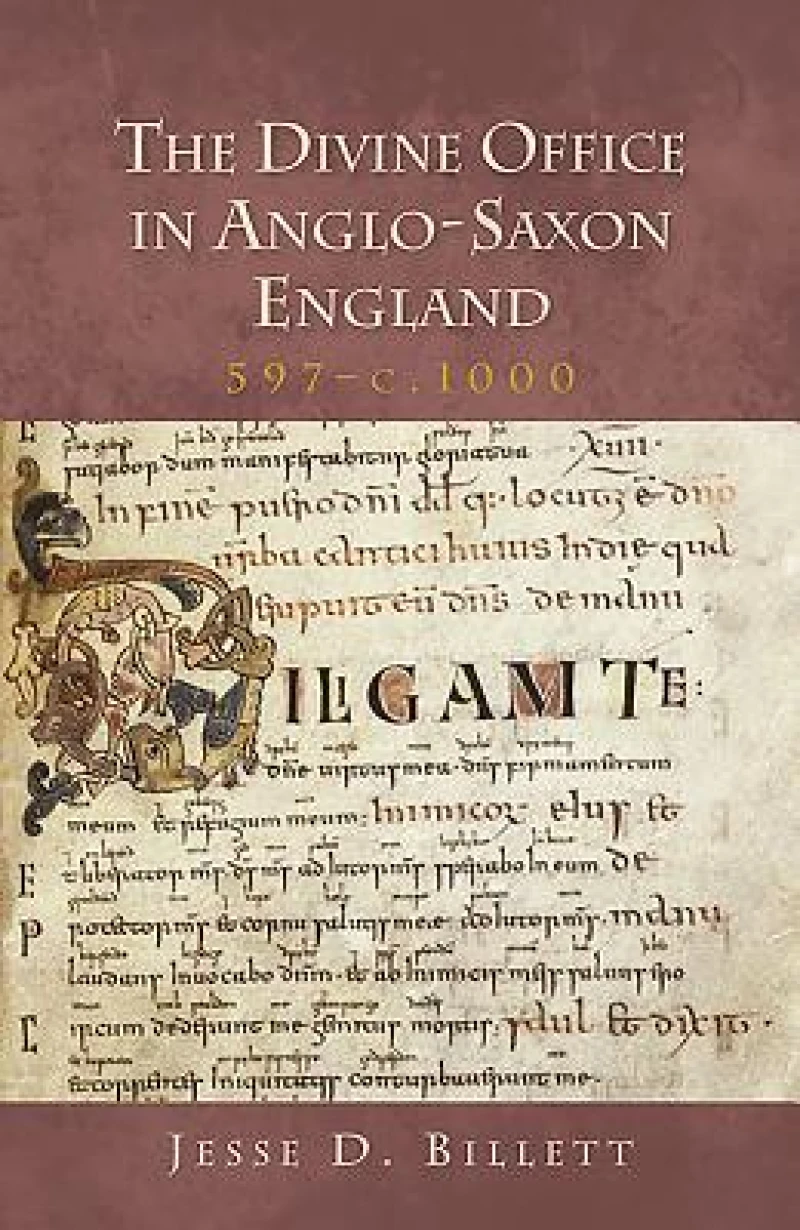
Divine Office in Anglo-Saxon England, 597-c.1000
Book Details
Format
Paperback / Softback
Book Series
Henry Bradshaw Society Subsidia
ISBN-10
1907497358
ISBN-13
9781907497353
Publisher
Henry Bradshaw Society
Imprint
Henry Bradshaw Society
Country of Manufacture
GB
Country of Publication
GB
Publication Date
Feb 15th, 2019
Print length
486 Pages
Weight
614 grams
Dimensions
21.80 x 14.10 x 2.90 cms
Product Classification:
Englishc 500 to c 1000 CEHistory of religionHistory of religion
Ksh 7,950.00
Temporarily out of stock, due soon
0 in stock
Delivery Location
Delivery fee: Select location
Secure
Quality
Fast
First full-scale survey and examination of liturgical practice and its fundamental changes over four centuries.
First full-scale survey and examination of liturgical practice and its fundamental changes over four centuries.
At the heart of life in any medieval Christian religious community was the communal recitation of the daily "hours of prayer" or Divine Office. This book draws on narrative, conciliar, and manuscript sources to reconstruct the history of how the Divine Office was sung in Anglo-Saxon minster churches from the coming of the first Roman missionaries in 597 to the height of the "monastic revival" in the tenth century.
Going beyond both the hagiographic "Benedictine" assumptions of older scholarship and the cautious agnosticism of more recent historians of Anglo-Saxon Christianity, the author demonstrates that the early Anglo-Saxon Church followed a non-Benedictine "Roman" monasticliturgical tradition. Despite Viking depredations and native laxity, this tradition survived, enriched through contact with varied Continental liturgies, into the tenth century. Only then did a few advanced monastic reformers conclude, based on their study of ninth-century Frankish reforms fully explained for the first time in this book, that English monks and nuns ought to follow the liturgical prescriptions of the Rule of St Benedict to the letter. Fragmentary manuscript survivals reveal how monastic leaders such as Dunstan and Æthelwold variously adapted the native English liturgical tradition - or replaced it - to implement this forgotten central plank of the "Benedictine Reform".
JESSE D. BILLETT is Assistant Professor in the Faculty of Divinity, Trinity College, Toronto.
At the heart of life in any medieval Christian religious community was the communal recitation of the daily "hours of prayer" or Divine Office. This book draws on narrative, conciliar, and manuscript sources to reconstruct the history of how the Divine Office was sung in Anglo-Saxon minster churches from the coming of the first Roman missionaries in 597 to the height of the "monastic revival" in the tenth century.
Going beyond both the hagiographic "Benedictine" assumptions of older scholarship and the cautious agnosticism of more recent historians of Anglo-Saxon Christianity, the author demonstrates that the early Anglo-Saxon Church followed a non-Benedictine "Roman" monasticliturgical tradition. Despite Viking depredations and native laxity, this tradition survived, enriched through contact with varied Continental liturgies, into the tenth century. Only then did a few advanced monastic reformers conclude, based on their study of ninth-century Frankish reforms fully explained for the first time in this book, that English monks and nuns ought to follow the liturgical prescriptions of the Rule of St Benedict to the letter. Fragmentary manuscript survivals reveal how monastic leaders such as Dunstan and Æthelwold variously adapted the native English liturgical tradition - or replaced it - to implement this forgotten central plank of the "Benedictine Reform".
JESSE D. BILLETT is Assistant Professor in the Faculty of Divinity, Trinity College, Toronto.
Get Divine Office in Anglo-Saxon England, 597-c.1000 by at the best price and quality guaranteed only at Werezi Africa's largest book ecommerce store. The book was published by Henry Bradshaw Society and it has pages.

