
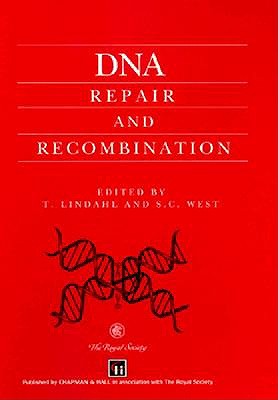
DNA Repair and Recombination
Book Details
Format
Hardback
ISBN-10
0412640406
ISBN-13
9780412640407
Publisher
Chapman and Hall
Imprint
Chapman and Hall
Country of Manufacture
GB
Country of Publication
GB
Publication Date
Jul 1st, 1995
Print length
120 Pages
Weight
532 grams
Dimensions
30.80 x 21.70 x 1.30 cms
Product Classification:
Genetics (non-medical)Cellular biology (cytology)
KSh 12,950.00
Temporarily out of stock, due soon
0 in stock
Delivery Location
Delivery fee: Select location
Secure
Quality
Fast
The processes of DNA repair and recombination are currently of widespread interest. This book, which arises from a Royal Society discussion meeting, presents an overview of the subject by leading researchers in the field.
Genomic instability is a major threat to living organisms. To counteract the damaging effects posed by endogenous and environmental agents, such as chemicals or radiation, micro-organisms devote several percent of their genome to encode proteins that function in the repair and recombination of DNA. For many years, a relatively small group of scientists have carefully delineated the molecular mechanisms of these repair processes, using the simplest model systems available, namely Escherichia coli and Saccharomyces cerevisiae. These studies, which until recently had only moderate impact outside of the field, now provide the cornerstone for exciting new research into analogous processes in human cells. The reason for this is the revelation that the biochemical pathways for the accurate replication, repair and recombination of DNA have been conserved through evolution. New research shows that human cells use DNA repair mechanisms that are analogous to those found in bacteria to overcome the damaging effects of environmental mutagens and carcinogens. Of particular significance is the observation that certain cancers are caused by defects in DNA repair enzymes. For example, the human inherited non-polyposis colon cancer is now known to be caused by defects in the enzymes that repair DNA mismatches. Because much detailed information has been accumulated in studies of analogous mismatch repair proteins from bacteria, rapid progress can now be made. Without these model systems, progress would be dependent upon the usual time-consuming and laborious attempts to carry out positional cloning of human disease genes, followed by often painstaking efforts to identify the function of each gene product. The structural and functional homologies between the E. coli MutS and MutL proteins, and the S. cerevisiae and human MSH2 and MLH1 proteins, now guide research into understanding the basis of this form of colon cancer. In the realm of model systems, few have been studied in more detail than the mechanism of recombination catalysed by the E. coli RecA protein. This protein, which is responsible for the pairing of homologous chromosomes during recombination and the post-replicational repair of DNA damages, has a counterpart in yeast and man (Rad51), again emphasizing the evolutionary conservation of important biological processes. The same can be said of the primary mechanism by which human cells are resistant towards the mutagenic effects of ultraviolet light since the mechanism of nucleotide excision repair, carried out in bacteria by the UvrABC proteins, has been conserved in yeast and human cells. Again, defects in this DNA repair system exhibit themselves in man as a predisposition to cancer, i.e. the human inherited disease xeroderma pigmentosum. Most likely, there are additional lessons to be learnt by extending model systems to man. For example, when exposed to a hostile environment, bacteria attempt to defend themselves by induction of an error-prone DNA repair system; over twenty years ago, Brenner and Milstein proposed that a similar mechanism of local error-prone DNA repair synthesis might be employed by higher cells as a hypermutation mechanism to generate antibody diversity. This intriguing hypothesis is now open to experimental test. However, it is obvious that higher eukaryotes also have unique organizational problems that do not occur in bacteria. The presence of a large amount of repeated DNA sequences in higher cells poses problems in avoiding the loss or gain of DNA sequences, resulting from slippage of the template during replication and recombination. It is difficult to imagine the consequences of the high level of spontaneous recombination characteristic of S. cerevisiae if it occurred in human cells (actually, it is not difficult to imagine, but the thought of it sends a shiver down our DNA backbones!). The aim of this Discussion meeting was to provide a current authoritative account of a rapidly developing field. We thank our distinguished colleagues who contributed to this volume for making this possible.
Get DNA Repair and Recombination by S.C. West at the best price and quality guaranteed only at Werezi Africa's largest book ecommerce store. The book was published by Chapman and Hall and it has 120 pages.
Customers Who Bought This Also Bought
The Selfish Gene
KSh 2,350.00

The Secret of Life – Rosalind Franklin, James Watson, Francis Crick, and the Discovery of DNA's Double Helix
KSh 3,000.00
The Secret of Life – Rosalind Franklin, James Watson, Francis Crick, and the Discovery of DNA's Double Helix
KSh 4,850.00
Silent Witness
KSh 21,550.00
Britannica Guide to Genetics
KSh 3,750.00

Plant Spatial Biology
KSh 27,000.00

Omics-driven Research in Medicinal Plants
KSh 21,600.00
Who Am I?
KSh 5,800.00
Genetics and Genomics of the Triticeae
KSh 32,400.00

Chimeric RNAs
KSh 32,400.00

Routes to Cellulosic Ethanol
KSh 23,400.00
Molecules in Time and Space
KSh 16,200.00
More in This Genre
The Selfish Gene
KSh 2,350.00
The Secret of Life – Rosalind Franklin, James Watson, Francis Crick, and the Discovery of DNA's Double Helix
KSh 3,000.00
The Secret of Life – Rosalind Franklin, James Watson, Francis Crick, and the Discovery of DNA's Double Helix
KSh 4,850.00
Silent Witness
KSh 21,550.00
Britannica Guide to Genetics
KSh 3,750.00
Plant Spatial Biology
KSh 27,000.00
