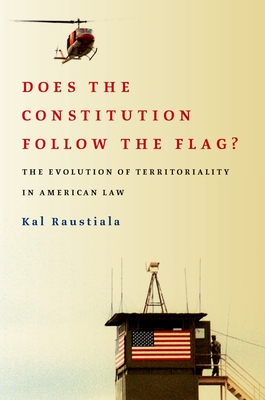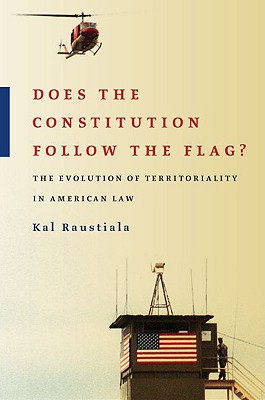
Does the Constitution Follow the Flag? : The Evolution of Territoriality in American Law
Book Details
Format
Hardback
ISBN-10
0195304594
ISBN-13
9780195304596
Publisher
Oxford University Press Inc
Imprint
Oxford University Press Inc
Country of Manufacture
GB
Country of Publication
GB
Publication Date
Oct 29th, 2009
Print length
328 Pages
Weight
601 grams
Dimensions
15.70 x 23.60 x 2.50 cms
KSh 8,200.00
Temporarily out of stock, due soon
0 in stock
Delivery Location
Delivery fee: Select location
Secure
Quality
Fast
The Bush Administration has notoriously argued that detainees at Guantanamo do not enjoy constitutional rights because they are held outside American borders. But where do rules about territorial legal limits such as this one come from? Why does geography make a difference for what legal rules apply? Most people intuitively understand that location affects constitutional rights, but the legal and political basis for territorial jurisdiction is poorly understood. In this novel and accessible treatment of territoriality in American law and foreign policy, Kal Raustiala begins by tracing the history of the subject from its origins in post-revolutionary America to the Indian wars and overseas imperialism of the 19th century. He then takes the reader through the Cold War and the globalization era before closing with a powerful explanation of America's attempt to increase its extraterritorial power in the post-9/11 world. As American power has grown, our understanding of extraterritorial legal rights has expanded too, and Raustiala illuminates why America's assumptions about sovereignty and territory have changed. Throughout, he focuses on how the legal limits of territorial sovereignty have diminished to accommodate the expanding American empire, and addresses how such limits ought to look in the wake of Iraq, Afghanistan, and the war on terror. A timely and engaging narrative, Does the Constitution Follow the Flag? will change how we think about American territory, American law, and-ultimately-the changing nature of American power.
The Bush Administration has notoriously argued that detainees at Guantanamo do not enjoy constitutional rights because they are held outside American borders. But where do rules about territorial legal limits such as this one come from? Why does geography make a difference for what legal rules apply? Most people intuitively understand that location affects constitutional rights, but the legal and political basis for territorial jurisdiction is poorly understood. In this novel and accessible treatment of territoriality in American law and foreign policy, Kal Raustiala begins by tracing the history of the subject from its origins in post-revolutionary America to the Indian wars and overseas imperialism of the 19th century. He then takes the reader through the Cold War and the globalization era before closing with a powerful explanation of America''s attempt to increase its extraterritorial power in the post-9/11 world. As American power has grown, our understanding of extraterritorial legal rights has expanded too, and Raustiala illuminates why America''s assumptions about sovereignty and territory have changed. Throughout, he focuses on how the legal limits of territorial sovereignty have diminished to accommodate the expanding American empire, and addresses how such limits ought to look in the wake of Iraq, Afghanistan, and the war on terror. A timely and engaging narrative, Does the Constitution Follow the Flag? will change how we think about American territory, American law, and-ultimately-the changing nature of American power.
Get Does the Constitution Follow the Flag? by Kal Raustiala at the best price and quality guaranteed only at Werezi Africa's largest book ecommerce store. The book was published by Oxford University Press Inc and it has 328 pages.
Customers Who Bought This Also Bought

Crusade for Justice – The Autobiography of Ida B. Wells, Second Edition
KSh 4,050.00

Killers of the Flower Moon
KSh 2,000.00

Warmth of Other Suns
KSh 3,050.00
Frederick Douglass
KSh 3,350.00
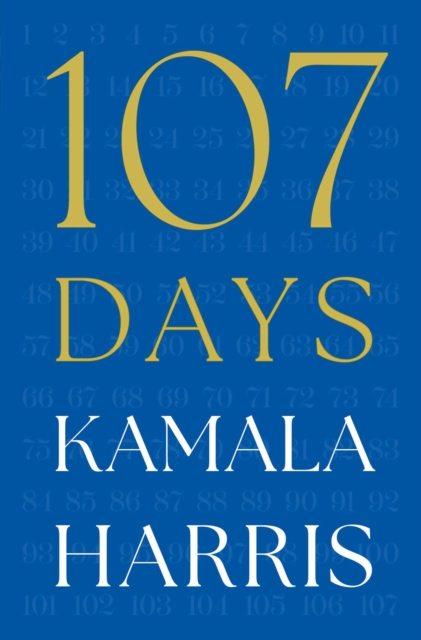
107 Days
KSh 4,500.00

Second Treatise of Government – Norton Library
KSh 1,600.00

Tuesdays With Morrie
KSh 2,000.00
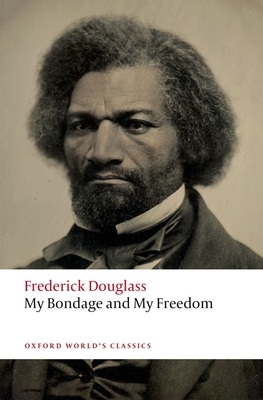
My Bondage and My Freedom
KSh 1,600.00

Hidden Figures
KSh 2,000.00
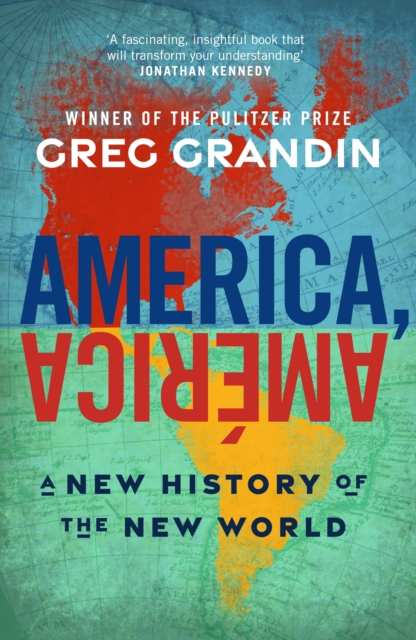
America, América
KSh 3,650.00
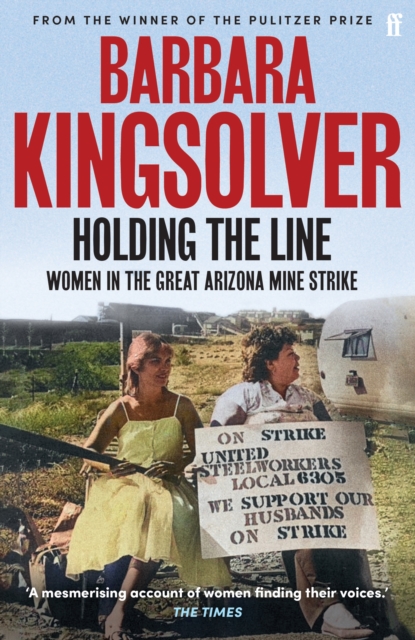
Holding the Line
KSh 2,000.00
Nuclear Folly
KSh 3,050.00