

Dollars and Dominion : US Bankers and the Making of a Superpower
Book Details
Format
Paperback / softback
Book Series
America in the World
ISBN-10
0691248389
ISBN-13
9780691248387
Publisher
Princeton University Press
Imprint
Princeton University Press
Country of Manufacture
GB
Country of Publication
GB
Publication Date
Nov 10th, 2026
Print length
280 Pages
KSh 4,500.00
Not Yet Published
0 in stock
Delivery Location
Delivery fee: Select location
Secure
Quality
Fast
How the creation of a new banking infrastructure in the early twentieth century established the United States as a global financial powerThe dominance of US multinational businesses today can seem at first like an inevitable byproduct of the nation’s superpower status. In Dollars and Dominion, Mary Bridges tells a different origin story. She explores the ramshackle beginnings of US financial power overseas, showing that US bankers in the early twentieth century depended on the US government, European know-how, and last-minute improvisation to sustain their work abroad. Bridges focuses on an underappreciated piece of the nation’s financial infrastructure—the overseas branch bank—as a brick-and-mortar foundation for expanding US commercial influence. Bridges explores how bankers sorted their new communities into “us”—potential clients—and “them”—local populations, who often existed on the periphery of the banking world. She argues that US bankers mapped their new communities by creating foreign credit information—and by using a financial asset newly enabled by the Federal Reserve System, the bankers’ acceptance, in the process. In doing so, they constructed a new architecture of US trade finance that relied on long-standing inequalities and hierarchies of privilege. Thus, racialized, class-based, and gendered ideas became baked into the financial infrastructure. Contrary to conventional wisdom, there was nothing inevitable or natural about the rise of US finance capitalism. Bridges shows that US foreign banking was a bootstrapped project that began as a side hustle of Gilded Age tycoons and sustained itself by relying on the power of the US state, copying the example of British foreign bankers, and building alliances with local elites. In this way, US bankers constructed a flexible and durable new infrastructure to support the nation’s growing global power.
Get Dollars and Dominion by Professor Mary Bridges at the best price and quality guaranteed only at Werezi Africa's largest book ecommerce store. The book was published by Princeton University Press and it has 280 pages.
Customers Who Bought This Also Bought

Gulag Archipelago
KSh 2,700.00

Churchill
KSh 3,700.00

Modern Africa
KSh 11,500.00

Kairos
KSh 1,800.00

Spy and the Traitor
KSh 2,150.00
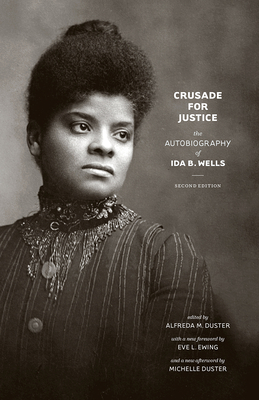
Crusade for Justice – The Autobiography of Ida B. Wells, Second Edition
KSh 4,050.00

Killers of the Flower Moon
KSh 2,000.00

The Origins of Totalitarianism
KSh 2,700.00

On Tyranny
KSh 2,000.00

Gandhi 1914-1948
KSh 3,950.00

Warmth of Other Suns
KSh 3,050.00
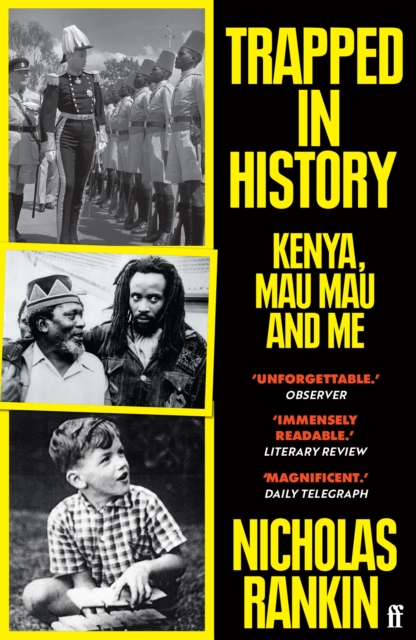
Trapped in History
KSh 2,350.00