
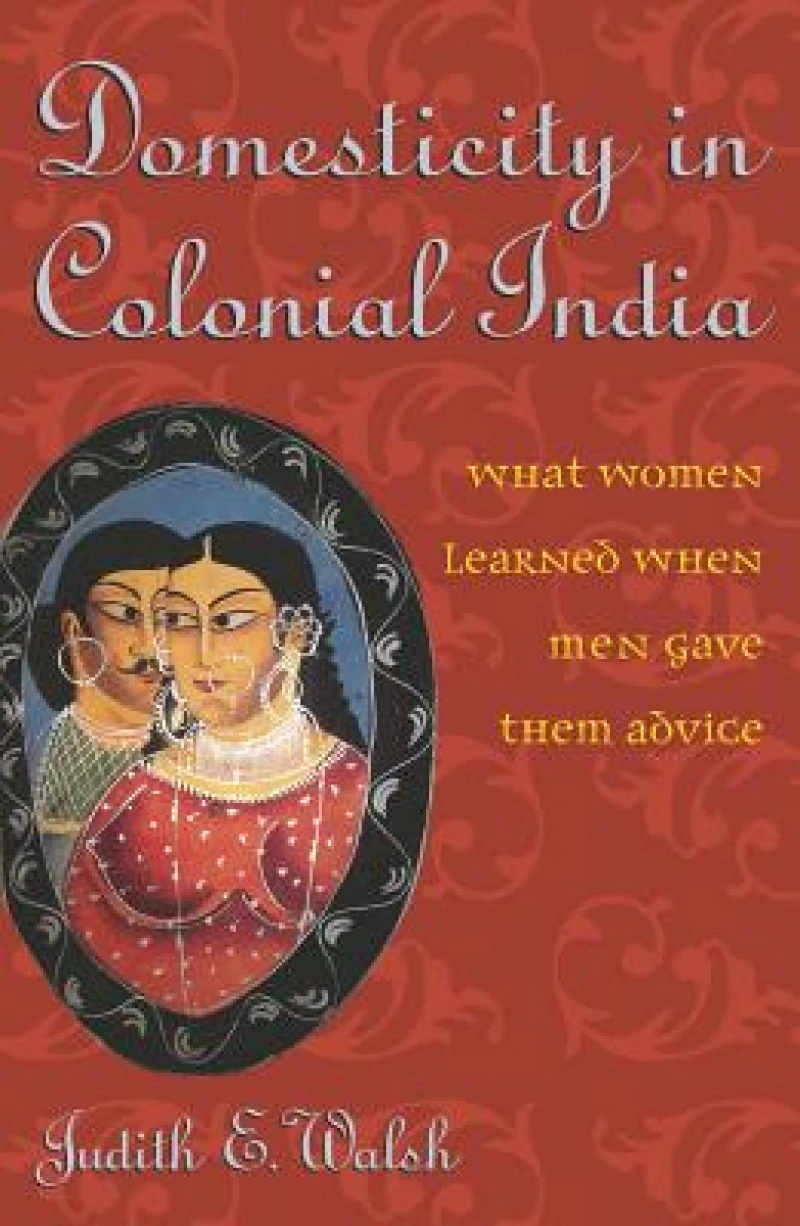
Domesticity in Colonial India : What Women Learned When Men Gave Them Advice
Book Details
Format
Hardback or Cased Book
ISBN-10
0742529363
ISBN-13
9780742529366
Publisher
Bloomsbury Publishing Plc
Imprint
Rowman & Littlefield
Country of Manufacture
US
Country of Publication
GB
Publication Date
May 5th, 2004
Print length
256 Pages
Weight
440 grams
Dimensions
23.40 x 16.70 x 2.10 cms
Product Classification:
Gender studies, gender groupsGender studies, gender groups
Ksh 23,400.00
Werezi Extended Catalogue
0 in stock
Delivery Location
Delivery fee: Select location
Secure
Quality
Fast
Domesticity in Colonial India offers a trenchant analysis of the impact of imperialism on the personal, familial, and daily structures of colonized people''s lives. Exploring the ''intimacies of empire,'' Judith E. Walsh traces changing Indian gender relations and the social reconstructions of the late nineteenth century. She sets both in the global context of a transnationally defined discourse on domesticity and in the Indian context of changing family relations and redefinitions of daily and domestic life. By the 1880s, Hindu domestic life and its most intimate relationships had become contested ground. For urban, middle-class Indians, the Hindu woman was at the center of a debate over colonial modernity and traditional home and family life. This book sets this debate within the context of a nineteenth-century world where bourgeois, European ideas on the home had become part of a transnational, hegemonic domestic discourse, a ''global domesticity.'' But Walsh''s interest is more in hybridity than hegemony as she explores what women themselves learned when men sought to teach them through the Indian advice literature of the time. As a younger generation of Indian nationalists and reformers attempted to undercut the authority of family elders and create a ''new patriarchy'' of more nuclear and exclusive relations with their wives, elderly women in extended Hindu families learned that their authority in family life (however contingent) was coming to an end. But young women learned a different lesson. The author draws on an important advice manual by a woman poet from Bengal and women''s life stories from other regions of India to show us how young women used competing patriarchies to launch their own explorations of agency and self-identity. The practices of family, home, and daily life that resulted would define the Hindu woman of the twentieth and twenty-first centuries and the domestic worlds in which she was embedded.
Get Domesticity in Colonial India by at the best price and quality guaranteed only at Werezi Africa's largest book ecommerce store. The book was published by Bloomsbury Publishing Plc and it has pages.

