
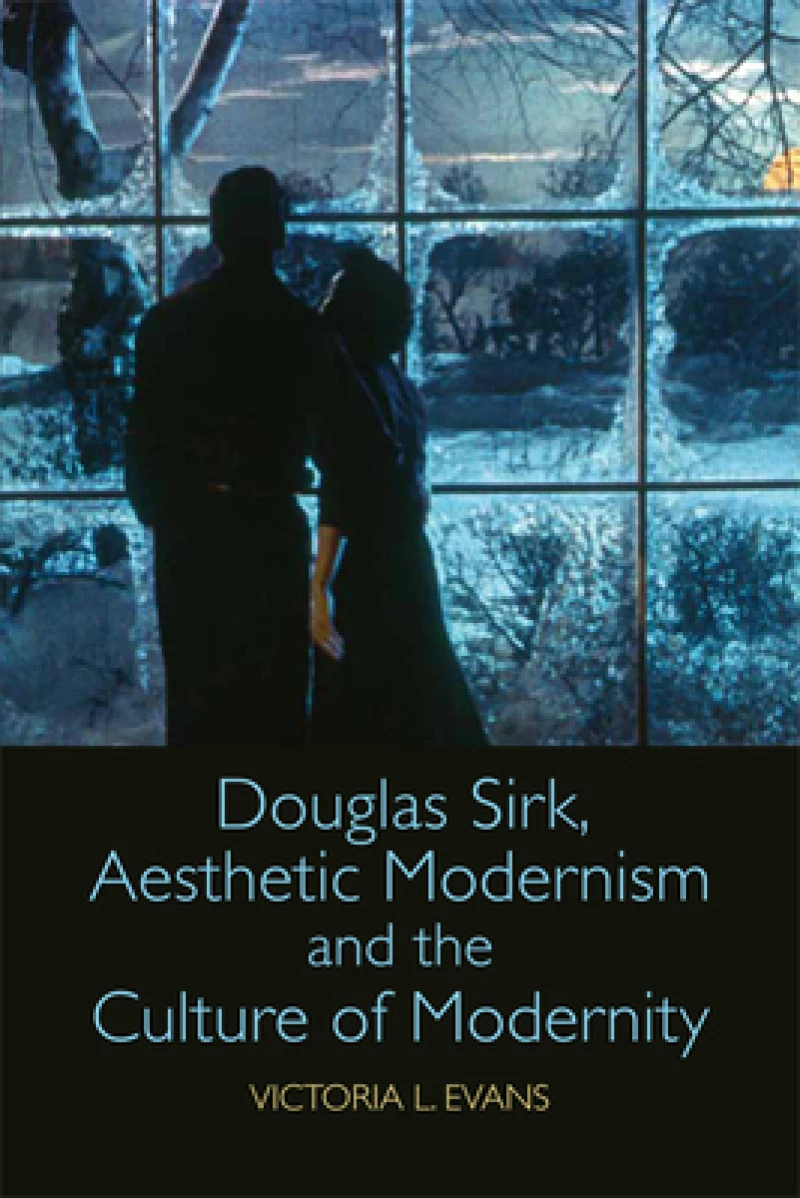
Douglas Sirk, Aesthetic Modernism and the Culture of Modernity
Book Details
Format
Hardback or Cased Book
ISBN-10
1474409393
ISBN-13
9781474409391
Publisher
Edinburgh University Press
Imprint
Edinburgh University Press
Country of Manufacture
GB
Country of Publication
GB
Publication Date
Jun 30th, 2017
Print length
208 Pages
Weight
464 grams
Dimensions
16.20 x 24.00 x 1.80 cms
Product Classification:
Film theory & criticismIndividual film directors, film-makersFilm guides & reviews
Ksh 18,000.00
Werezi Extended Catalogue
0 in stock
Delivery Location
Delivery fee: Select location
Secure
Quality
Fast
The first truly interdisciplinary analysis to link Douglas Sirk's striking visual aesthetic to key movements in twentieth century art and architecture, this book reveals how the exaggerated artifice of Sirk's formal style emerged from his detailed understanding of the artistic debates that raged in 1920s Europe and the post-war United States.
The first truly interdisciplinary analysis to link Douglas Sirk''s striking visual aesthetic to key movements in twentieth century art and architecture, this book reveals how the exaggerated artifice of Sirk''s formal style emerged from his detailed understanding of the artistic debates that raged in 1920s Europe and the post-war United States.
With detailed case studies of Final Chord and All That Heaven Allows, Victoria Evans demonstrates how Sirk attempted to dissolve the boundaries of cinema by assimilating elements of avant-garde art, architecture and design into the colour, composition and setting of many of his most well-known films. Treating Sirk''s oeuvre as a continuum between his German and American periods, Evans argues that his mise-en-scene was the result of an interdisciplinary, transnational dialogue, and illuminates the broader cultural context in which his films appeared by establishing links between archival documents, Modernist manifestos and the philosophical writings of his peers.
With detailed case studies of Final Chord and All That Heaven Allows, Victoria Evans demonstrates how Sirk attempted to dissolve the boundaries of cinema by assimilating elements of avant-garde art, architecture and design into the colour, composition and setting of many of his most well-known films. Treating Sirk''s oeuvre as a continuum between his German and American periods, Evans argues that his mise-en-scene was the result of an interdisciplinary, transnational dialogue, and illuminates the broader cultural context in which his films appeared by establishing links between archival documents, Modernist manifestos and the philosophical writings of his peers.
Get Douglas Sirk, Aesthetic Modernism and the Culture of Modernity by at the best price and quality guaranteed only at Werezi Africa's largest book ecommerce store. The book was published by Edinburgh University Press and it has pages.

