

Dougong : The Cultural Geometry of the Chinese Bracket Set
Book Details
Format
Hardback
ISBN-10
0824895568
ISBN-13
9780824895563
Publisher
University of Hawai'i Press
Imprint
University of Hawai'i Press
Country of Manufacture
GB
Country of Publication
GB
Publication Date
Jul 31st, 2025
Print length
277 Pages
Weight
988 grams
Dimensions
18.70 x 26.30 x 2.60 cms
KSh 11,050.00
Currently unavailable
0 in stock
Delivery Location
Delivery fee: Select location
Secure
Quality
Fast
This is the first English-language study devoted to dougong, the block-bracket cluster widely regarded as the epitome of traditional Chinese architecture. For almost two millennia, dougong have been central to the multipartite frame structure of wooden buildings, connecting columns with beams, supporting projecting eaves, and providing resistance to earthquake damage. They have enabled and required builders to ensure both the functionality and the moral dimension of their designs through the thoughtful use of appropriately graded timbers and corresponding methods of modular design that determine the size and quality of a building in keeping with the social standing of its owner.
Richly illustrated with original high-quality photographs and drawings, this book explores the engaging story of dougong as technical artifacts that embody Chinese culture. Alexandra Harrer delves into the previously unresolved relationship between standard dougong and their regional and local variations in the rhetoric of Chinese construction, offering an alternative to sociopolitical caste as a means of interpreting these differences. She untangles the lengthy selection process and trial-and-error development of the block-bracket cluster before codification to reveal how design idiosyncrasies derived from an unlikely combination of legal codes and ethical imperatives. For example, dougong with arms projecting at a 45- or 60-degree angle from the wall plane—long dismissed as unorthodox—are shown to be a subtle design expression that yields to authority while it seeks to exploit archi-cultural standards. Harrer argues that the ethical dimensions of graphic shapes and the culturally charged space that dougong occupy are key to understanding this creative process.
Richly illustrated with original high-quality photographs and drawings, this book explores the engaging story of dougong as technical artifacts that embody Chinese culture. Alexandra Harrer delves into the previously unresolved relationship between standard dougong and their regional and local variations in the rhetoric of Chinese construction, offering an alternative to sociopolitical caste as a means of interpreting these differences. She untangles the lengthy selection process and trial-and-error development of the block-bracket cluster before codification to reveal how design idiosyncrasies derived from an unlikely combination of legal codes and ethical imperatives. For example, dougong with arms projecting at a 45- or 60-degree angle from the wall plane—long dismissed as unorthodox—are shown to be a subtle design expression that yields to authority while it seeks to exploit archi-cultural standards. Harrer argues that the ethical dimensions of graphic shapes and the culturally charged space that dougong occupy are key to understanding this creative process.
Get Dougong by Alexandra Harrer at the best price and quality guaranteed only at Werezi Africa's largest book ecommerce store. The book was published by University of Hawai'i Press and it has 277 pages.
Customers Who Bought This Also Bought
Architecture – Form, Space, & Order
KSh 8,700.00
In Fine Detail: Perspective
KSh 3,700.00
Islamic Art and Architecture
KSh 3,600.00

Classical Architecture
KSh 8,700.00
The Sources of Modern Architecture and Design
KSh 3,400.00
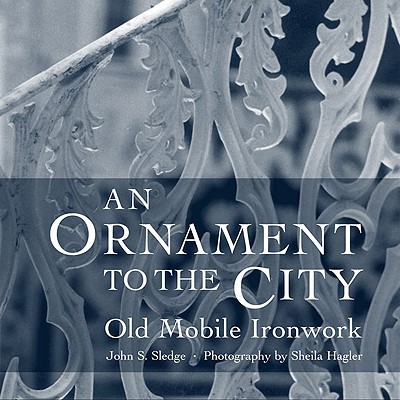
An Ornament to the City
KSh 10,450.00

Frank Lloyd Wright Designs
KSh 18,550.00

International Space Station
KSh 11,700.00

Colorful Cities
KSh 2,050.00
The Culture Factory
KSh 3,600.00

American Renaissance
KSh 18,700.00

Zürich Primer
KSh 8,900.00
