

Draining New Orleans : The 300-Year Quest to Dewater the Crescent City
Book Details
Format
Hardback
ISBN-10
0807178543
ISBN-13
9780807178546
Publisher
Louisiana State University Press
Imprint
Louisiana State University Press
Country of Manufacture
GB
Country of Publication
GB
Publication Date
May 3rd, 2023
Print length
424 Pages
Weight
771 grams
Dimensions
23.00 x 15.00 x 2.50 cms
KSh 6,450.00
Temporarily out of stock, due soon
0 in stock
Delivery Location
Delivery fee: Select location
Secure
Quality
Fast
In the first full-length book devoted to ‘the world’s toughest drainage problem’, renowned geographer Richard Campanella recounts the epic challenges and ingenious efforts to dewater the Crescent City.
In Draining New Orleans, the first full-length book devoted to "the world's toughest drainage problem," renowned geographer Richard Campanella recounts the epic challenges and ingenious efforts to dewater the Crescent City. With forays into geography, public health, engineering, architecture, politics, sociology, race relations, and disaster response, he chronicles the herculean attempts to "reclaim" the city's swamps and marshes and install subsurface drainage for massive urban expansion.
The study begins with a vivid description of a festive event on Mardi Gras weekend 1915, which attracted an entourage of elite New Orleanians to the edge of Bayou Barataria to witness the christening of giant water pumps. President Woodrow Wilson, connected via phoneline from the White House, planned to activate the station with the push of a button, effectively draining the West Bank of New Orleans. What transpired in the years and decades that followed can only be understood by examining the large swath of history dating back two centuries earlier—to the geological formation and indigenous occupation of this delta—and extending through the colonial, antebellum, postbellum, and Progressive eras to modern times.
The consequences of dewatering New Orleans proved both triumphant and tragic. The city's engineering prowess transformed it into a world leader in drainage technology, yet the municipality also fell victim to its own success. Rather than a story about mud and machinery, this is a history of people, power, and the making of place. Campanella emphasizes the role of determined and sometimes unsavory individuals who spearheaded projects to separate water from dirt, creating lucrative opportunities in the process not only for the community but also for themselves.
The study begins with a vivid description of a festive event on Mardi Gras weekend 1915, which attracted an entourage of elite New Orleanians to the edge of Bayou Barataria to witness the christening of giant water pumps. President Woodrow Wilson, connected via phoneline from the White House, planned to activate the station with the push of a button, effectively draining the West Bank of New Orleans. What transpired in the years and decades that followed can only be understood by examining the large swath of history dating back two centuries earlier—to the geological formation and indigenous occupation of this delta—and extending through the colonial, antebellum, postbellum, and Progressive eras to modern times.
The consequences of dewatering New Orleans proved both triumphant and tragic. The city's engineering prowess transformed it into a world leader in drainage technology, yet the municipality also fell victim to its own success. Rather than a story about mud and machinery, this is a history of people, power, and the making of place. Campanella emphasizes the role of determined and sometimes unsavory individuals who spearheaded projects to separate water from dirt, creating lucrative opportunities in the process not only for the community but also for themselves.
Get Draining New Orleans by Richard Campanella at the best price and quality guaranteed only at Werezi Africa's largest book ecommerce store. The book was published by Louisiana State University Press and it has 424 pages.
Customers Who Bought This Also Bought

Crusade for Justice – The Autobiography of Ida B. Wells, Second Edition
KSh 4,050.00

Killers of the Flower Moon
KSh 2,000.00

Warmth of Other Suns
KSh 3,050.00

Frederick Douglass
KSh 3,350.00

107 Days
KSh 4,500.00

Second Treatise of Government – Norton Library
KSh 1,600.00

Tuesdays With Morrie
KSh 2,000.00
My Bondage and My Freedom
KSh 1,600.00

Hidden Figures
KSh 2,000.00

America, América
KSh 3,650.00

Holding the Line
KSh 2,000.00

Nuclear Folly
KSh 3,050.00
More by Richard Campanella

Crossroads, Cutoffs, and Confluences
KSh 4,850.00
The Photojournalism of Del Hall
KSh 6,600.00

Nocturnal New Orleans
KSh 8,650.00
Bourbon Street
KSh 7,650.00

Above New Orleans
KSh 11,450.00

Crossroads, Cutoffs, and Confluences
KSh 7,200.00

Cityscapes of New Orleans
KSh 4,850.00
The West Bank of Greater New Orleans
KSh 6,600.00
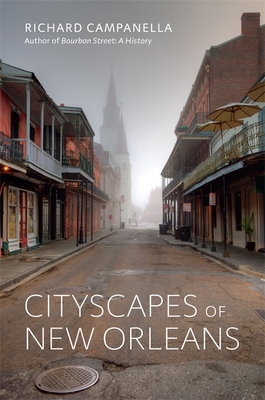
Cityscapes of New Orleans
KSh 5,650.00

Bourbon Street
KSh 7,200.00
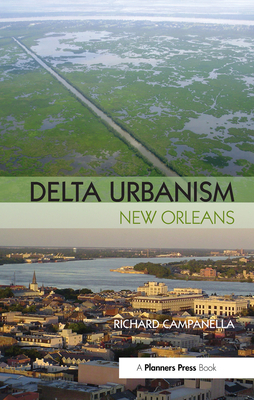
Delta Urbanism
KSh 30,950.00
Delta Urbanism
KSh 8,450.00
