Drawing on Tradition : Manga, Anime and Religion in Contemporary Japan
Book Details
Format
Paperback / softback
ISBN-10
0824836545
ISBN-13
9780824836542
Publisher
University of Hawai'i Press
Imprint
University of Hawai'i Press
Country of Manufacture
US
Country of Publication
GB
Publication Date
Sep 30th, 2012
Print length
216 Pages
Weight
344 grams
Dimensions
22.80 x 15.40 x 1.70 cms
Product Classification:
Other non-Christian religionsFurther religions and spiritual beliefs,
KSh 3,950.00
Currently unavailable
0 in stock
Delivery Location
Delivery fee: Select location
Secure
Quality
Fast
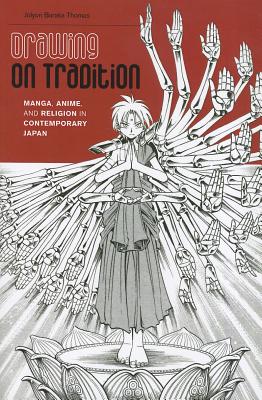
Manga and anime (illustrated serial novels and animated films) are highly influential Japanese entertainment media that boast tremendous domestic consumption as well as worldwide distribution and an international audience. Drawing on Tradition examines religious aspects of the culture of manga and anime production and consumption through a methodological synthesis of narrative and visual analysis, history, and ethnography. Rather than merely describing the incidence of religions such as Buddhism or Shinto in these media, Jolyon BarakaThomas shows that authors and audiences create and re-create “religious frames of mind” through their imaginative and ritualised interactions with illustrated worlds. Manga and anime therefore not only contribute to familiarity with traditional religious doctrines and imagery, but also allow authors, directors, and audiences to modify and elaborate upon such traditional tropes, sometimes creating hitherto unforeseen religious ideas and practices.
The book takes play seriously by highlighting these recursive relationships between recreation and religion, emphasising throughout the double sense of play as entertainment and play as adulteration (i.e., the whimsical or parodic representation of religious figures, doctrines, and imagery). Building on recent developments in academic studies of manga and anime—as well as on recent advances in the study of religion as related to art and film—Thomas demonstrates that the specific aesthetic qualities and industrial dispositions of manga and anime invite practices of rendition and reception that can and do influence the ways that religious institutions and lay authors have attempted to captivate new audiences.
Drawing on Tradition will appeal to both the dilettante and the specialist: Fans and self-professed otaku will find an engaging academic perspective on often overlooked facets of the media and culture of manga and anime, while scholars and students of religion will discover a fresh approach to the complicated relationships between religion and visual media, religion and quotidian practice, and the putative differences between “traditional” and “new” religions.
The book takes play seriously by highlighting these recursive relationships between recreation and religion, emphasising throughout the double sense of play as entertainment and play as adulteration (i.e., the whimsical or parodic representation of religious figures, doctrines, and imagery). Building on recent developments in academic studies of manga and anime—as well as on recent advances in the study of religion as related to art and film—Thomas demonstrates that the specific aesthetic qualities and industrial dispositions of manga and anime invite practices of rendition and reception that can and do influence the ways that religious institutions and lay authors have attempted to captivate new audiences.
Drawing on Tradition will appeal to both the dilettante and the specialist: Fans and self-professed otaku will find an engaging academic perspective on often overlooked facets of the media and culture of manga and anime, while scholars and students of religion will discover a fresh approach to the complicated relationships between religion and visual media, religion and quotidian practice, and the putative differences between “traditional” and “new” religions.
Get Drawing on Tradition by Jolyon Baraka Thomas at the best price and quality guaranteed only at Werezi Africa's largest book ecommerce store. The book was published by University of Hawai'i Press and it has 216 pages.
Customers Who Bought This Also Bought

A Well-Tended Soul
KSh 1,800.00

The Philosophical Traditions of India
KSh 11,150.00

Yezidis
KSh 4,550.00

The God in Us
KSh 30,950.00

Kakais of Iraq
KSh 5,850.00

Shamanism
KSh 5,750.00

Violin
KSh 5,200.00
Rastafari in the New Millennium
KSh 3,550.00

Yoga
KSh 30,950.00

From Material to Deity
KSh 10,700.00

Shamanism
KSh 11,150.00

Ritual, Discourse, and Community in Cuban Santería
KSh 3,800.00