
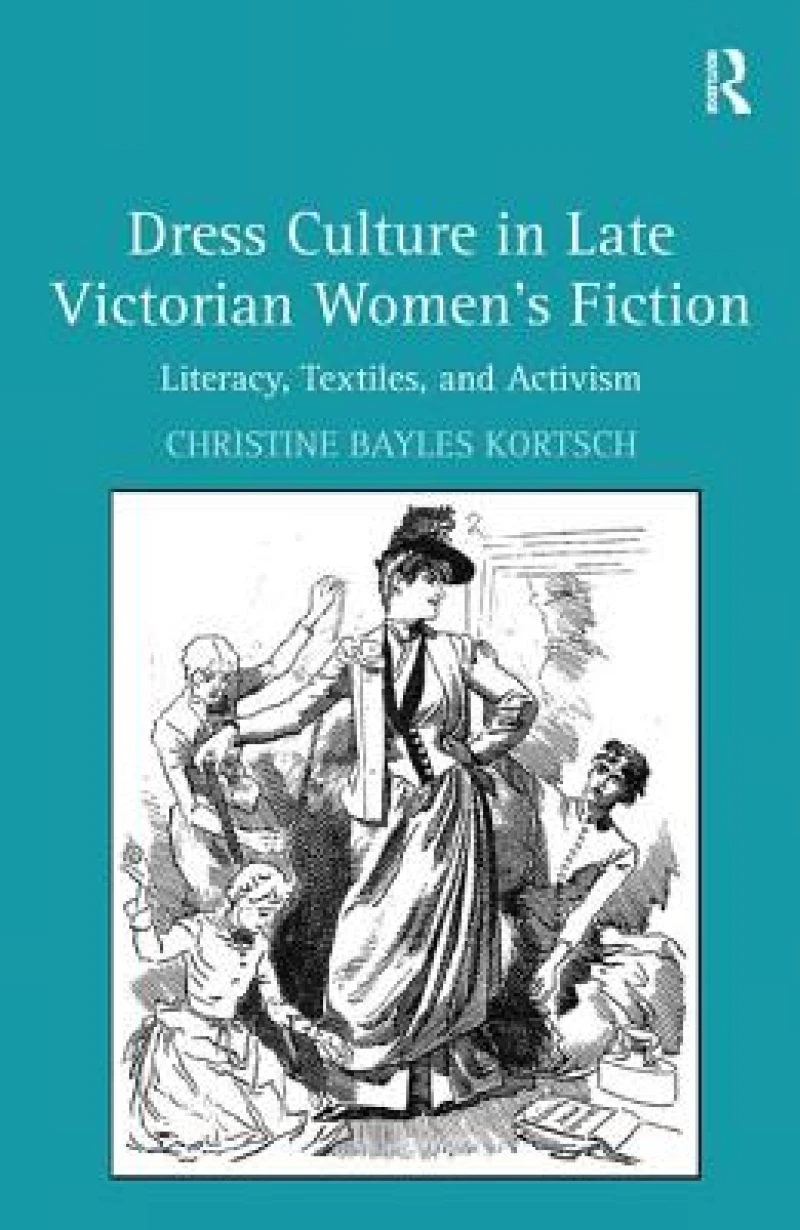
Dress Culture in Late Victorian Women''s Fiction : Literacy, Textiles, and Activism
Book Details
Format
Paperback / Softback
ISBN-10
113827335X
ISBN-13
9781138273351
Publisher
Taylor & Francis Ltd
Imprint
Routledge
Country of Manufacture
GB
Country of Publication
GB
Publication Date
Dec 2nd, 2016
Print length
212 Pages
Weight
338 grams
Dimensions
15.70 x 23.10 x 1.80 cms
Product Classification:
Literature: history & criticismLiterature: history and criticism
Ksh 10,600.00
Werezi Extended Catalogue
0 in stock
Delivery Location
Delivery fee: Select location
Secure
Quality
Fast
In her immensely readable and richly documented book, Christine Bayles Kortsch asks us to shift our understanding of late Victorian literary culture by examining its inextricable relationship with the material culture of dress and sewing. Even as the Education Acts of 1870, 1880, and 1891 extended the privilege of print literacy to greater numbers of the populace, stitching samplers continued to be a way of acculturating girls in both print literacy and what Kortsch terms "dress culture." Kortsch explores nineteenth-century women''s education, sewing and needlework, mainstream fashion, alternative dress movements, working-class labor in the textile industry, and forms of social activism, showing how dual literacy in dress and print cultures linked women writers with their readers. Focusing on Victorian novels written between 1870 and 1900, Kortsch examines fiction by writers such as Olive Schreiner, Ella Hepworth Dixon, Margaret Oliphant, Sarah Grand, and Gertrude Dix, with attention to influential predecessors like Elizabeth Gaskell, Charlotte Brontë, and George Eliot. Periodicals, with their juxtaposition of journalism, fiction, and articles on dress and sewing are particularly fertile sites for exploring the close linkages between print and dress cultures. Informed by her examinations of costume collections in British and American museums, Kortsch''s book broadens our view of New Woman fiction and its relationship both to dress culture and to contemporary women''s fiction.
Get Dress Culture in Late Victorian Women''s Fiction by at the best price and quality guaranteed only at Werezi Africa's largest book ecommerce store. The book was published by Taylor & Francis Ltd and it has pages.

