
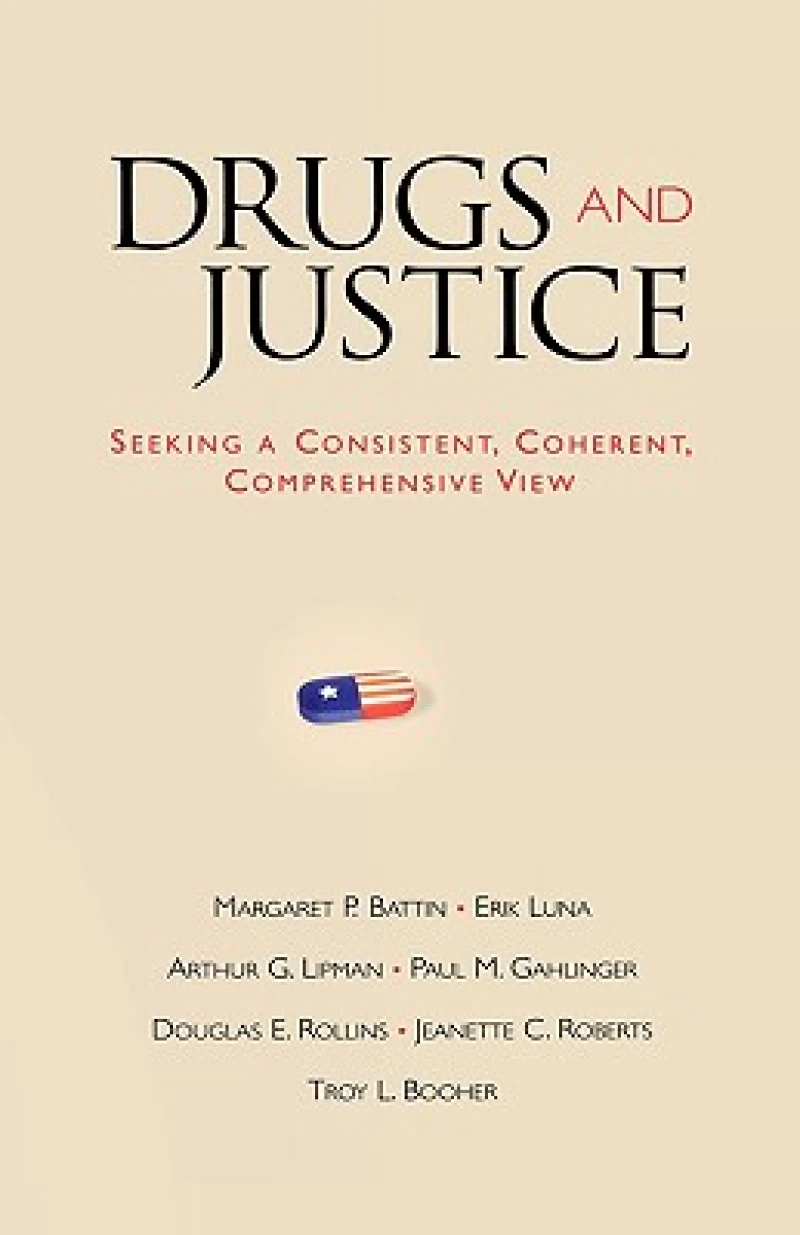
Drugs and Justice : Seeking a Consistent, Coherent, Comprehensive View
Book Details
Format
Hardback or Cased Book
ISBN-10
0195321006
ISBN-13
9780195321005
Publisher
Oxford University Press Inc
Imprint
Oxford University Press Inc
Country of Manufacture
GB
Country of Publication
GB
Publication Date
Sep 25th, 2008
Print length
312 Pages
Weight
454 grams
Dimensions
21.10 x 14.20 x 2.00 cms
Product Classification:
Ethics & moral philosophyMedical ethics & professional conductScience funding & policyBio-ethics
Ksh 7,450.00
Manufactured on Demand
0 in stock
Delivery Location
Delivery fee: Select location
Secure
Quality
Fast
This compact and innovative book tackles one of the central issues in drug policy: the lack of a coherent conceptual structure for thinking about drugs. Drugs generally fall into one of seven categories: prescription, over the counter, alternative medicine, common-use drugs like alcohol, tobacco and caffeine; religious-use, sports enhancement; and of course illegal street drugs like cocaine and marijuana. Our thinking and policies varies wildly from one to the other, with inconsistencies that derive more from cultural and social values than from medical or scientific facts. Penalties exist for steroid use, while herbal remedies or cold medication are legal. Native Americans may legally use peyote, but others may not. Penalties may vary for using different forms of the same drug, such as crack vs. powder cocaine. Herbal remedies are unregulated by the FDA; but medical marijuana is illegal in most states. Battin and her contributors lay a foundation for a wiser drug policy by promoting consistency and coherency in the discussion of drug issues and by encouraging a unique dialogue across disciplines. The contributors are an interdisciplinary group of scholars mostly based at the University of Utah, and include a pharmacologist, a psychiatrist, a toxicologist, a trial court judge, a law professor, an attorney, a diatary specialist, a physician, a health expert on substance abuse, and Battin herself who is a philosopher. They consider questions like the historical development of current policy and the rationales for it; scientific views on how drugs actually cause harm; how to define the key notions of harm and addiction; and ways in which drug policy can be made more consistent. They conclude with an examination of the implications of a consistent policy for various disciplines and society generally. The book is written accessibly with little need for expert knowledge, and will appeal to a diverse audience of philosophers, bioethicists, clinicians, policy makers, law enforcement, legal scholars and practitioners, social workers, and general readers, as well as to students in areas like pharmacy, medicine, law, nursing, sociology, social work, psychology, and bioethics.
This compact and innovative book tackles one of the central issues in drug policy: the lack of a coherent conceptual structure for thinking about drugs. Drugs generally fall into one of seven categories: prescription, over the counter, alternative medicine, common-use drugs like alcohol, tobacco and caffeine; religious-use, sports enhancement; and of course illegal street drugs like cocaine and marijuana. Our thinking and policies varies wildly from one to the other, with inconsistencies that derive more from cultural and social values than from medical or scientific facts. Penalties exist for steroid use, while herbal remedies or cold medication are legal. Native Americans may legally use peyote, but others may not. Penalties may vary for using different forms of the same drug, such as crack vs. powder cocaine. Herbal remedies are unregulated by the FDA; but medical marijuana is illegal in most states. Battin and her contributors lay a foundation for a wiser drug policy by promoting consistency and coherency in the discussion of drug issues and by encouraging a unique dialogue across disciplines. The contributors are an interdisciplinary group of scholars mostly based at the University of Utah, and include a pharmacologist, a psychiatrist, a toxicologist, a trial court judge, a law professor, an attorney, a diatary specialist, a physician, a health expert on substance abuse, and Battin herself who is a philosopher. They consider questions like the historical development of current policy and the rationales for it; scientific views on how drugs actually cause harm; how to define the key notions of harm and addiction; and ways in which drug policy can be made more consistent. They conclude with an examination of the implications of a consistent policy for various disciplines and society generally. The book is written accessibly with little need for expert knowledge, and will appeal to a diverse audience of philosophers, bioethicists, clinicians, policy makers, law enforcement, legal scholars and practitioners, social workers, and general readers, as well as to students in areas like pharmacy, medicine, law, nursing, sociology, social work, psychology, and bioethics.
Get Drugs and Justice by at the best price and quality guaranteed only at Werezi Africa's largest book ecommerce store. The book was published by Oxford University Press Inc and it has pages.

