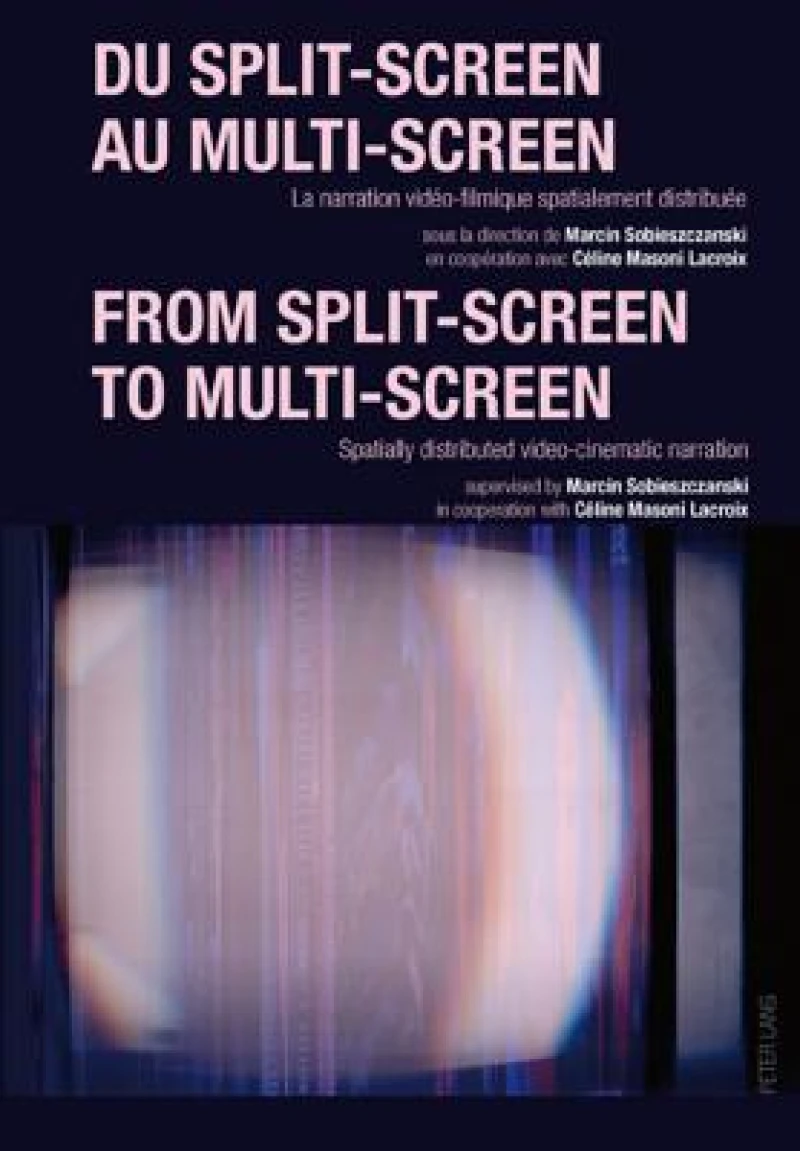
Du split-screen au multi-screen-- From split-screen to multi-screen : La narration video-filmique spatialement distribuee-- Spatially distributed video-cinematic narration
New
Book Details
Format
Paperback / Softback
ISBN-10
3034303254
ISBN-13
9783034303255
Edition
New
Publisher
Peter Lang AG, Internationaler Verlag der Wissenschaften
Imprint
Peter Lang AG, Internationaler Verlag der Wissensc
Country of Manufacture
CH
Country of Publication
GB
Publication Date
Oct 19th, 2010
Print length
323 Pages
Weight
488 grams
Dimensions
15.70 x 22.50 x 1.80 cms
Ksh 12,650.00
Manufactured on Demand
0 in stock
Delivery Location
Delivery fee: Select location
Secure
Quality
Fast
Du split-screen au multi-screen
From split-screen to multi-screen
From split-screen to multi-screen
Selon la perspective suivie dans cet ouvrage, le spectateur est actuellement en train d’acquérir de nouvelles capacités de suivi et d’absorption de l’image en mouvement. Depuis une quinzaine d’années, les créateurs de l’iconosphère avancent sur le chemin de la complexification et de la multiplication des moyens narratifs visuels. Cette démarche est préparée non seulement par des expérimentations artistiques historiques mais avant tout par l’accoutumance des populations urbanisées à l’immersion dans l’iconographie dynamique, par la prolifération des sources d’information imagée, par les pratiques interactives tels le zapping télévisuel, la consultation d’Internet, l’imagerie de la téléphonie mobile, ainsi que par la médiatisation iconique de la conduite de véhicules et d’engins. Ces nouvelles manières de consommer l’image et le son dynamisent les nouvelles créations multi-supports et feront bientôt disparaître la salle obscure à projection plate et unique ainsi que les appareils mono-écraniques.
Nous proposons dans cet ouvrage une étude bilingue franco-anglaise quasi-exhaustive du phénomène, ancrée dans l’épistémologie des sciences cognitives, apportant des éclaircissements théoriques conjugués aux analyses des œuvres récentes et anciennes, et étayée par les considérations et les témoignages d’artistes.
According to this study, the spectator is currently acquiring new capacities to follow and to assimilate the moving image. In the last fifteen years, designers in the iconosphere have continued to make progress with the development and expansion of the media of visual narration. This advance is not only the result of past artistic experiments, but is above all rooted in such phenomena as the adaptation of urban populations to dynamic iconography, the proliferation of visual information, the emergence of interactive practices, such as channel surfing, the Internet search, mobile phone interfaces, as well as the visual interfaces for operating vehicles and other machines. These new ways of consuming images and sounds have fueled an expansion of new multi-screen designs that will gradually make the dark theater projection and the single-screen device obsolete.
This bilingual French-English study offers a semi-comprehensive investigation of these phenomena, anchored in the epistemology of cognitive science, providing theoretical explanations combined with analyses of recent and historical works and accompanied by the reflections and testimonies of artists.
Nous proposons dans cet ouvrage une étude bilingue franco-anglaise quasi-exhaustive du phénomène, ancrée dans l’épistémologie des sciences cognitives, apportant des éclaircissements théoriques conjugués aux analyses des œuvres récentes et anciennes, et étayée par les considérations et les témoignages d’artistes.
According to this study, the spectator is currently acquiring new capacities to follow and to assimilate the moving image. In the last fifteen years, designers in the iconosphere have continued to make progress with the development and expansion of the media of visual narration. This advance is not only the result of past artistic experiments, but is above all rooted in such phenomena as the adaptation of urban populations to dynamic iconography, the proliferation of visual information, the emergence of interactive practices, such as channel surfing, the Internet search, mobile phone interfaces, as well as the visual interfaces for operating vehicles and other machines. These new ways of consuming images and sounds have fueled an expansion of new multi-screen designs that will gradually make the dark theater projection and the single-screen device obsolete.
This bilingual French-English study offers a semi-comprehensive investigation of these phenomena, anchored in the epistemology of cognitive science, providing theoretical explanations combined with analyses of recent and historical works and accompanied by the reflections and testimonies of artists.
Get Du split-screen au multi-screen-- From split-screen to multi-screen by at the best price and quality guaranteed only at Werezi Africa's largest book ecommerce store. The book was published by Peter Lang AG, Internationaler Verlag der Wissenschaften and it has pages.