
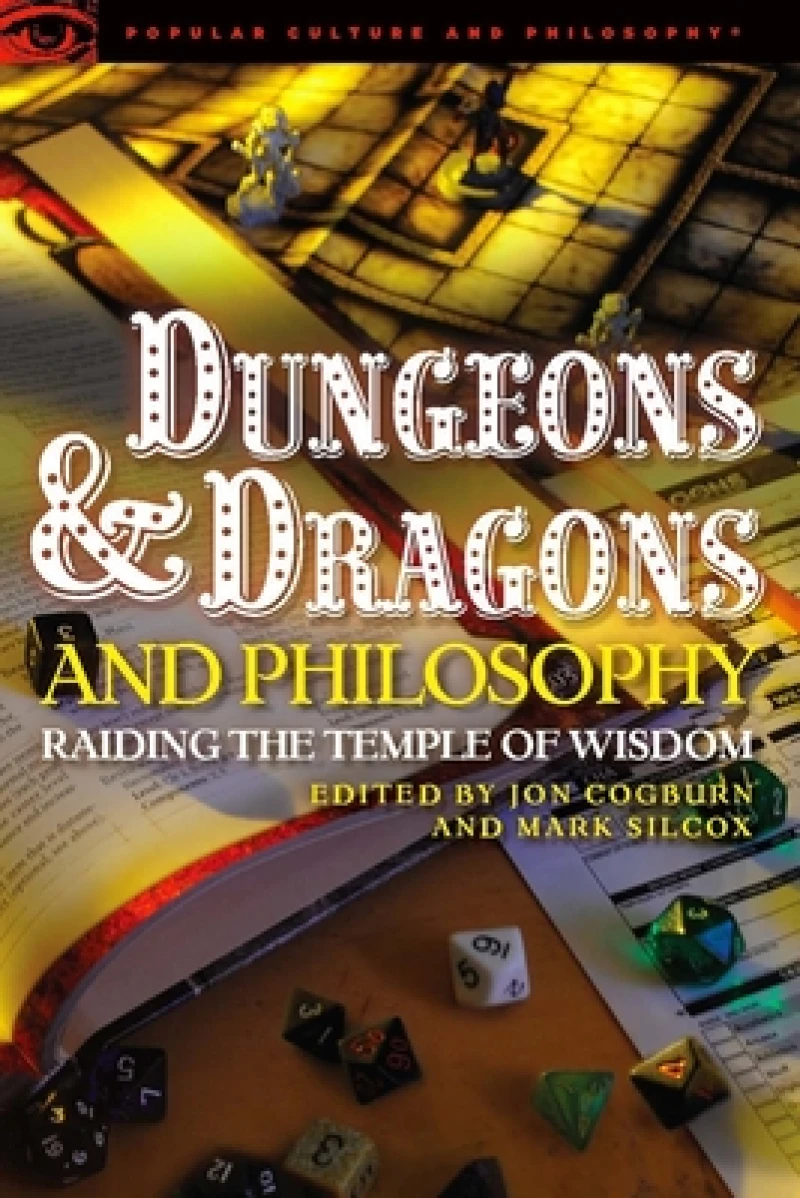
Dungeons and Dragons and Philosophy : Raiding the Temple of Wisdom
Book Details
Format
Paperback / Softback
Book Series
Popular Culture and Philosophy
ISBN-10
0812697960
ISBN-13
9780812697964
Publisher
Open Court Publishing Co ,U.S.
Imprint
Open Court Publishing Co ,U.S.
Country of Manufacture
GB
Country of Publication
GB
Publication Date
Oct 25th, 2012
Print length
288 Pages
Weight
444 grams
Dimensions
22.90 x 15.00 x 1.70 cms
Product Classification:
Computer games / online games: strategy guides
Ksh 4,500.00
Werezi Extended Catalogue
0 in stock
Delivery Location
Delivery fee: Select location
Secure
Quality
Fast
Shows readers that the swift ascent of the tabletop role-playing game Dungeons and Dragons to worldwide popularity event in popular culture since the invention of the motion picture. This title explores what D&D has to teach us about ethics and about how results from philosophical study of morality that can enrich and transform the game itself.
This volume will convince readers that the swift ascent of the tabletop role-playing game Dungeons and Dragons to worldwide popularity in the 1970s and 1980s is “the most exciting event in popular culture since the invention of the motion picture.”
Dungeons and Dragons and Philosophy presents twenty-one chapters by different writers, all D&D aficionados but with starkly different insights and points of view. It will be appreciated by thoughtful fans of the game, including both those in their thirties, forties, and fifties who have rediscovered the pastime they loved as teenagers and the new teenage and college-student D&D players who have grown up with gaming via computer and console games and are now turning to D&D as a richer, fuller gaming experience.
The book is divided into three parts. The first, “Heroic Tier: The Ethical Dungeon-Crawler,” explores what D&D has to teach us about ethics and about how results from the philosophical study of morality can enrich and transform the game itself. Authors argue that it’s okay to play evil characters, criticize the traditional and new systems of moral alignment, and (from the perspective of those who love the game) tackle head-on the recurring worries about whether the game has problems with gender and racial stereotypes. Readers of Dungeons and Dragons and Philosophy will become better players, better thinkers, better dungeon-masters, and better people.
Part II, “Paragon Tier: Planes of Existence,” arouses a new sense of wonder about both the real world and the collaborative world game players create. Authors look at such metaphysical questions as what separates magic from science, how we express the inexpressible through collaborative storytelling, and what the objects that populate Dungeons and Dragons worlds can teach us about the equally fantastic objects that surround us in the real world.
The third part, “Epic Tier: Leveling Up,” is at the crossroads of philosophy and the exciting new field of Game Studies. The writers investigate what makes a game a game, whether D&D players are artists producing works of art, whether D&D (as one of its inventors claimed) could operate entirely without rules, how we can overcome the philosophical divide between game and story, and what types of minds take part in D&D.
Dungeons and Dragons and Philosophy presents twenty-one chapters by different writers, all D&D aficionados but with starkly different insights and points of view. It will be appreciated by thoughtful fans of the game, including both those in their thirties, forties, and fifties who have rediscovered the pastime they loved as teenagers and the new teenage and college-student D&D players who have grown up with gaming via computer and console games and are now turning to D&D as a richer, fuller gaming experience.
The book is divided into three parts. The first, “Heroic Tier: The Ethical Dungeon-Crawler,” explores what D&D has to teach us about ethics and about how results from the philosophical study of morality can enrich and transform the game itself. Authors argue that it’s okay to play evil characters, criticize the traditional and new systems of moral alignment, and (from the perspective of those who love the game) tackle head-on the recurring worries about whether the game has problems with gender and racial stereotypes. Readers of Dungeons and Dragons and Philosophy will become better players, better thinkers, better dungeon-masters, and better people.
Part II, “Paragon Tier: Planes of Existence,” arouses a new sense of wonder about both the real world and the collaborative world game players create. Authors look at such metaphysical questions as what separates magic from science, how we express the inexpressible through collaborative storytelling, and what the objects that populate Dungeons and Dragons worlds can teach us about the equally fantastic objects that surround us in the real world.
The third part, “Epic Tier: Leveling Up,” is at the crossroads of philosophy and the exciting new field of Game Studies. The writers investigate what makes a game a game, whether D&D players are artists producing works of art, whether D&D (as one of its inventors claimed) could operate entirely without rules, how we can overcome the philosophical divide between game and story, and what types of minds take part in D&D.
Get Dungeons and Dragons and Philosophy by at the best price and quality guaranteed only at Werezi Africa's largest book ecommerce store. The book was published by Open Court Publishing Co ,U.S. and it has pages.

