

Dynamic Programming for Economists : From Basic Growth Models to Computational Methods
Book Details
Format
Paperback / softback
ISBN-10
1041303394
ISBN-13
9781041303398
Publisher
Taylor & Francis Ltd
Imprint
Routledge
Country of Manufacture
GB
Country of Publication
GB
Publication Date
Jul 21st, 2026
Print length
252 Pages
Weight
500 grams
KSh 9,350.00
Currently unavailable
0 in stock
Delivery Location
Delivery fee: Select location
Secure
Quality
Fast
This book is a primer in dynamic programming and related numerical techniques. The reader is introduced to formal concepts by an application to a simple deterministic growth model. The concepts can then be easily adapted to deal with Real Business Cycle, New Keynesian models, dynamic CAPM and many other topics in Macroeconomics and Finance.
Dynamic programming is a powerful technique for modeling problems requiring sequential decisions in macroeconomics and finance. The drawback is that its analytic foundations are mathematically demanding, making existing textbooks often too technical for beginners. Moreover, dynamic models most often cannot be solved analytically and, therefore, require the use of numerical methods, whose implementation details can be discouraging. This book is a primer on dynamic programming and related numerical techniques. To assist the reader, the discussion focuses on a specific example: a simple optimal growth model. Once the reader has mastered the most important concepts, these can be easily applied to business cycle models, New Keynesian frameworks, dynamic CAPM, and many other issues. The deterministic growth model is used to introduce dynamic programming in an intuitive way. Technicalities are reduced to a minimum, though not avoided, to provide a solid foundation for the applications (and to stimulate the interested reader toward further readings). After a discussion of cases where a closed-form solution exists, the most commonly used numerical techniques are introduced. The book considers the value function iteration method, detailing the steps needed to build the pertinent numerical routines using Matlab. The policy function iteration method and the endogenous grid approach are also discussed since—while similar in spirit to value function iteration—they offer ways to save computing time for some applications. Then, collocation methods are used to obtain a ‘global’ solution. Again, the reader is guided step-by-step in building the numerical routines. Finally, the book introduces the perturbation method, emphasizing its nature as an approximation of the ‘true’ solution. Moving in small steps, and with the aim of keeping the presentation as readable as possible, the book then focuses on stochastic versions of the growth model. The numerical techniques introduced for the deterministic version are used to deal with (persistent) productivity shocks. In addition, the book presents a method—the parameterized expectation approach—that only mildly suffers from the “curse of dimensionality”.
Get Dynamic Programming for Economists by Gianluca Femminis at the best price and quality guaranteed only at Werezi Africa's largest book ecommerce store. The book was published by Taylor & Francis Ltd and it has 252 pages.
Customers Who Bought This Also Bought
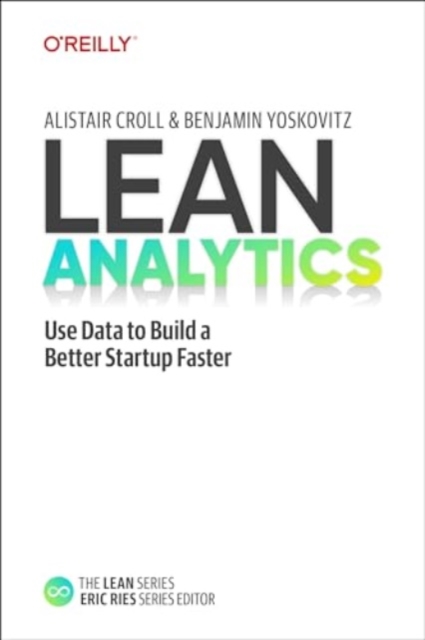
Lean Analytics – Use Data to Build a Better Startup Faster
KSh 5,750.00
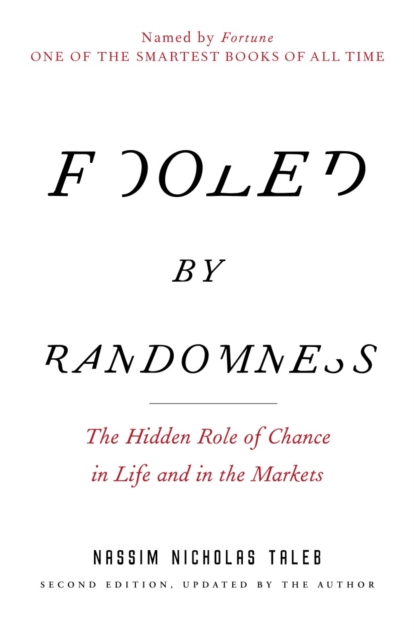
Fooled by Randomness
KSh 3,400.00
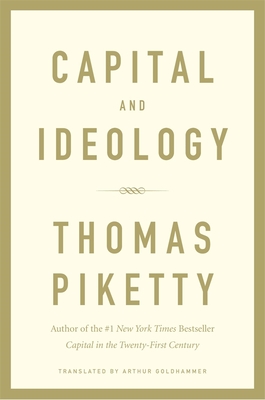
Capital and Ideology
KSh 7,450.00
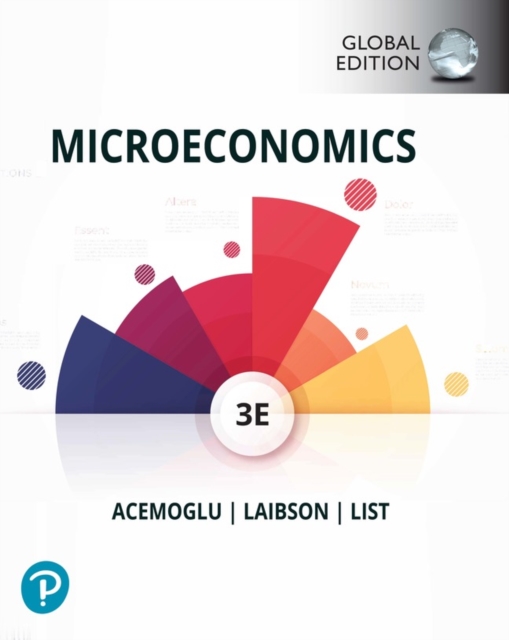
Microeconomics, Global Edition
KSh 15,500.00

The Power of Darkness
KSh 2,000.00

National Accounts Statistics
KSh 16,050.00

Microstructure, Statistical Fluctuations, and Technical Signals in Rational Asset Pricing
KSh 24,650.00
Progress Towards the Sustainable Development Goals in the Arab Region in 2026
KSh 3,700.00
Game Theory
KSh 45,000.00
Essays in Nonlinear Time Series Econometrics
KSh 22,950.00
A Concise Introduction to Econometrics
KSh 18,900.00
A Dynamic Approach to Economic Theory
KSh 33,850.00

