
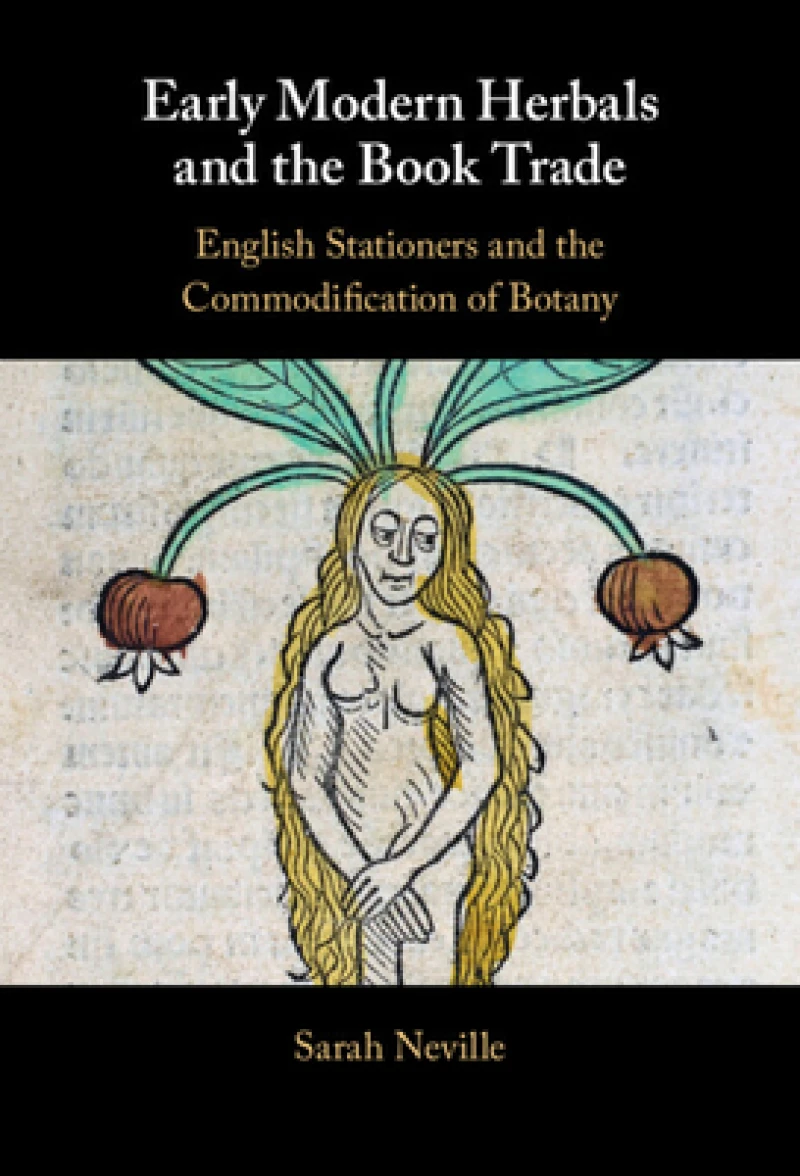
Early Modern Herbals and the Book Trade : English Stationers and the Commodification of Botany
Book Details
Format
Hardback or Cased Book
ISBN-10
1316515990
ISBN-13
9781316515990
Publisher
Cambridge University Press
Imprint
Cambridge University Press
Country of Manufacture
GB
Country of Publication
GB
Publication Date
Jan 6th, 2022
Print length
308 Pages
Weight
590 grams
Dimensions
16.00 x 23.60 x 2.50 cms
Ksh 14,750.00
Manufactured on Demand
0 in stock
Delivery Location
Delivery fee: Select location
Secure
Quality
Fast
Herbals, books describing the characteristics and uses of plants, were extraordinarily popular as a genre in early modern England. Illuminating the herbal's rich material history and its remarkable popularity across the social spectrum, Sarah Neville reveals the close relationship between print culture and the construction of scientific authority.
Between 1525 and 1640, a remarkable phenomenon occurred in the world of print: England saw the production of more than two dozen editions identified by their imprints or by contemporaries as ''herbals''. Sarah Neville explains how this genre grew from a series of tiny anonymous octavos to authoritative folio tomes with thousands of woodcuts, and how these curious works quickly became valuable commodities within a competitive print marketplace. Designed to serve readers across the social spectrum, these rich material artifacts represented both a profitable investment for publishers and an opportunity for authors to establish their credibility as botanists. Highlighting the shifting contingencies and regulations surrounding herbals and English printing during the sixteenth and early seventeenth century, the book argues that the construction of scientific authority in Renaissance England was inextricably tied up with the circumstances governing print. This title is also available as Open Access on Cambridge Core.
Get Early Modern Herbals and the Book Trade by at the best price and quality guaranteed only at Werezi Africa's largest book ecommerce store. The book was published by Cambridge University Press and it has pages.

