
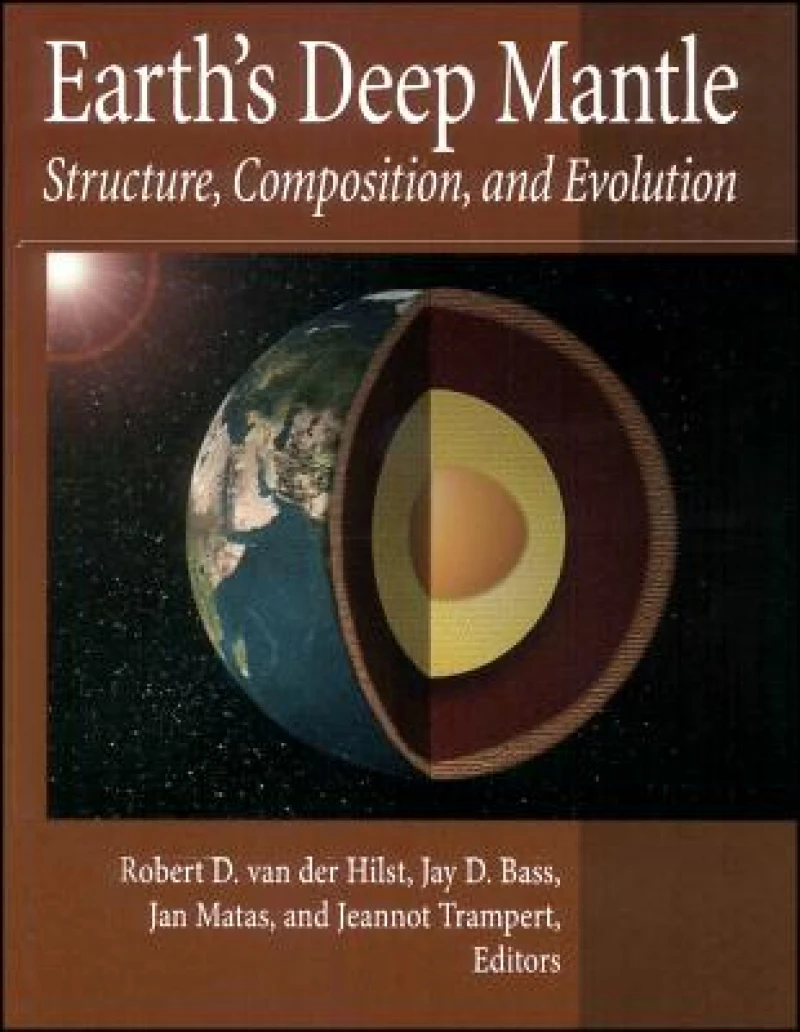
Earth's Deep Mantle : Structure, Composition, and Evolution
Book Details
Format
Hardback or Cased Book
Book Series
Geophysical Monograph Series
ISBN-10
0875904254
ISBN-13
9780875904252
Publisher
John Wiley & Sons Inc
Imprint
American Geophysical Union
Country of Manufacture
US
Country of Publication
GB
Publication Date
Jan 1st, 2005
Print length
334 Pages
Weight
1,134 grams
Dimensions
44.00 x 27.80 x 2.30 cms
Product Classification:
Earth sciences
Ksh 14,200.00
Werezi Extended Catalogue
0 in stock
Delivery Location
Delivery fee: Select location
Secure
Quality
Fast
Published by the American Geophysical Union as part of the Geophysical Monograph Series, Volume 160. Understanding the inner workings of our planet and its relationship to processes closer to the surface remains a frontier in the geosciences. Manmade probes barely reach ˜10 km depth and volcanism rarely brings up samples from deeper than ˜150 km. These distances are dwarfed by Earth's dimensions, and our knowledge of the deeper realms is pieced together from a range of surface observables, meteorite and solar atmosphere analyses, experimental and theoretical mineral physics and rock mechanics, and computer simulations. A major unresolved issue concerns the nature of mantle convection, the slow (1-5 cm/year) solid-state stirring that helps cool the planet by transporting radiogenic and primordial heat from Earth's interior to its surface. Expanding our knowledge here requires input from a range of geoscience disciplines, including seismology, geodynamics, mineral physics, and mantle petrology and chemistry. At the same time, with better data sets and faster computers, seismologists are producing more detailed models of 3-D variations in the propagation speed of different types of seismic waves; new instrumentation and access to state-of-the-art community facilities such as synchrotrons have enabled mineral physicists to measure rock and mineral properties at ever larger pressures and temperatures; new generations of mass spectrometers are allowing geo-chemists to quantify minute concentrations of diagnostic isotopes; and with supercomputers geodynamicists are making increasingly realistic simulations of dynamic processes at conditions not attainable in analogue experiments. But many questions persist. What causes the lateral variations in seismic wavespeed that we can image with mounting accuracy? How reliable are extrapolations of laboratory measurements on simple materials over many orders of magnitude of pressure and temperature? What are the effects of volatiles and minor elements on rock and mineral properties under extreme physical conditions? Can ab initio calculations help us understand material behavior in conditions that are still out of reach of laboratory measurement? What was the early evolution of our planet and to what extent does it still influence present-day dynamics? And how well do we know such first-order issues as the average bulk composition of Earth?
Get Earth's Deep Mantle by at the best price and quality guaranteed only at Werezi Africa's largest book ecommerce store. The book was published by John Wiley & Sons Inc and it has pages.

