
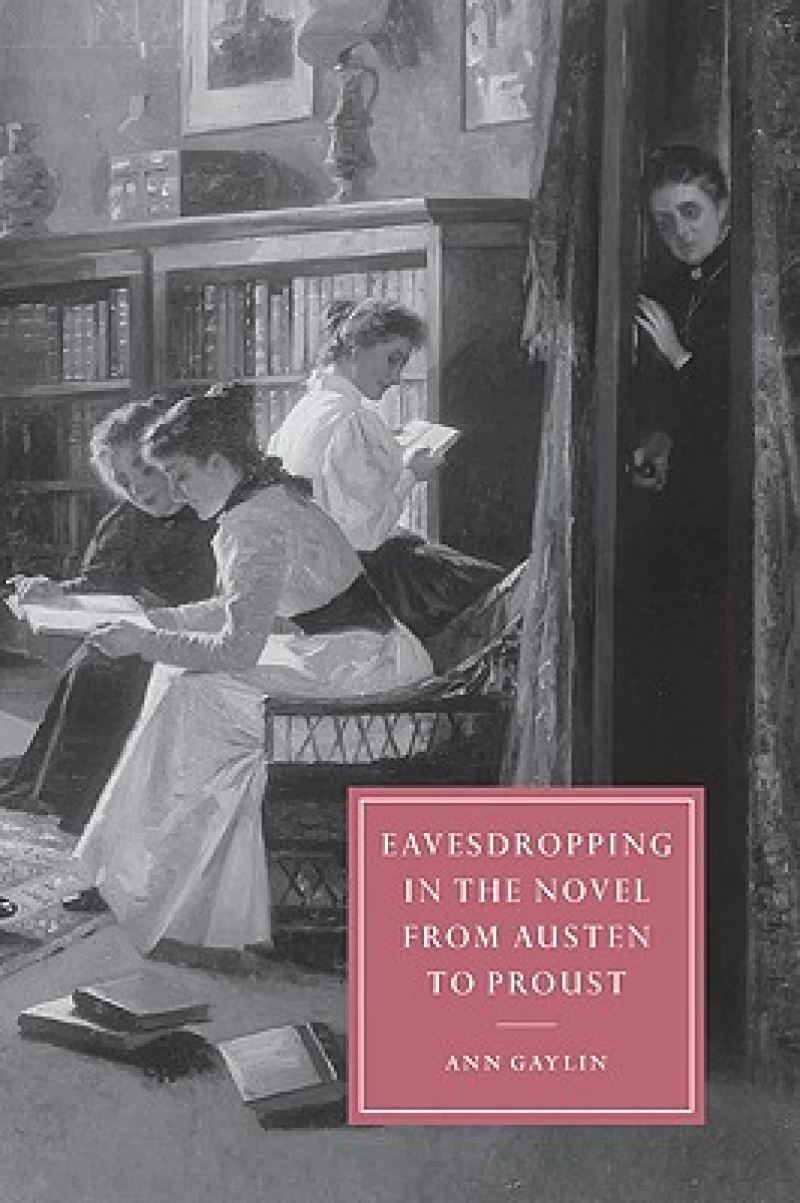
Eavesdropping in the Novel from Austen to Proust
by
Ann Gaylin
Book Details
Format
Paperback / Softback
ISBN-10
0521038901
ISBN-13
9780521038904
Publisher
Cambridge University Press
Imprint
Cambridge University Press
Country of Manufacture
GB
Country of Publication
GB
Publication Date
Aug 16th, 2007
Print length
260 Pages
Weight
406 grams
Dimensions
22.90 x 15.30 x 2.30 cms
Ksh 7,750.00
Manufactured on Demand
0 in stock
Delivery Location
Delivery fee: Select location
Secure
Quality
Fast
This 2003 book investigates human curiosity and its representation in eavesdropping scenes in nineteenth-century English and French novels. Ann Gaylin analyses eavesdropping in Austen, Balzac, Collins, Dickens and Proust. This study will be of interest to scholars of nineteenth-century English and European literature.
Eavesdropping in the Novel from Austen to Proust investigates human curiosity and its representation in eavesdropping scenes in nineteenth-century English and French novels. Ann Gaylin argues that eavesdropping dramatizes a primal human urge to know and offers a paradigm of narrative transmission and reception of information among characters, narrators and readers. Gaylin sheds light on the social and psychological effects of the nineteenth-century rise of information technology and accelerated flow of information, as manifested in the anxieties about - and delight in - displays of private life and its secrets. Analysing eavesdropping in Austen, Balzac, Collins, Dickens and Proust, Gaylin demonstrates the flexibility of the scene to produce narrative complication or resolution; to foreground questions of gender and narrative agency; to place the debates of privacy and publicity within the literal and metaphoric spaces of the nineteenth-century novel. This 2003 study will be of interest to scholars of nineteenth-century English and European literature.
Get Eavesdropping in the Novel from Austen to Proust by at the best price and quality guaranteed only at Werezi Africa's largest book ecommerce store. The book was published by Cambridge University Press and it has pages.

