
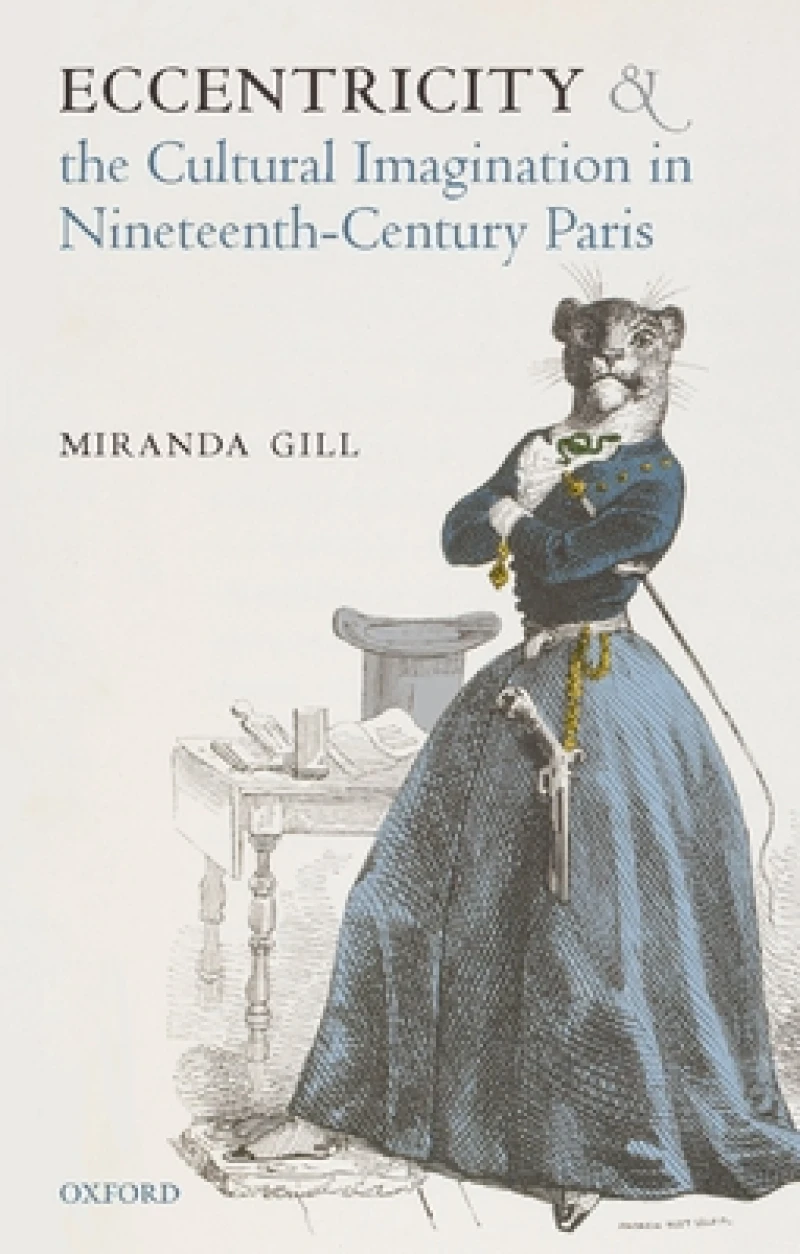
Eccentricity and the Cultural Imagination in Nineteenth-Century Paris
by
Miranda Gill
Book Details
Format
Hardback or Cased Book
ISBN-10
0199543283
ISBN-13
9780199543281
Publisher
Oxford University Press
Imprint
Oxford University Press
Country of Manufacture
GB
Country of Publication
GB
Publication Date
Jan 15th, 2009
Print length
352 Pages
Weight
566 grams
Dimensions
14.80 x 22.40 x 2.70 cms
Product Classification:
European historyModern history to 20th century: c 1700 to c 1900Social & cultural history
Ksh 14,000.00
Manufactured on Demand
0 in stock
Delivery Location
Delivery fee: Select location
Secure
Quality
Fast
What did it mean to call someone 'eccentric' in 19th-century Paris? Drawing on etiquette manuals, fashion magazines, newspapers, novels, and psychiatric treatises, this interdisciplinary study illuminates figures of Parisian modernity, from the courtesan and Bohemian to the female dandy and circus freak.
What did it mean to call someone ''eccentric'' in nineteenth-century Paris? And why did breaking with convention arouse such ambivalent responses in middle-class readers, writers, and spectators? From high society to Bohemia and the demi-monde to the madhouse, the scandal of nonconformism provoked anxiety, disgust, and often secret yearning. In a culture preoccupied by the need for order yet simultaneously drawn to the values of freedom and innovation, eccentricity continually tested the boundaries of bourgeois identity, ultimately becoming inseparable from it. This interdisciplinary study charts shifting French perceptions of the anomalous and bizarre from the 1830s to the fin de siècle, focusing on three key issues. First, during the July Monarchy eccentricity was linked to fashion, dandyism, and commodity culture; to many Parisians it epitomized the dangerous seductions of modernity and the growing prestige of the courtesan. Second, in the aftermath of the 1848 Revolution eccentricity was associated with the Bohemian artists and performers who inhabited ''the unknown Paris'', a zone of social exclusion which middle-class spectators found both fascinating and repugnant. Finally, the popularization of medical theories of national decline in the latter part of the century led to decreasing tolerance for individual difference, and eccentricity was interpreted as a symptom of hidden insanity and deformity. Drawing on a wide range of sources, including etiquette manuals, fashion magazines, newspapers, novels, and psychiatric treatises, the study highlights the central role of gender in shaping perceptions of eccentricity. It provides new readings of works by major French writers and illuminates both well-known and neglected figures of Parisian modernity, from the courtesan and Bohemian to the female dandy and circus freak.
Get Eccentricity and the Cultural Imagination in Nineteenth-Century Paris by at the best price and quality guaranteed only at Werezi Africa's largest book ecommerce store. The book was published by Oxford University Press and it has pages.

