Search

Categories

    • categories-img Jacket, Women
    • categories-img Woolend Jacket
    • categories-img Western denim
    • categories-img Mini Dresss
    • categories-img Jacket, Women
    • categories-img Woolend Jacket
    • categories-img Western denim
    • categories-img Mini Dresss
    • categories-img Jacket, Women
    • categories-img Woolend Jacket
    • categories-img Western denim
    • categories-img Mini Dresss
    • categories-img Jacket, Women
    • categories-img Woolend Jacket
    • categories-img Western denim
    • categories-img Mini Dresss
    • categories-img Jacket, Women
    • categories-img Woolend Jacket
    • categories-img Western denim
    • categories-img Mini Dresss

Filter By Price

$
-
$

Dietary Needs

Top Rated Product

product-img product-img

Modern Chair

$165.00
product-img product-img

Plastic Chair

$165.00
product-img product-img

Design Rooms

$165.00

Brands

  • Wooden
  • Chair
  • Modern
  • Fabric
  • Shoulder
  • Winter
  • Accessories
  • Dress

Welcome and thank you for visiting us. For any query call us on 0799 626 359 or Email [email protected]

Offcanvas Menu Open

Shopping Cart

Africa largest book store

Sub Total:

Search for any Title

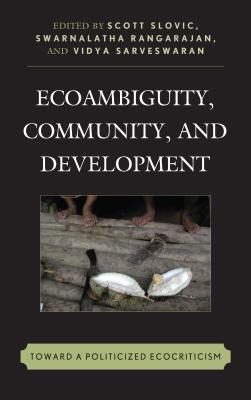
Ecoambiguity, Community, and Development : Toward a Politicized Ecocriticism

By: (Edited by) Scott Slovic , (Edited by) Swarnalatha Rangarajan , (Edited by) Vidya Sarveswaran

Manufactured on Demand
Delivery in 35 days

Ksh 10,900.00

Format: Paperback / Softback

ISBN-10: 1498525369

ISBN-13: 9781498525367

Series: Ecocritical Theory and Practice

Publisher: Bloomsbury Publishing Plc

Imprint: Lexington Books

Country of Manufacture: GB

Country of Publication: GB

Publication Date: Oct 16th, 2015

Print length: 214 Pages

Weight: 314 grams

Dimensions (height x width x thickness): 22.90 x 15.10 x 1.90 cms

Choose your Location

Shipping & Delivery

Door Delivery

Delivery fee

Delivery in 35 days

  • Description

  • Reviews

Ecoambiguity, Community, and Development takes stock of cultural and environmental contexts in many different regions of the world by exploring literature and film. Artists and scholars working in the social ecology, environmental justice, and postcolonial arenas have long recognized that as soon as we tug on a thread of “ecodegradation,” we generally find it linked to some form of cultural oppression. The reverse is also often true. In the spirit of postcolonial ecocriticism, the studies collected by Scott Slovic, R. Swarnalatha, and Vidya Sarveswaran emphasize the impossibility of disentangling environmental and cultural problems. While not all the authors explicitly invoke Karen Thornber’s term “ecoambiguity” or the concepts and terminology of postcolonial ecocriticism, their articles frequently bring to light various ironies. For example, the fact that Ukrainian environmental experience in the twenty-first century is defined by one of the world’s most infamous industrial disasters, the Chernobyl nuclear accident of 1986, yet Ukrainian culture, like many throughout the world, actually cherishes a profound, even animistic, attachment to the wonders of nature. The repetition of this and other paradoxes in human cultural responses to the more-than-human world reinforces our sense of the congruities and idiosyncrasies of human culture. Every human culture, regardless of its condition of economic and industrial development, has produced its own version of “environmental literature and art”—but the nuances of this work reflect that culture’s precise social and geophysical circumstances. In various ways, these stories of community and development from across the planet converge and diverge, as told and explained by distinguished scholars, many of whom come from the cultures represented in these articles.

Get Ecoambiguity, Community, and Development by at the best price and quality guranteed only at Werezi Africa largest book ecommerce store. The book was published by Bloomsbury Publishing Plc and it has pages. Enjoy Shopping Best Offers & Deals on books Online from Werezi - Receive at your doorstep - Fast Delivery - Secure mode of Payment

Customer Reviews

Based on 0 reviews

Mind, Body, & Spirit