
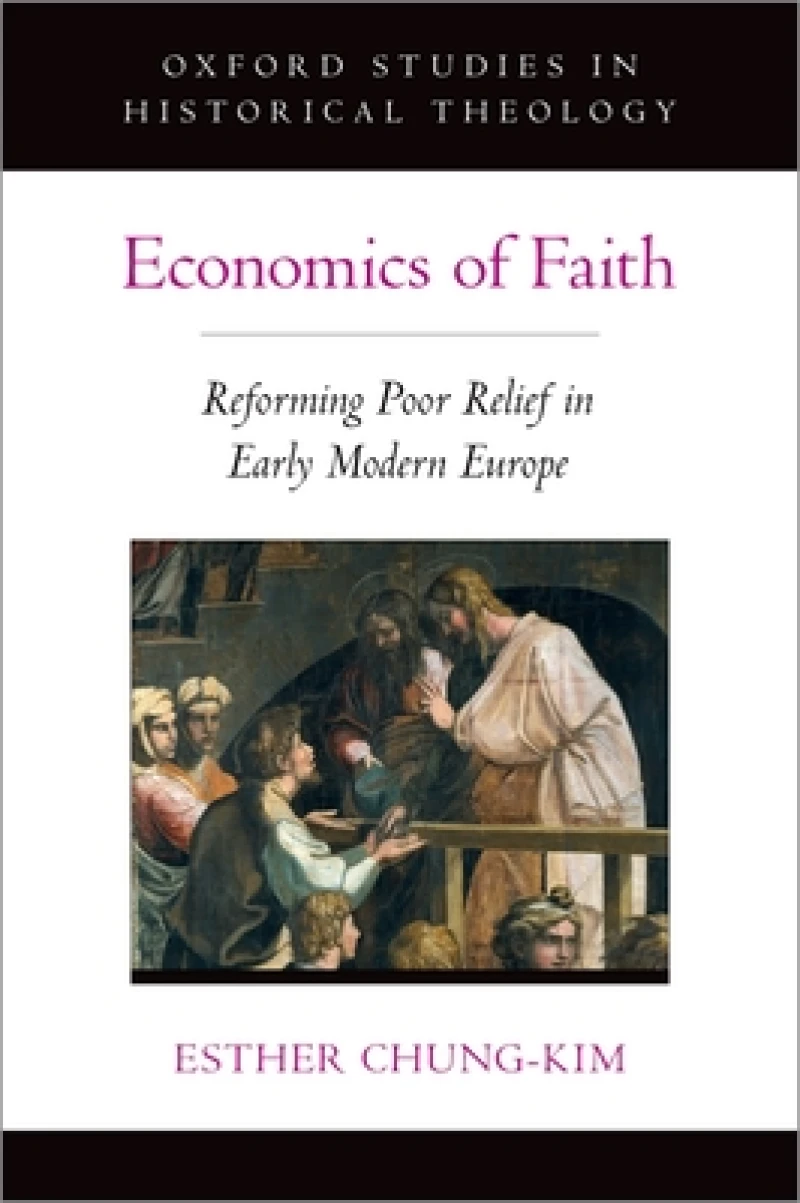
Economics of Faith : Reforming Poverty in Early Modern Europe
Book Details
Format
Hardback or Cased Book
Book Series
Oxford Studies in Historical Theology
ISBN-10
0197537731
ISBN-13
9780197537732
Publisher
Oxford University Press Inc
Imprint
Oxford University Press Inc
Country of Manufacture
US
Country of Publication
GB
Publication Date
Sep 24th, 2021
Print length
272 Pages
Weight
530 grams
Dimensions
16.30 x 24.30 x 2.60 cms
Product Classification:
Early modern history: c 1450/1500 to c 1700Church historyPoverty & unemployment
Ksh 19,850.00
Werezi Extended Catalogue
0 in stock
Delivery Location
Delivery fee: Select location
Secure
Quality
Fast
Economics of Faith addresses the multiple ways that leaders of the European Reformation sought to inspire new attitudes toward poverty and wealth, to reform the institutions of poor relief, and to create new organizations for aiding religious refugees. Guided by biblical ideals and values, religious reformers became some of the major contributors in the effort to address poverty, one of the most vexing social problem in early modern Europe. By examining the connections between religion, politics, and community, it highlights the crucial role that religion had in the promotion of social responsibility and the development of social welfare systems.
Economics of Faith examines the role of religious leaders in the development of poor relief institutions in early modern Europe. As preachers, policy makers, advocates, and community leaders, these reformers offered a new interpretation of salvation and good works that provided the religious foundation for poor relief reform. Although poverty was once associated with the religious image of piety, reformers no longer saw it as a spiritual virtue. Rather they considered social welfare reform to be an integral part of religious reform and worked to modify existing poor relief institutions or to set up new ones. Population growth, economic crises, and migration in early modern Europe caused poverty and begging to be an ever-increasing concern, and religious leaders encouraged the development and expansion of poor relief institutions. This new cadre of reformers served as catalysts, organizers, stabilizers, and consolidators of strategies to alleviate poverty, the most glaring social problem of early modern society. Although different roles emerged from varying relationships and negotiations with local political authorities and city councils, reform-minded ministers and lay leaders shaped a variety of institutions to address the problem of poverty and to promote social and communal responsibility. As religious options multiplied within Christianity, one''s understanding of community determined the boundaries, albeit contested and sometimes fluid, of responsible poor relief. This goal of communal care would be especially relevant for religious refugees who as foreigners and strangers became responsible for caring for their own group.
Get Economics of Faith by at the best price and quality guaranteed only at Werezi Africa's largest book ecommerce store. The book was published by Oxford University Press Inc and it has pages.

