
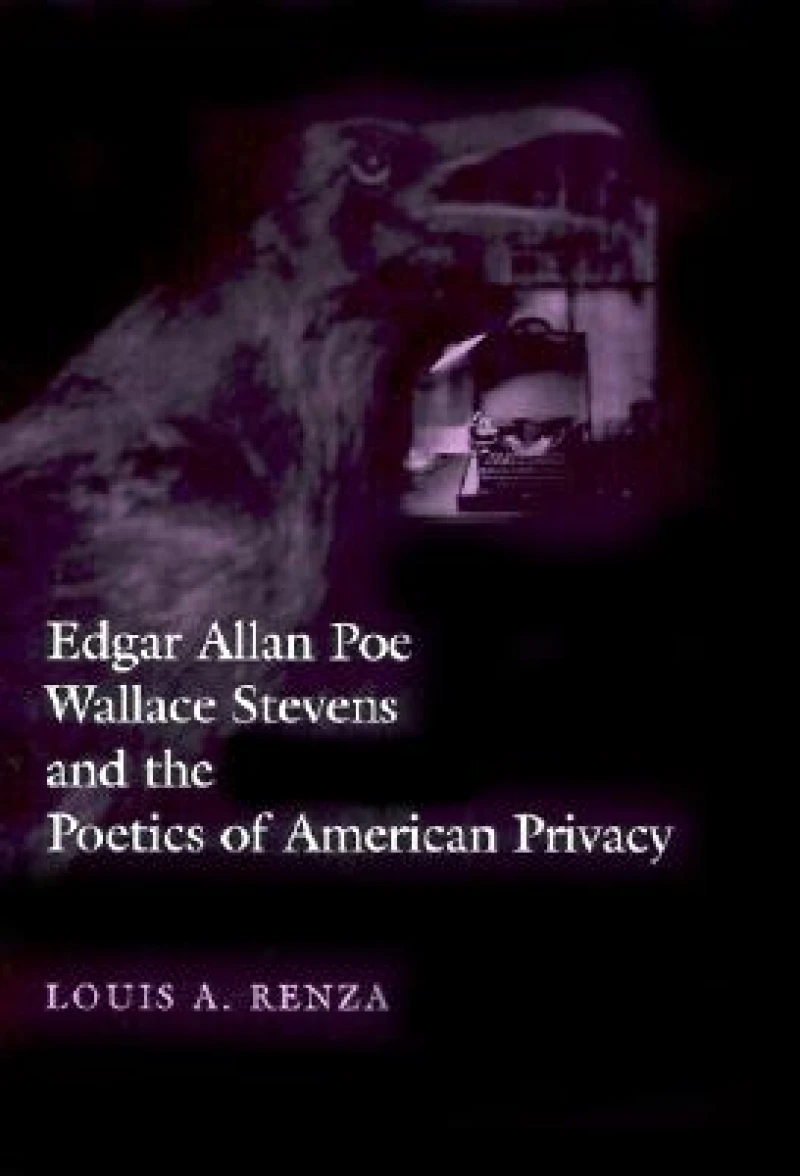
Edgar Allan Poe, Wallace Stevens, and the Poetics of American Privacy
Book Details
Format
Hardback or Cased Book
Book Series
Horizons in Theory and American Culture
ISBN-10
0807127558
ISBN-13
9780807127551
Publisher
Louisiana State University Press
Imprint
Louisiana State University Press
Country of Manufacture
US
Country of Publication
GB
Publication Date
Apr 1st, 2002
Print length
277 Pages
Weight
630 grams
Dimensions
23.70 x 16.30 x 3.00 cms
Ksh 7,550.00
Temporarily out of stock, due soon
0 in stock
Delivery Location
Delivery fee: Select location
Secure
Quality
Fast
In his ingeniously argued new study, Louis Renza extends the idea of privacy beyond the received wisdom of its popular legal and psychological conceptions and, iconoclastically, beyond its conception in postmodern literary theory to show that the public-private paradigm has import for American literary texts past and present.
Throughout the history of the United States, a commitment to both democratic political ideals and to capitalist realities has made privacy a persistently controversial issue. Only rarely, however, has privacy attracted the attention of American literary criticism. In his ingeniously argued new study, Louis A. Renza extends the idea of privacy beyond the received wisdom of its popular legal and psychological conceptions and, iconoclastically, beyond its conception in postmodern literary theory to show that the public-private paradigm has import for American literary texts past and present.
It is a truism of cultural studies that the interior space of imagination is socially constructed and thus that the private is ineluctably political. But Renza shows, through a brilliantly original analysis of works by Edgar Allan Poe and Wallace Stevens, that as an effect of reading and writing, a real or ""radical"" privacy continually resists appropriation. In admirably close readings of Poe's tales, his long essay Eureka, and Stevens's Harmonium poems, Renza demonstrates that both writers ground the concept of privacy in the possibility of multiple interpretations of their texts. Neither Poe nor Stevens resists meaning or sense, but by thematically engaging in their work the inescapable public/private dichotomy of artistic creation, they create a highly personal idiom that, like Poe's ""purloined letter,"" allows them to ""hide in plain sight"" and in that way to finesse public constructions of meaning. Thus, surprisingly, privacy can always be conceived as something more than what current social-cultural codes urge us to believe.
The poetics Renza compellingly elucidates does not deny the insights of current theory but offers a refreshing alternative that allows for the ""radical"" autonomy of authorship without resorting to vague elitist claims of individual genius. His thoughtful readings are a major contribution to traditional Poe and Stevens scholarship, and his challenging thesis will provoke new investigations into the privacy issue in American literature as a whole.
It is a truism of cultural studies that the interior space of imagination is socially constructed and thus that the private is ineluctably political. But Renza shows, through a brilliantly original analysis of works by Edgar Allan Poe and Wallace Stevens, that as an effect of reading and writing, a real or ""radical"" privacy continually resists appropriation. In admirably close readings of Poe's tales, his long essay Eureka, and Stevens's Harmonium poems, Renza demonstrates that both writers ground the concept of privacy in the possibility of multiple interpretations of their texts. Neither Poe nor Stevens resists meaning or sense, but by thematically engaging in their work the inescapable public/private dichotomy of artistic creation, they create a highly personal idiom that, like Poe's ""purloined letter,"" allows them to ""hide in plain sight"" and in that way to finesse public constructions of meaning. Thus, surprisingly, privacy can always be conceived as something more than what current social-cultural codes urge us to believe.
The poetics Renza compellingly elucidates does not deny the insights of current theory but offers a refreshing alternative that allows for the ""radical"" autonomy of authorship without resorting to vague elitist claims of individual genius. His thoughtful readings are a major contribution to traditional Poe and Stevens scholarship, and his challenging thesis will provoke new investigations into the privacy issue in American literature as a whole.
Get Edgar Allan Poe, Wallace Stevens, and the Poetics of American Privacy by at the best price and quality guaranteed only at Werezi Africa's largest book ecommerce store. The book was published by Louisiana State University Press and it has pages.

