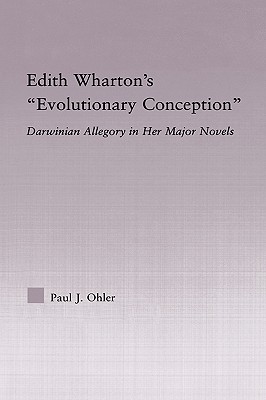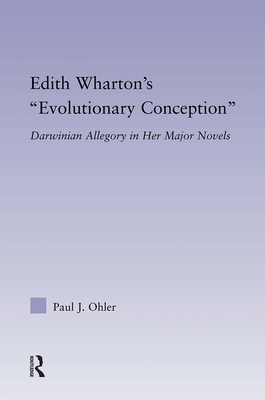
Edith Wharton''s Evolutionary Conception : Darwinian Allegory in the Major Novels
Book Details
Format
Paperback / softback
Book Series
Studies in Major Literary Authors
ISBN-10
0415880068
ISBN-13
9780415880060
Publisher
Taylor & Francis Ltd
Imprint
Routledge
Country of Manufacture
GB
Country of Publication
GB
Publication Date
Jan 26th, 2010
Print length
214 Pages
Weight
430 grams
Product Classification:
Biography, Literature and Literary studiesLiterature & literary studies
KSh 7,250.00
Currently unavailable
0 in stock
Delivery Location
Delivery fee: Select location
Secure
Quality
Fast
Edith Wharton''s "Evolutionary Conception" investigates Edith Wharton''s engagement with evolutionary theory in The House of Mirth, The Custom of the Country, and The Age of Innocence. The book also examines The Descent of Man, The Fruit of the Tree, Twilight Sleep, and The Children to show that Wharton''s interest in biology and sociology was central to the thematic and formal elements of her fiction. Ohler argues that Wharton depicts the complex interrelations of New York''s gentry and socioeconomic elite from a perspective informed by the main concerns of evolutionary thought. Concentrating on her use of ideas she encountered in works by Darwin, Herbert Spencer, and T.H. Huxley, his readings of Wharton''s major novels demonstrate the literary configuration of scientific ideas she drew on and, in some cases, disputed. R.W.B. Lewis writes that Wharton ''was passionately addicted to scientific study'': this book explores the ramifications of this fact for her fictional sociobiology.
The book explores the ways in which Edith Wharton''s scientific interests shaped her analysis of class, affected the formal properties of her fiction, and resulted in her negative valuation of social Darwinism.
The book explores the ways in which Edith Wharton''s scientific interests shaped her analysis of class, affected the formal properties of her fiction, and resulted in her negative valuation of social Darwinism.
Get Edith Wharton''s Evolutionary Conception by Paul J. Ohler at the best price and quality guaranteed only at Werezi Africa's largest book ecommerce store. The book was published by Taylor & Francis Ltd and it has 214 pages.
Customers Who Bought This Also Bought
Crime and Punishment
KSh 1,700.00

The Stories of Kulang Toat
KSh 3,600.00
Middlemarch
KSh 1,900.00

Tolstoy Together
KSh 2,900.00
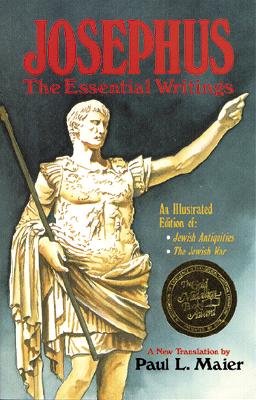
Josephus: The Essential Writings
KSh 3,600.00

Animal Farm
KSh 1,450.00

Freedom, Only Freedom
KSh 3,850.00
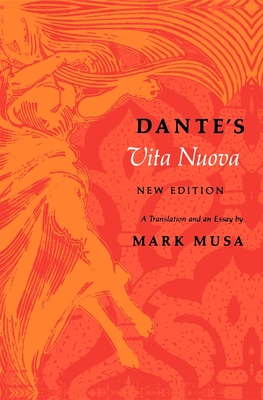
Dante''s Vita Nuova, New Edition
KSh 3,050.00

Frankenstein
KSh 3,050.00
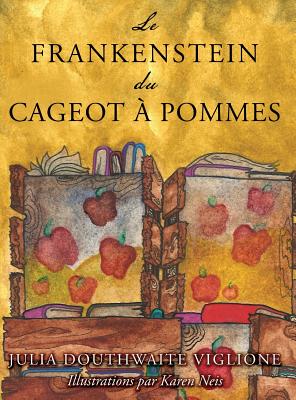
Le Frankenstein du cageot a pommes
KSh 4,700.00
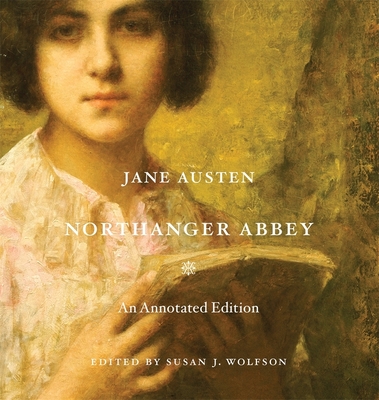
Northanger Abbey – An Annotated Edition
KSh 6,150.00

Where Europe Begins – Stories
KSh 2,350.00