
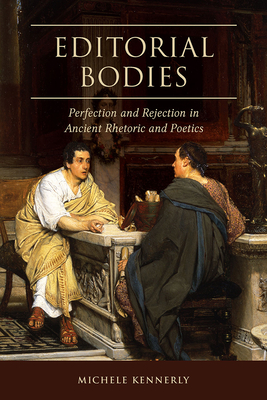
Editorial Bodies : Perfection and Rejection in Ancient Rhetoric and Poetics
Book Details
Format
Paperback / softback
Book Series
Studies in Rhetoric/Communication
ISBN-10
1611179106
ISBN-13
9781611179101
Publisher
University of South Carolina Press
Imprint
University of South Carolina Press
Country of Manufacture
US
Country of Publication
GB
Publication Date
Sep 28th, 2018
Print length
248 Pages
Weight
358 grams
Dimensions
15.40 x 22.70 x 1.60 cms
Product Classification:
Semantics, discourse analysis, etcSemantics, discourse analysis, stylistics
KSh 3,250.00
Currently unavailable
0 in stock
Delivery Location
Delivery fee: Select location
Secure
Quality
Fast
Though typically considered oral cultures, ancient Greece and Rome also boasted textual cultures, enabled by efforts to perfect, publish, and preserve both new and old writing. In Editorial Bodies, Michele Kennerly argues that such efforts were commonly articulated through the extended metaphor of the body.
Reveals the emergence and endurance of vocabularies, habits, and preferences that sustained ancient textual cultures.
Though typically considered oral cultures, ancient Greece and Rome also boasted textual cultures, enabled by efforts to perfect, publish, and preserve both new and old writing. In Editorial Bodies, Michele Kennerly argues that such efforts were commonly articulated through the extended metaphor of the body. They were also supported by people upon whom writers relied for various kinds of assistance and necessitated by lively debates about what sort of words should be put out and remain in public.
Spanning ancient Athenian, Alexandrian, and Roman textual cultures, Kennerly shows that orators and poets attributed public value to their seemingly inward-turning compositional labors. After establishing certain key terms of writing and editing from classical Athens through late republican Rome, Kennerly focuses on works from specific orators and poets writing in Latin in the first century B.C.E. and the first century C.E.: Cicero, Horace, Ovid, Quintilian, Tacitus, and Pliny the Younger. The result is a rich and original history of rhetoric that reveals the emergence and endurance of vocabularies, habits, and preferences that sustained ancient textual cultures. This major contribution to rhetorical studies unsettles longstanding assumptions about ancient rhetoric and poetics by means of generative readings of both well-known and understudied texts.
Though typically considered oral cultures, ancient Greece and Rome also boasted textual cultures, enabled by efforts to perfect, publish, and preserve both new and old writing. In Editorial Bodies, Michele Kennerly argues that such efforts were commonly articulated through the extended metaphor of the body. They were also supported by people upon whom writers relied for various kinds of assistance and necessitated by lively debates about what sort of words should be put out and remain in public.
Spanning ancient Athenian, Alexandrian, and Roman textual cultures, Kennerly shows that orators and poets attributed public value to their seemingly inward-turning compositional labors. After establishing certain key terms of writing and editing from classical Athens through late republican Rome, Kennerly focuses on works from specific orators and poets writing in Latin in the first century B.C.E. and the first century C.E.: Cicero, Horace, Ovid, Quintilian, Tacitus, and Pliny the Younger. The result is a rich and original history of rhetoric that reveals the emergence and endurance of vocabularies, habits, and preferences that sustained ancient textual cultures. This major contribution to rhetorical studies unsettles longstanding assumptions about ancient rhetoric and poetics by means of generative readings of both well-known and understudied texts.
Get Editorial Bodies by Michele Kennerly at the best price and quality guaranteed only at Werezi Africa's largest book ecommerce store. The book was published by University of South Carolina Press and it has 248 pages.
Customers Who Bought This Also Bought

On Great Writing (On the Sublime)
KSh 2,000.00

Look Again: Empire
KSh 1,800.00
The Art of Rhetoric
KSh 2,000.00
The Role of the Reader
KSh 3,400.00

Six Walks in the Fictional Woods
KSh 4,850.00
The Language of Literature
KSh 3,450.00
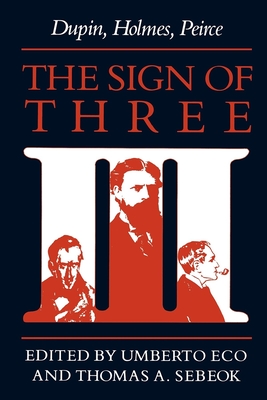
The Sign of Three
KSh 3,250.00
The Limits of Interpretation
KSh 12,200.00

Die philippischen Reden
KSh 22,250.00
Walker Percy''s Search for Community
KSh 5,950.00
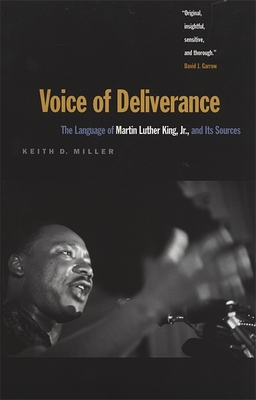
Voice of Deliverance
KSh 6,450.00

Community and Critique
KSh 10,800.00


