
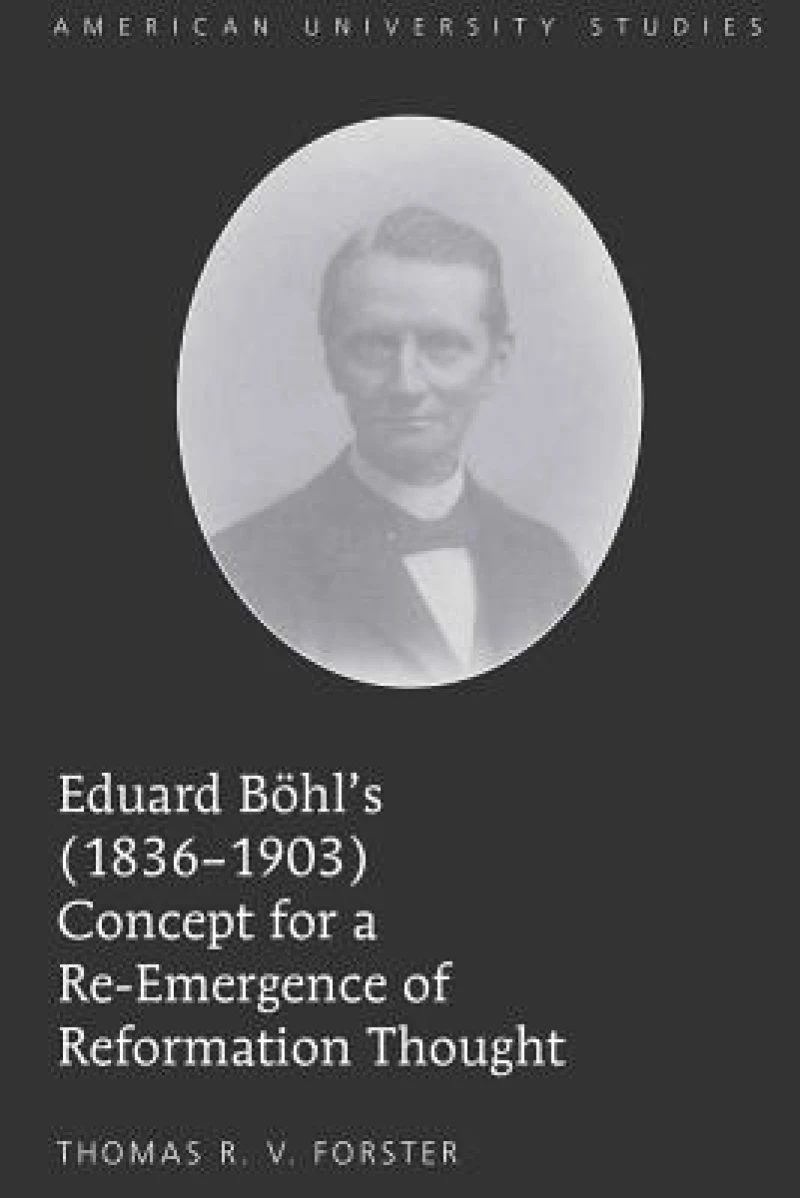
Eduard Boehl's (1836-1903) Concept for a Re-Emergence of Reformation Thought
New
Book Details
Format
Hardback or Cased Book
Book Series
American University Studies
ISBN-10
1433103540
ISBN-13
9781433103544
Edition
New
Publisher
Peter Lang Publishing Inc
Imprint
Peter Lang Publishing Inc
Country of Manufacture
US
Country of Publication
GB
Publication Date
Jul 1st, 2009
Print length
279 Pages
Weight
532 grams
Dimensions
15.70 x 23.10 x 2.20 cms
Product Classification:
HistoryReligious issues & debatesChurch history
Ksh 14,000.00
Manufactured on Demand
0 in stock
Delivery Location
Delivery fee: Select location
Secure
Quality
Fast
Nineteenth-century continental theology is usually associated with the classic liberal Protestantism of Schleiermacher and Ritschl. On the other side of the theological divide there was the Dutch Neo-Calvinist school, a sharp reaction to liberalism. Yet the theological realm of that era also included the Kohlbrugge school, which founded its theological method upon the "Older Testament" and re-read and applied the documents of the Reformation for its time. The most important representative of this school is Eduard Boehl (1836-1903), who advocated a return to Reformed doctrine and church order and a strong Christological reading of the Old Testament. He also rejected historical criticism, for which he was subjected to censure. Moving into the field of systematics, Boehl suggested a new reading of "the image of God". His peculiar understanding of the imago Dei was also his biggest contribution to theological anthropology; this in turn influenced his views on Christology and salvation. Although Boehl saw himself as a Reformed theologian, he would cross swords with those who claimed the same for themselves. Boehl especially valued the teachings of Martin Luther, whom he held as a better exegete than the Genevan Reformer. Boehl's theology is best captured as Reformation theology within the context of the Kohlbrugge school. Although the names of Luther and Calvin are well known in church history, and to a lesser degree, so is Kohlbrugge's, Boehl's is not. This historico-theological account of Boehl's life and work sheds some rare but much-needed shafts of light on a theologian who has wrongfully fallen into oblivion.
Nineteenth-century continental theology is usually associated with the classic liberal Protestantism of Schleiermacher and Ritschl. On the other side of the theological divide there was the Dutch Neo-Calvinist school, a sharp reaction to liberalism. Yet the theological realm of that era also included the Kohlbrügge school, which founded its theological method upon the «Older Testament» and re-read and applied the documents of the Reformation for its time. The most important representative of this school is Eduard Böhl (1836-1903), who advocated a return to Reformed doctrine and church order and a strong Christological reading of the Old Testament. He also rejected historical criticism, for which he was subjected to censure. Moving into the field of systematics, Böhl suggested a new reading of «the image of God». His peculiar understanding of the imago Dei was also his biggest contribution to theological anthropology; this in turn influenced his views on Christology and salvation. Although Böhl saw himself as a Reformed theologian, he would cross swords with those who claimed the same for themselves. Böhl especially valued the teachings of Martin Luther, whom he held as a better exegete than the Genevan Reformer. Böhl’s theology is best captured as Reformation theology within the context of the Kohlbrügge school. Although the names of Luther and Calvin are well known in church history, and to a lesser degree, so is Kohlbrügge’s, Böhl’s is not. This historico-theological account of Böhl’s life and work sheds some rare but much-needed shafts of light on a theologian who has wrongfully fallen into oblivion.
Get Eduard Boehl's (1836-1903) Concept for a Re-Emergence of Reformation Thought by at the best price and quality guaranteed only at Werezi Africa's largest book ecommerce store. The book was published by Peter Lang Publishing Inc and it has pages.

