
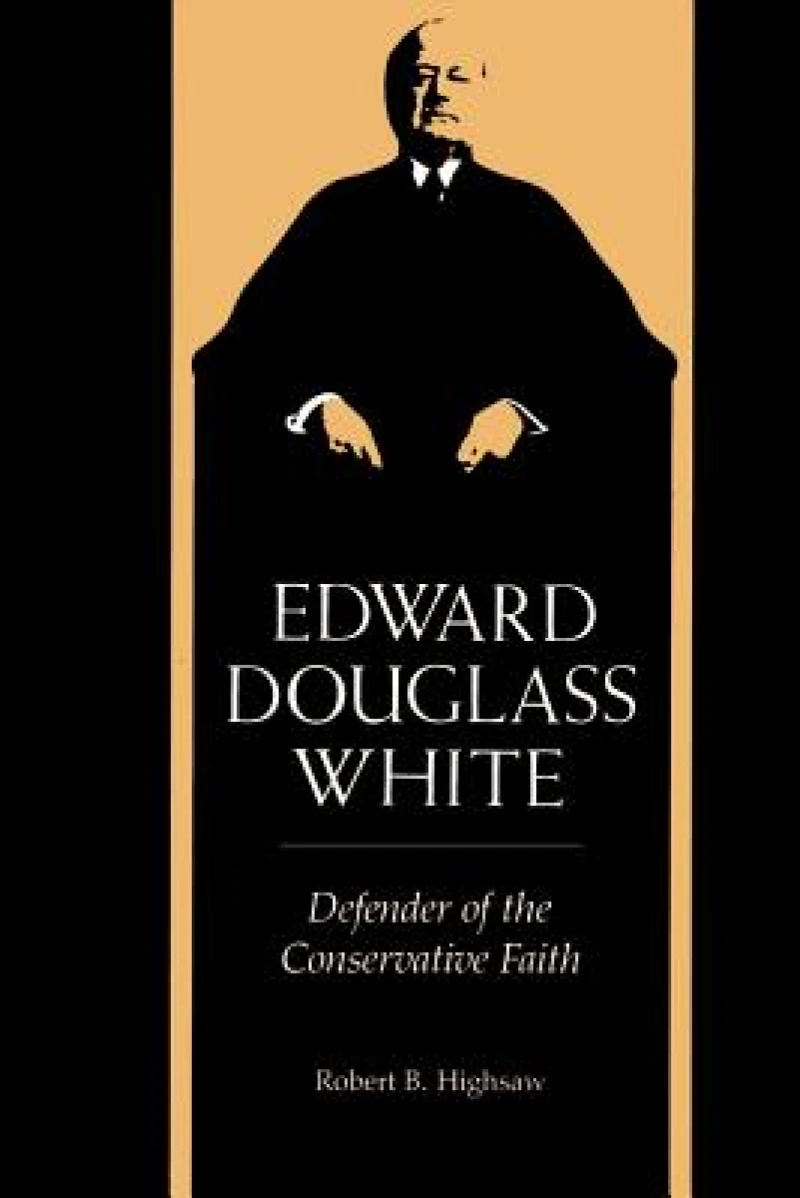
Edward Douglass White : Defender of the Conservative Faith
Book Details
Format
Paperback / Softback
Book Series
Southern Biography Series
ISBN-10
0807124281
ISBN-13
9780807124284
Publisher
Louisiana State University Press
Imprint
Louisiana State University Press
Country of Manufacture
US
Country of Publication
GB
Publication Date
Mar 1st, 1999
Print length
277 Pages
Weight
333 grams
Dimensions
22.80 x 15.40 x 1.60 cms
Ksh 4,650.00
Werezi Extended Catalogue
0 in stock
Delivery Location
Delivery fee: Select location
Secure
Quality
Fast
Elite, personable, and persuasive, Edward Douglass White served on the United States Supreme Court for twenty-seven years. During his tenure, he significantly influenced American public law. Robert Highsaw' s extensive judicial biography stresses White's constitutional thought and philosophy.
Elite, personable, and persuasive, Edward Douglass White, a ''large and bearish man from Louisiana,'' served on the United States Supreme Court for twenty-seven years. During his tenure, first as an associate justice (1894-1910) and then as the ninth chief justice (1910-1921), White significantly influenced American public law.
Robert Highsaw' s extensive judicial biography stresses White's constitutional thought and philosophy. Several chapters discuss his early years in Louisiana, his training in Jesuit schools there and at Georgetown University, and his early legal career in New Orleans. The emphasis, however, remains on White's theories and applications of the judicial and constitutional processes. Edward Douglass White ""looked upon the American constitutional system as a model for a well-ordered society that must be preserved.""
White's concept of a federal system in which the national and state governments each operated within a defined sphere of powers underlay many of his opinions. White considered farm issues that developed after the closing of the western frontier, economic issues precipitated by a growing laboring class, and tense political issues of civil liberties that emerged during World War I. He played an important part in developing administrative law and was, perhaps, most responsible for strengthening dual federalism of commerce and taxing powers. His pragmatism, evidenced in the Insular cases where his doctrine of ""incorporated"" and ""unincorporated"" territories, synthesized American constitutional law with the political reality of American imperialism.
White was a conservative, but unlike the conservative justices of the 1920s and 1930s whose intransigence produced the judicial revolution of 1937, he saw that injury to the Constitution might result from its consistent use as a barrier to social progress. Significantly, Edward Douglass White demonstrates that ""the judicial revolution of 1937 and the ensuing decades of the Court's history are meaningless unless we know what happened fifty or so years earlier.
Robert Highsaw' s extensive judicial biography stresses White's constitutional thought and philosophy. Several chapters discuss his early years in Louisiana, his training in Jesuit schools there and at Georgetown University, and his early legal career in New Orleans. The emphasis, however, remains on White's theories and applications of the judicial and constitutional processes. Edward Douglass White ""looked upon the American constitutional system as a model for a well-ordered society that must be preserved.""
White's concept of a federal system in which the national and state governments each operated within a defined sphere of powers underlay many of his opinions. White considered farm issues that developed after the closing of the western frontier, economic issues precipitated by a growing laboring class, and tense political issues of civil liberties that emerged during World War I. He played an important part in developing administrative law and was, perhaps, most responsible for strengthening dual federalism of commerce and taxing powers. His pragmatism, evidenced in the Insular cases where his doctrine of ""incorporated"" and ""unincorporated"" territories, synthesized American constitutional law with the political reality of American imperialism.
White was a conservative, but unlike the conservative justices of the 1920s and 1930s whose intransigence produced the judicial revolution of 1937, he saw that injury to the Constitution might result from its consistent use as a barrier to social progress. Significantly, Edward Douglass White demonstrates that ""the judicial revolution of 1937 and the ensuing decades of the Court's history are meaningless unless we know what happened fifty or so years earlier.
Get Edward Douglass White by at the best price and quality guaranteed only at Werezi Africa's largest book ecommerce store. The book was published by Louisiana State University Press and it has pages.

