
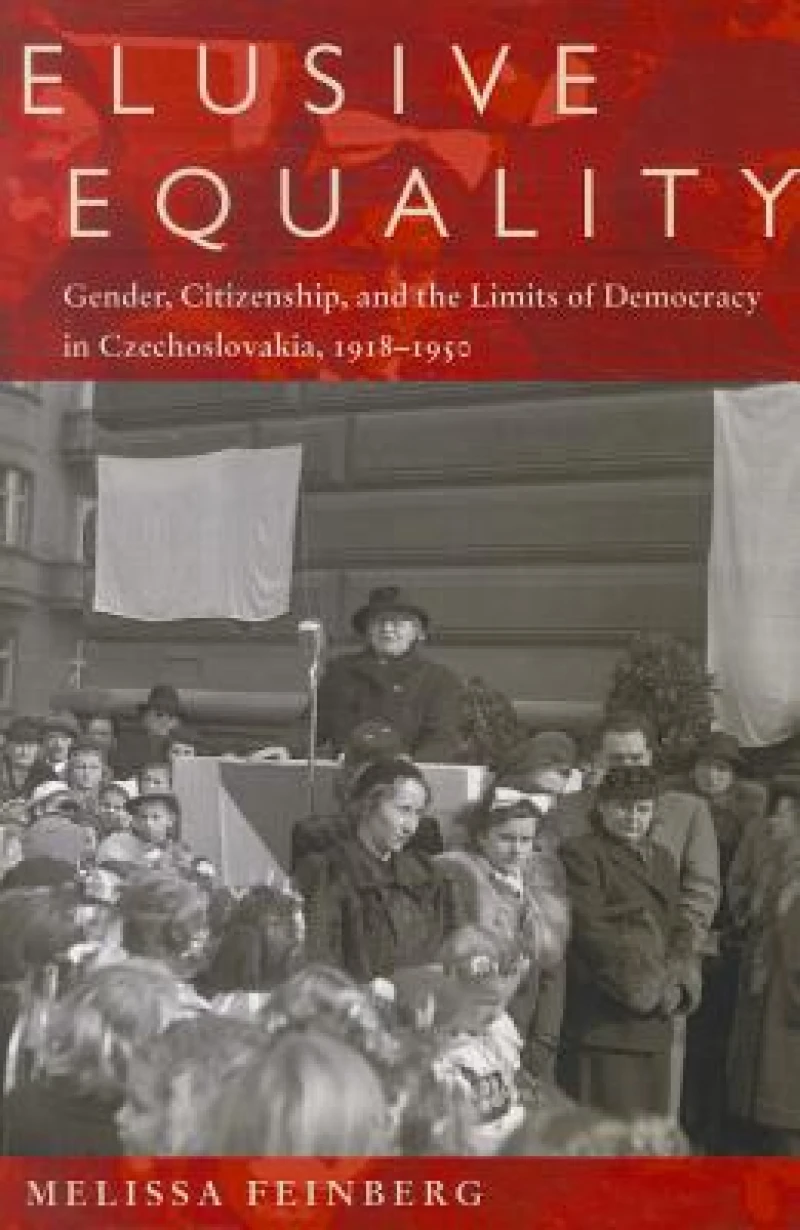
Elusive Equality : Gender, Citizenship, and the Limits of Democracy in Czechoslovokia, 1918-1950
Book Details
Format
Paperback / Softback
Book Series
Russian and East European Studies
ISBN-10
0822961970
ISBN-13
9780822961970
Publisher
University of Pittsburgh Press
Imprint
University of Pittsburgh Press
Country of Manufacture
US
Country of Publication
GB
Publication Date
Apr 20th, 2006
Print length
288 Pages
Weight
432 grams
Dimensions
15.20 x 22.60 x 3.90 cms
Product Classification:
Political structures / systems: democracyPolitical structures: democracy
Ksh 8,550.00
Temporarily out of stock, due soon
0 in stock
Delivery Location
Delivery fee: Select location
Secure
Quality
Fast
Examines debates over women's rights in the first half of the twentieth century, to show how Czechs gradually turned away from democracy and established the separation of state and domestic issues, at the expense of personal freedoms.
When Czechoslovakia became independent in 1918, Czechs embraced democracy, which they saw as particularly suited to their national interests. Politicians enthusiastically supported a constitution that proclaimed all citizens, women as well as men, legally equal. But they soon found themselves split over how to implement this pledge. Some believed democracy required extensive egalitarian legislation. Others contended that any commitment to equality had to bow before other social interests, such as preserving the traditional family. On the eve of World War II, Czech leaders jettisoned the young republic for an “authoritarian democracy” that firmly placed their nation, and not the individual citizen, at the center of politics. In 1948, they turned to a Communist-led “people's democracy,” which also devalued individual rights. By examining specific policy issues, including marriage and family law, civil service regulations, citizenship law, and abortion statutes, Elusive Equality demonstrates the relationship between Czechs' ideas about gender roles and their attitudes toward democracy. Gradually, many Czechs became convinced that protecting a traditionally gendered family ideal was more important to their national survival than adhering to constitutionally prescribed standards of equal citizenship. Through extensive original research, Melissa Feinberg assembles a compelling account of how early Czech progress in women's rights, tied to democratic reforms, eventually lost momentum in the face of political transformations and the separation of state and domestic issues. Moreover, Feinberg presents a prism through which our understanding of twentieth-century democracy is deepened, and a cautionary tale for all those who want to make democratic governments work.
Get Elusive Equality by at the best price and quality guaranteed only at Werezi Africa's largest book ecommerce store. The book was published by University of Pittsburgh Press and it has pages.

