
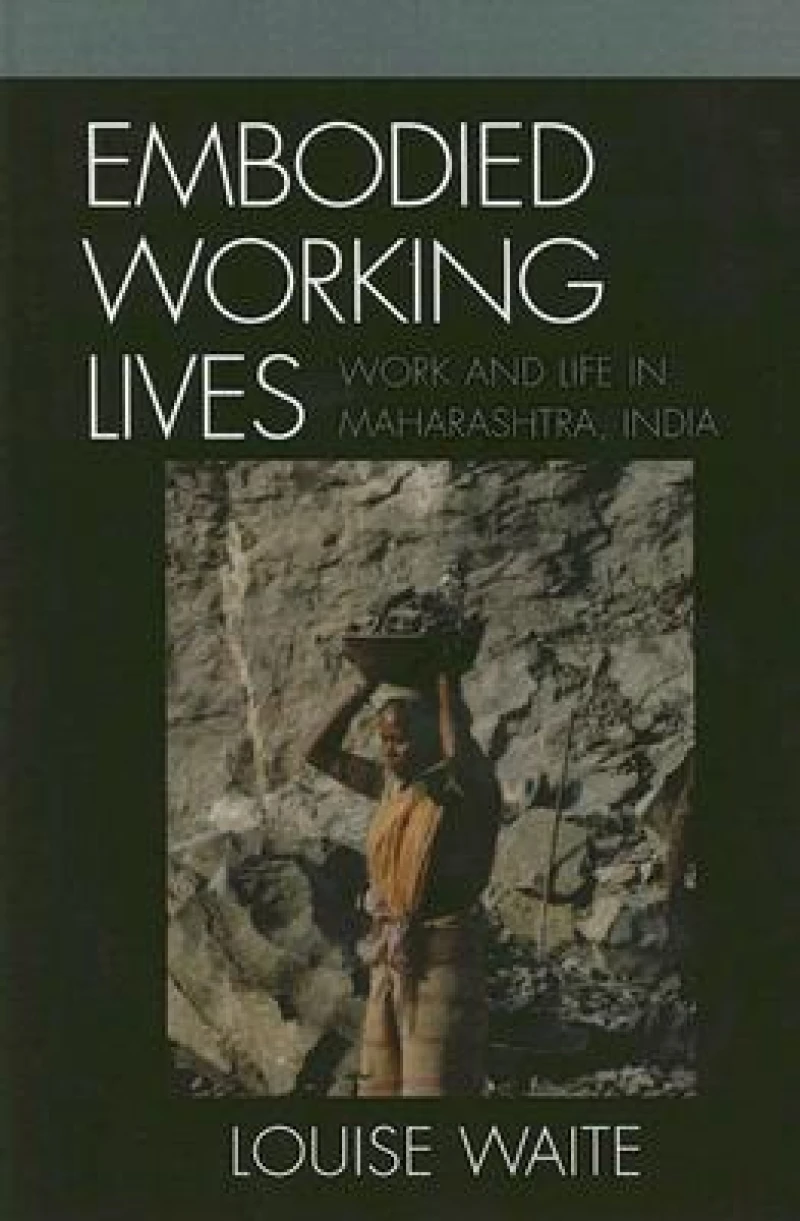
Embodied Working Lives : Manual Laboring in Maharashtra, India
by
Louise Waite
Book Details
Format
Hardback or Cased Book
ISBN-10
073910876X
ISBN-13
9780739108765
Publisher
Bloomsbury Publishing Plc
Imprint
Lexington Books
Country of Manufacture
GB
Country of Publication
GB
Publication Date
Mar 23rd, 2006
Print length
268 Pages
Weight
513 grams
Dimensions
23.60 x 16.70 x 2.30 cms
Product Classification:
Sociology: work & labour
Ksh 18,450.00
Manufactured on Demand
0 in stock
Delivery Location
Delivery fee: Select location
Secure
Quality
Fast
Both theoretical and empirical social science approaches to manual work in developing countries emphasize the infusions of power in social relations between workers and employers. But little attention has been paid to either the lived experiences of non-industrial and industrial manual workers or to the particularly physical character of their work. In Embodied Working Lives Louise Waite contributes to an expanded understanding of both. The concept of embodiment recognizes that bodies' habitual relations with the world engender subjectivities and life experiences. The most careful consideration of everyday-embodiment is found in the phenomenological tradition that theorizes 'incarnated consciousness' and 'embodied subjectivities.' This book follows such an understanding of embodiment, whose essence is to bridge the biological and the social. Waite incorporates embodiment into an ethnographic exploration of the worker-understood, in her study, to have 'personhood,' preferences, and desires which play a part in social relations. Waite's situates the subjects of her study in a deeply dense context of social relations that sufficiently complicate our understanding of culture, work, bodies and embodiment, phenomenology, anthropology, and habit. This book is essential reading across the social sciences and in the humanities. It is a groundbreaking ethnography that raises interesting questions in applied phenomenology, humanist philosophies, and also policy studies.
Both theoretical and empirical social science approaches to manual work in developing countries emphasize the infusions of power in social relations between workers and employers. But little attention has been paid to either the lived experiences of non-industrial and industrial manual workers or to the particularly physical character of their work. In Embodied Working Lives Louise Waite contributes to an expanded understanding of both. The concept of embodiment recognizes that bodies'' habitual relations with the world engender subjectivities and life experiences. The most careful consideration of everyday-embodiment is found in the phenomenological tradition that theorizes ''incarnated consciousness'' and ''embodied subjectivities.'' This book follows such an understanding of embodiment, whose essence is to bridge the biological and the social. Waite incorporates embodiment into an ethnographic exploration of the worker-understood, in her study, to have ''personhood,'' preferences, and desires which play a part in social relations. Waite''s situates the subjects of her study in a deeply dense context of social relations that sufficiently complicate our understanding of culture, work, bodies and embodiment, phenomenology, anthropology, and habit. This book is essential reading across the social sciences and in the humanities. It is a groundbreaking ethnography that raises interesting questions in applied phenomenology, humanist philosophies, and also policy studies.
Get Embodied Working Lives by at the best price and quality guaranteed only at Werezi Africa's largest book ecommerce store. The book was published by Bloomsbury Publishing Plc and it has pages.

