
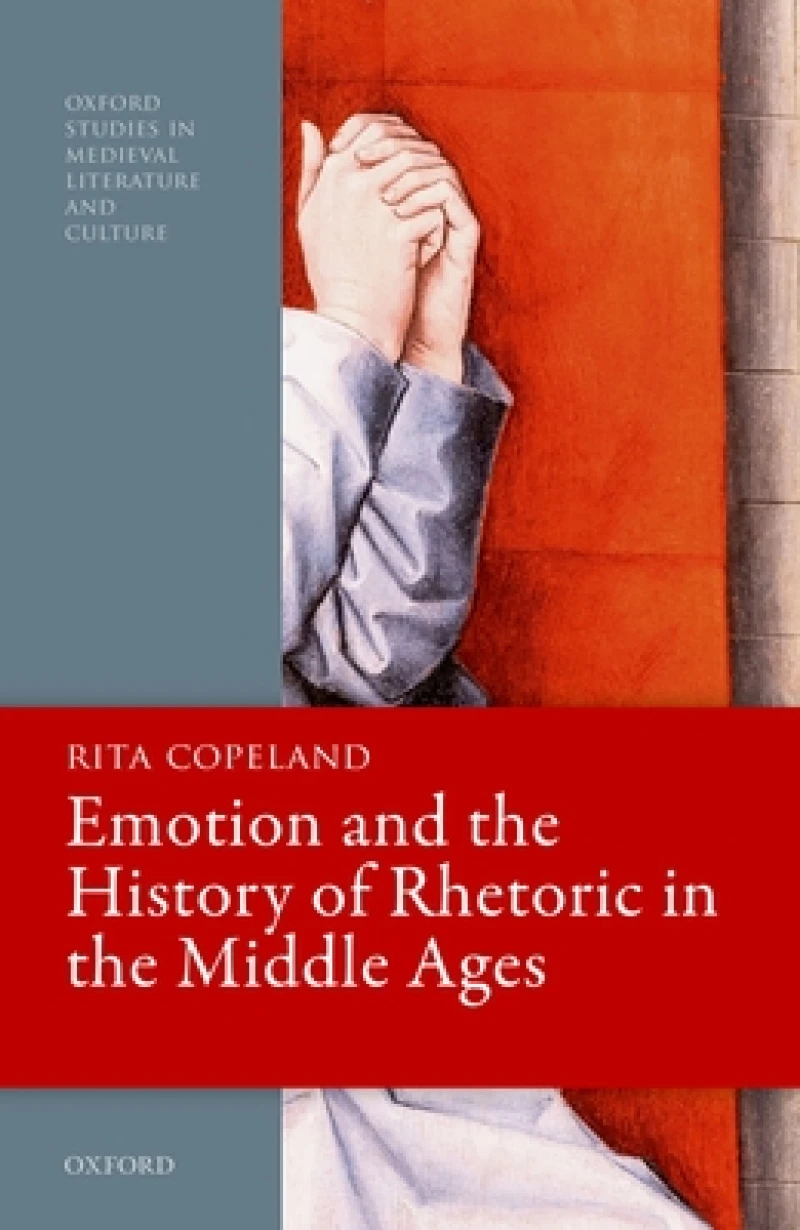
Emotion and the History of Rhetoric in the Middle Ages
Book Details
Format
Hardback or Cased Book
ISBN-10
0192845128
ISBN-13
9780192845122
Publisher
Oxford University Press
Imprint
Oxford University Press
Country of Manufacture
GB
Country of Publication
GB
Publication Date
Nov 18th, 2021
Print length
432 Pages
Weight
786 grams
Dimensions
16.50 x 24.10 x 3.10 cms
Ksh 23,950.00
Werezi Extended Catalogue
0 in stock
Delivery Location
Delivery fee: Select location
Secure
Quality
Fast
Presents a history of the ways in which authors of the Middle Ages mobilized the force of emotion in their rhetorical writings, and explores the changes that the role of emotion in rhetorical theory underwent during this period in relation to means of textual transmission and conditions of rhetorical teaching.
Rhetoric is an engine of social discourse and the art charged with generating and swaying emotion. The history of rhetoric provides a continuous structure by which we can measure how emotions were understood, articulated, and mobilized under various historical circumstances and social contracts. This book is about how rhetoric in the West, from Late Antiquity to the later Middle Ages, represented the role of emotion in shaping persuasions. It is the first book-length study of medieval rhetoric and the emotions, coloring that rhetorical history between about 600 CE and the cusp of early modernity. Rhetoric in the Middle Ages, as in other periods, constituted the gateway training for anyone engaged in emotionally persuasive writing. Medieval rhetorical thought on emotion has multiple strands of influence and sedimentations of practice. The earliest and most persistent tradition treated emotional persuasion as a property of surface stylistic effect, which can be seen in the medieval rhetorics of poetry and prose, and in literary production. But the impact of Aristotelian rhetoric, which reached the Latin West in the thirteenth century, gave emotional persuasion a core role in reasoning, incorporating it into the key device of proof, the enthymeme. In Aristotle, medieval teachers and writers found a new rhetorical language to explain the social and psychological factors that affect an audience. With Aristotelian rhetoric, the emotions became political. The impact of Aristotle''s rhetorical approach to emotions was to be felt in medieval political treatises, in poetry, and in preaching.
Get Emotion and the History of Rhetoric in the Middle Ages by at the best price and quality guaranteed only at Werezi Africa's largest book ecommerce store. The book was published by Oxford University Press and it has pages.

