
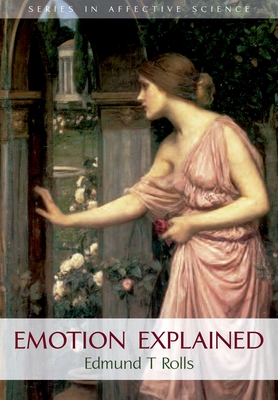
Emotion Explained
Book Details
Format
Paperback / softback
Book Series
Series in Affective Science
ISBN-10
019857004X
ISBN-13
9780198570042
Publisher
Oxford University Press
Imprint
Oxford University Press
Country of Manufacture
GB
Country of Publication
GB
Publication Date
Apr 26th, 2007
Print length
626 Pages
Weight
1,028 grams
Dimensions
23.90 x 17.00 x 2.80 cms
KSh 16,900.00
Currently unavailable
0 in stock
Delivery Location
Delivery fee: Select location
Secure
Quality
Fast
What produces emotions? Why do we have emotions? How do we have emotions? Why do emotional states feel like something? This book considers these questions, going beyond examining brain mechanisms of emotion, by proposing a theory of what emotions are, and an evolutionary, Darwinian, theory of the adaptive value of emotion.
What produces emotions? Why do we have emotions? How do we have emotions? Why do emotional states feel like something? This book seeks explanations of emotion by considering these questions. Emotion continues to be a topic of enormous scientific interest. ''Emotion Explained'' describes the nature, functions, and brain mechanisms that underlie both emotion and motivation. However it goes beyond examining brain mechanisms of emotion, by proposing a theory of what emotions are, and an evolutionary, Darwinian, theory of the adaptive value of emotion. It also shows that there is a clear relationship between motivation and emotion. The book also examines how cognitive states can modulate emotions, and in turn, how emotions can influence cognitive states. It considers the role of sexual selection in the evolution of affective behaviour. It also examines emotion and decision making, with links to the burgeoning field of neuroeconomics. The book is also unique in considering emotion at several levels - the neurophysiological, neuroimaging, neuropsychological, behavioural, and computational neuroscience levels.
Get Emotion Explained by Edmund T. Rolls at the best price and quality guaranteed only at Werezi Africa's largest book ecommerce store. The book was published by Oxford University Press and it has 626 pages.
More by Edmund T. Rolls

Brain Computations and Principles; and AI
KSh 29,750.00

Neuroscience Discoveries
KSh 21,400.00
Cerebral Cortex
KSh 12,900.00
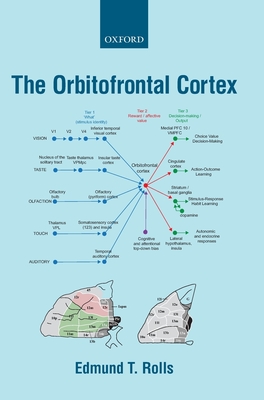
The Orbitofrontal Cortex
KSh 10,400.00

Memory, Attention, and Decision-Making
KSh 28,850.00
Emotion and Decision-making Explained
KSh 14,750.00
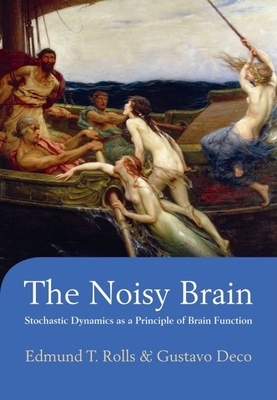
The Noisy Brain
KSh 17,950.00

Brain Computations and Connectivity
KSh 27,500.00
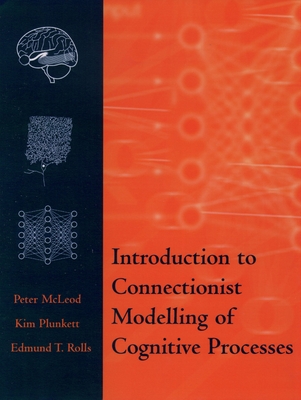
Introduction to Connectionist Modelling of Cognitive Processes
KSh 17,450.00

Thirst
KSh 5,550.00
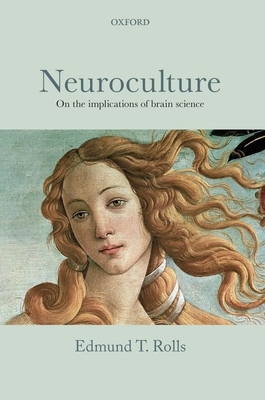
Neuroculture
KSh 13,500.00

Thirst
KSh 5,950.00
