
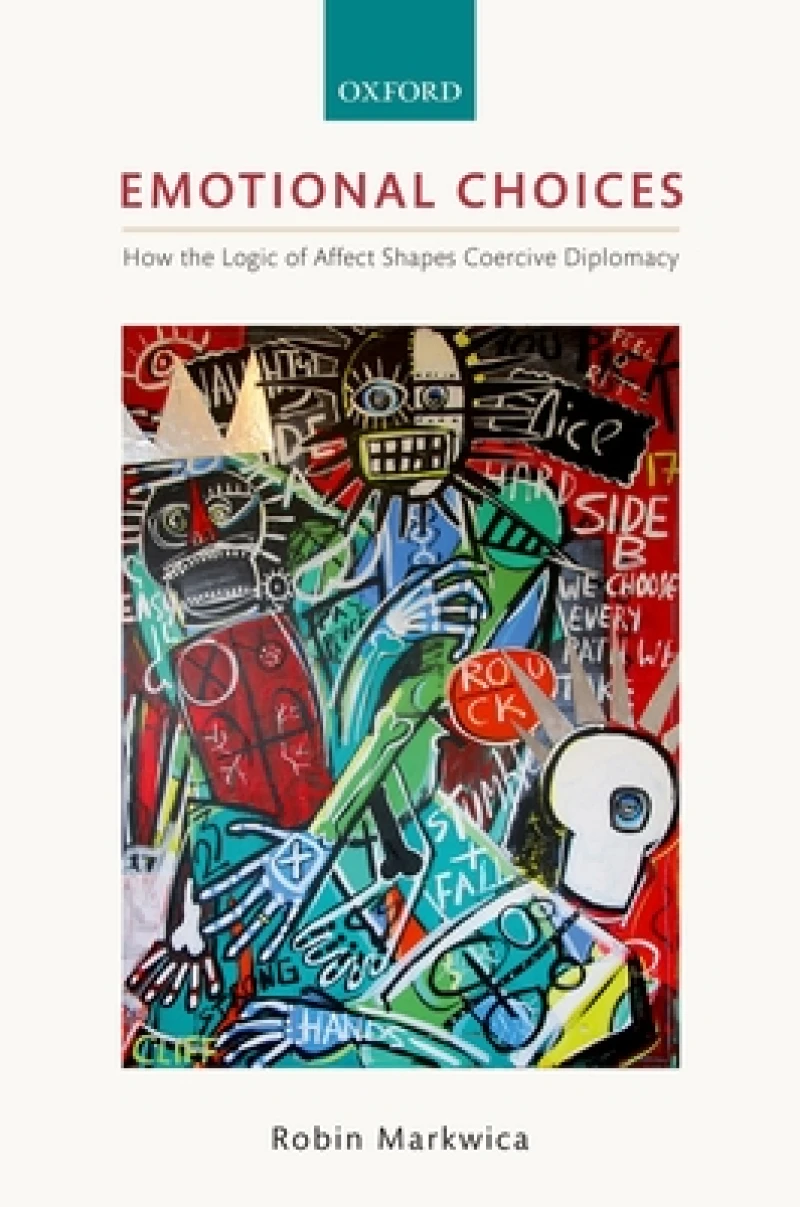
Emotional Choices : How the Logic of Affect Shapes Coercive Diplomacy
Book Details
Format
Hardback or Cased Book
ISBN-10
0198794347
ISBN-13
9780198794349
Publisher
Oxford University Press
Imprint
Oxford University Press
Country of Manufacture
GB
Country of Publication
GB
Publication Date
Mar 15th, 2018
Print length
380 Pages
Weight
738 grams
Dimensions
24.00 x 16.30 x 2.80 cms
Product Classification:
Peace studies & conflict resolutionPolitical science & theoryInternational relations
Ksh 22,850.00
Manufactured on Demand
0 in stock
Delivery Location
Delivery fee: Select location
Secure
Quality
Fast
This book examines coercive diplomacy and presents a theory of 'emotional choice' to analyse how affect enters into decision-making.
Why do states often refuse to yield to military threats from a more powerful actor, such as the United States? Why do they frequently prefer war to compliance? International Relations scholars generally employ the rational choice logic of consequences or the constructivist logic of appropriateness to explain this puzzling behavior. Max Weber, however, suggested a third logic of choice in his magnum opus Economy and Society: human decision making can also be motivated by emotions. Drawing on Weber and more recent scholarship in sociology and psychology, Robin Markwica introduces the logic of affect, or emotional choice theory, into the field of International Relations. The logic of affect posits that actors'' behavior is shaped by the dynamic interplay among their norms, identities, and five key emotions: fear, anger, hope, pride, and humiliation. Markwica puts forward a series of propositions that specify the affective conditions under which leaders are likely to accept or reject a coercer''s demands. To infer emotions and to examine their influence on decision making, he develops a methodological strategy combining sentiment analysis and an interpretive form of process tracing. He then applies the logic of affect to Nikita Khrushchev''s behavior during the Cuban missile crisis in 1962 and Saddam Hussein''s decision making in the Gulf conflict in 1990-1 offering a novel explanation for why U.S. coercive diplomacy succeeded in one case but not in the other.
Get Emotional Choices by at the best price and quality guaranteed only at Werezi Africa's largest book ecommerce store. The book was published by Oxford University Press and it has pages.

