
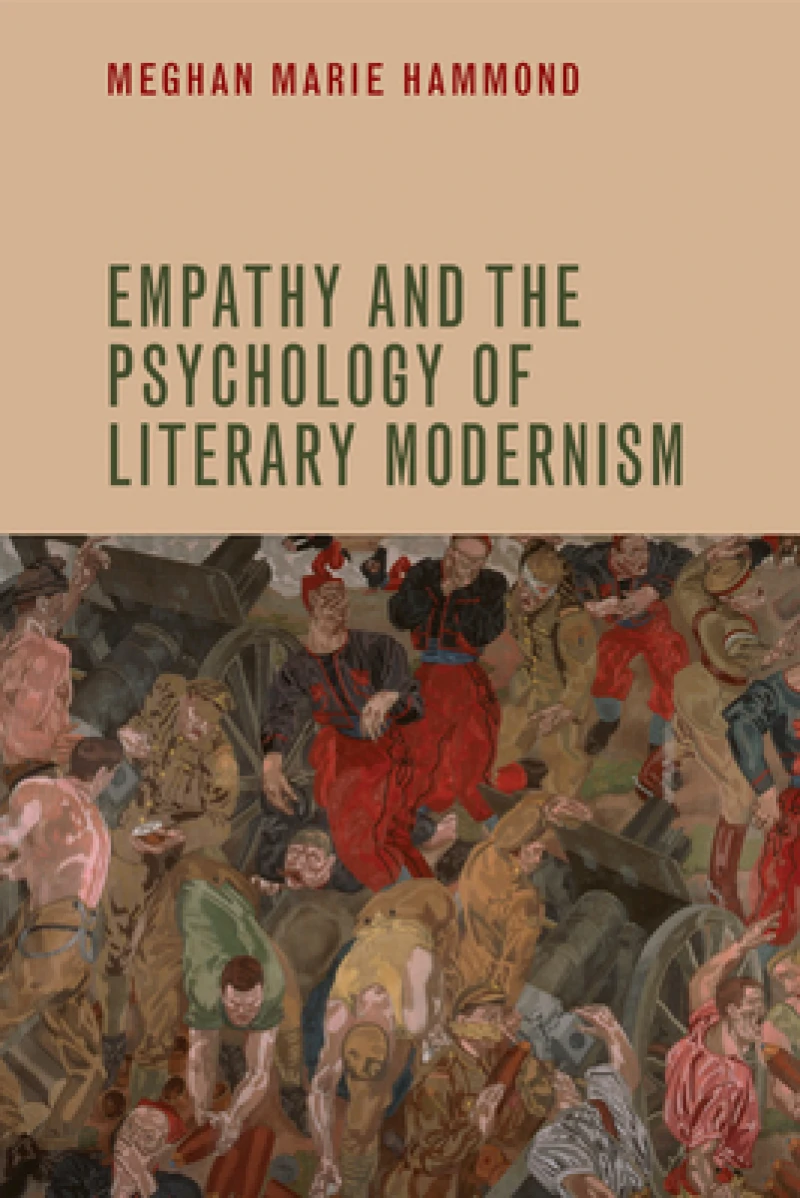
Empathy and the Psychology of Literary Modernism
Book Details
Format
Hardback or Cased Book
ISBN-10
0748690980
ISBN-13
9780748690985
Publisher
Edinburgh University Press
Imprint
Edinburgh University Press
Country of Manufacture
GB
Country of Publication
GB
Publication Date
Oct 8th, 2014
Print length
216 Pages
Weight
452 grams
Dimensions
16.30 x 23.50 x 1.70 cms
Product Classification:
Literary studies: c 1900 to c 2000Literary studies: from c 1900 -
Ksh 17,100.00
Manufactured on Demand
0 in stock
Delivery Location
Delivery fee: Select location
Secure
Quality
Fast
Meghan Marie Hammond shows how five exemplary writers (Henry James, Dorothy Richardson, Katherine Mansfield, Ford Madox Ford, and Virginia Woolf) tackle the so-called ‘problem of other minds’ in ways that reflect and enrich early twentieth-century discourses of fellow feeling.
Empathy is a cognitive and affective structure of feeling, a bridge across interpersonal distance. Coined in 1909 to combine English ''sympathy'' and German ''Einfühlung,'' ''empathy'' is a specifically twentieth-century concept of fellow feeling. Empathy and the Psychology of Literary Modernism looks into the little-known history of empathy, revealing how this multi-faceted concept had a profound effect on literary modernism.
Meghan Marie Hammond shows how five exemplary writers (Henry James, Dorothy Richardson, Katherine Mansfield, Ford Madox Ford, and Virginia Woolf) tackle the so-called ''problem of other minds'' in ways that reflect and enrich early twentieth-century discourses of fellow feeling. Hammond argues that these authors reconfigure notions of intersubjective experience; their writings mark a key shift away from sympathetic forms of literary representation toward empathic forms that strive to provide an immediate sense of another''s thoughts and feelings. But while literary modernism values empathic experience as an ideal, it is also teeming with voices that recognize potential for danger, even violence, in acts of empathy. These voices illuminate our culture''s ongoing concern with empathy''s limits.
Meghan Marie Hammond shows how five exemplary writers (Henry James, Dorothy Richardson, Katherine Mansfield, Ford Madox Ford, and Virginia Woolf) tackle the so-called ''problem of other minds'' in ways that reflect and enrich early twentieth-century discourses of fellow feeling. Hammond argues that these authors reconfigure notions of intersubjective experience; their writings mark a key shift away from sympathetic forms of literary representation toward empathic forms that strive to provide an immediate sense of another''s thoughts and feelings. But while literary modernism values empathic experience as an ideal, it is also teeming with voices that recognize potential for danger, even violence, in acts of empathy. These voices illuminate our culture''s ongoing concern with empathy''s limits.
Get Empathy and the Psychology of Literary Modernism by at the best price and quality guaranteed only at Werezi Africa's largest book ecommerce store. The book was published by Edinburgh University Press and it has pages.

