
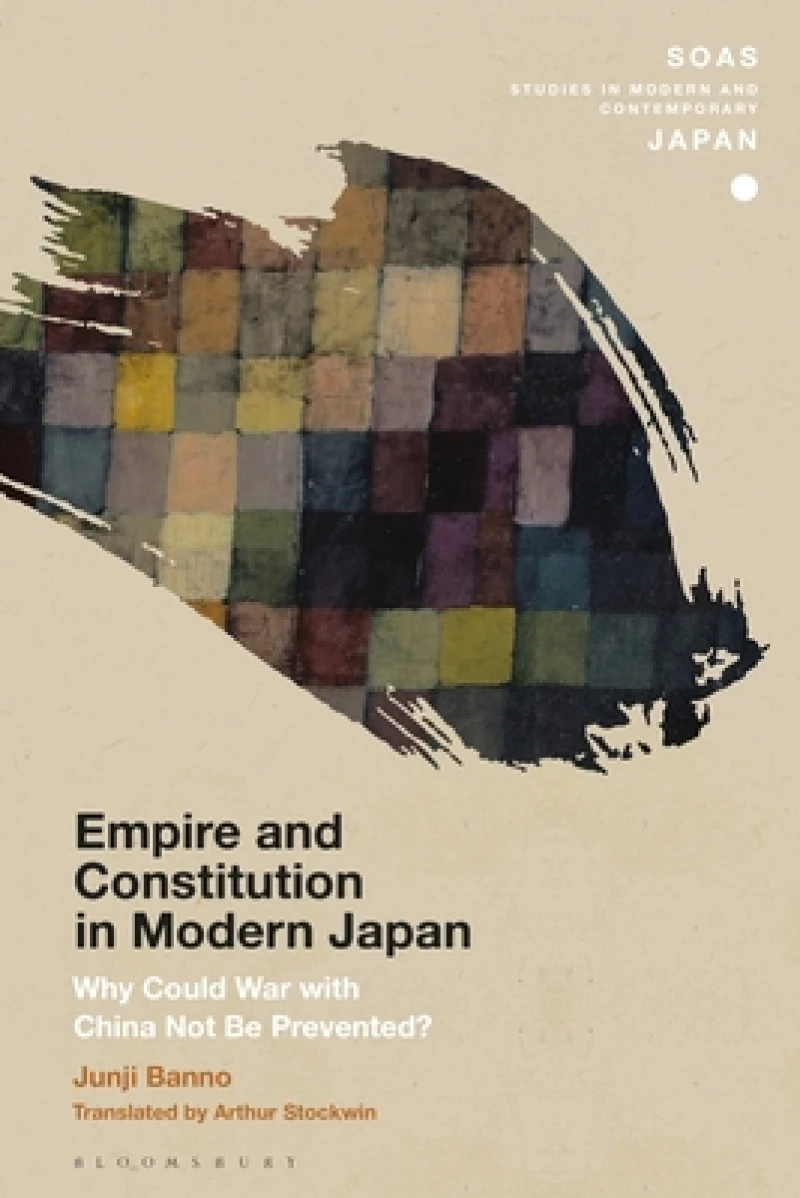
Empire and Constitution in Modern Japan : Why Could War with China Not Be Prevented?
by
Junji Banno
Book Details
Format
Paperback / Softback
Book Series
SOAS Studies in Modern and Contemporary Japan
ISBN-10
1350240400
ISBN-13
9781350240407
Publisher
Bloomsbury Publishing PLC
Imprint
Bloomsbury Academic
Country of Manufacture
GB
Country of Publication
GB
Publication Date
Dec 29th, 2022
Print length
186 Pages
Product Classification:
Asian history20th century history: c 1900 to c 2000
Ksh 5,600.00
Manufactured on Demand
0 in stock
Delivery Location
Delivery fee: Select location
Secure
Quality
Fast
Since the beginning of the Meiji period when Japan evolved into a modern and powerful nation-state, ideas of empire and constitution imbued Japanese rule and progress. In Empire and Constitution in Modern Japan, Junji Banno expertly analyses how these conflicting concepts operated together in Japan from 1868 until 1937. By ‘empire’, Banno means the Japanese impetus to create its own empire; by ‘constitution’, he identifies Japanese efforts to create a constitutional government. In this book, Banno discusses the complicated relationship between these two concepts, ranging from incompatibility in some periods to symbiosis in others. Furthermore, understanding the complex and competing nature of these ideals, he persuasively reasons, is key to our understanding of why Japan and China went to war in 1937, leading to Pearl Harbor just four years later. Translated by eminent scholar Arthur Stockwin, Banno’s highly accessible account of the dynamics of pre-war Japanese political history provides an engaging survey of imperialism and constitutionalism in modern Japan. It will be of vital importance to all scholars of modern Japanese history.
Since the beginning of the Meiji period when Japan evolved into a modern and powerful nation-state, ideas of empire and constitution imbued Japanese rule and progress. In Empire and Constitution in Modern Japan, Junji Banno expertly analyses how these conflicting concepts operated together in Japan from 1868 until 1937.By ‘empire’, Banno means the Japanese impetus to create its own empire; by ‘constitution’, he identifies Japanese efforts to create a constitutional government. In this book, Banno discusses the complicated relationship between these two concepts, ranging from incompatibility in some periods to symbiosis in others. Furthermore, understanding the complex and competing nature of these ideals, he persuasively reasons, is key to our understanding of why Japan and China went to war in 1937, leading to Pearl Harbor just four years later.Translated by eminent scholar Arthur Stockwin, Banno’s highly accessible account of the dynamics of pre-war Japanese political history provides an engaging survey of imperialism and constitutionalism in modern Japan. It will be of vital importance to all scholars of modern Japanese history.
Get Empire and Constitution in Modern Japan by at the best price and quality guaranteed only at Werezi Africa's largest book ecommerce store. The book was published by Bloomsbury Publishing PLC and it has pages.

