
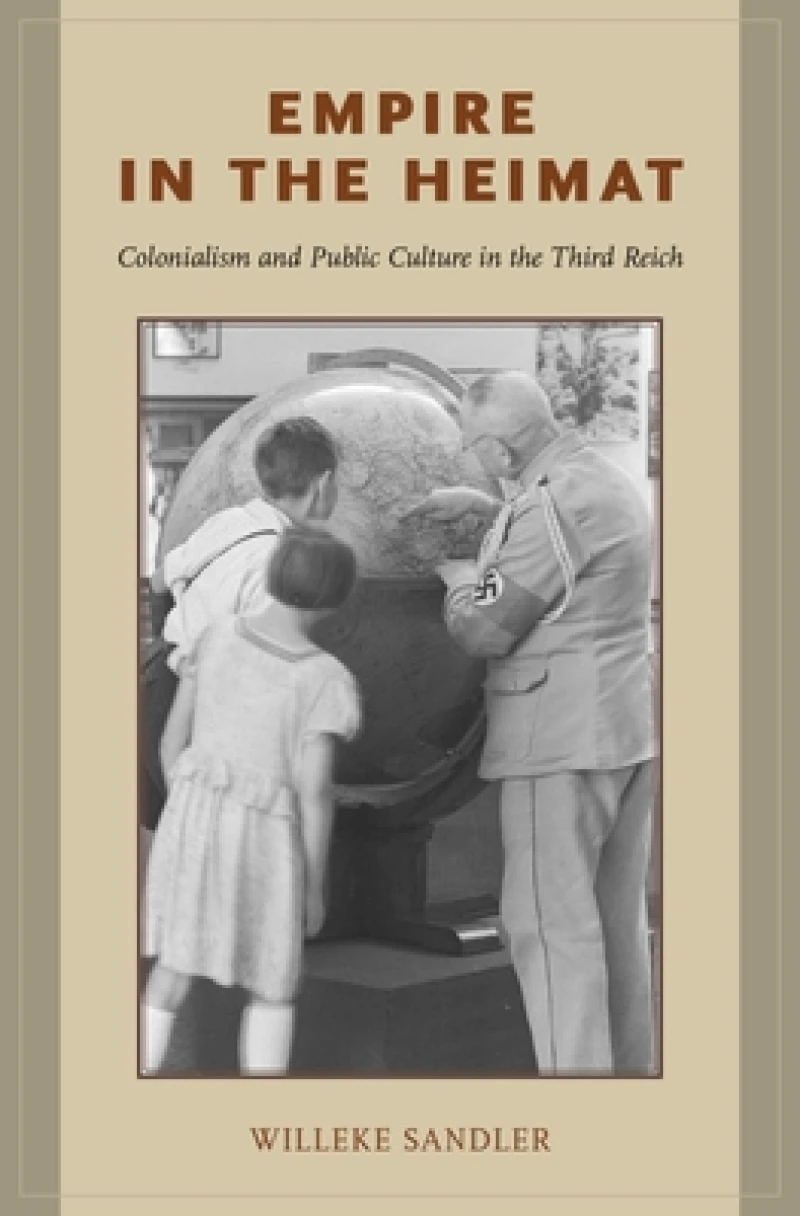
Empire in the Heimat : Colonialism and Public Culture in the Third Reich
Book Details
Format
Hardback or Cased Book
ISBN-10
0190697903
ISBN-13
9780190697907
Publisher
Oxford University Press Inc
Imprint
Oxford University Press Inc
Country of Manufacture
US
Country of Publication
GB
Publication Date
Sep 27th, 2018
Print length
360 Pages
Weight
674 grams
Dimensions
16.60 x 24.20 x 3.00 cms
Ksh 16,050.00
Manufactured on Demand
0 in stock
Delivery Location
Delivery fee: Select location
Secure
Quality
Fast
Despite losing their overseas empire in 1919, German colonialists in the Third Reich adamantly and publicly promoted this empire. They faced a mix of occasional support, ambivalence, or outright opposition from Nazi officials. Empire in the Heimat demonstrates the continued place of overseas colonialism in shaping German national identity.
With the end of the First World War, Germany became a "post-colonial" power. The Treaty of Versailles in 1919 transformed Germany''s overseas colonies in Africa and the Pacific into League of Nations Mandates, administered by other powers. Yet a number of Germans rejected this "post-colonial" status, arguing instead that Germany was simply an interrupted colonial power and would soon reclaim these territories. With the Nazi seizure of power in 1933, irredentism seemed once again on the agenda, and these colonialist advocates actively and loudly promoted their colonial cause in the Third Reich.Examining the domestic activities of these colonialist lobbying organizations, Empire in the Heimat demonstrates the continued place of overseas colonialism in shaping German national identity after the end of formal empire. In the Third Reich, the Deutsche Kolonialgesellschaft and the Reichskolonialbund framed Germans as having a particular aptitude for colonialism and the overseas territories as a German Heimat. As such, they sought to give overseas colonialism renewed meaning for both the present and the future of Nazi Germany. They brought this message to the German public through countless publications, exhibitions, rallies, lectures, photographs, and posters. Their public activities were met with a mix of occasional support, ambivalence, or even outright opposition from some Nazi officials, who privileged the Nazi regime''s European territorial goals over colonialists'' overseas goals. Colonialists'' ability to navigate this obstruction and intervention reveals both the limitations and the spaces available in the public sphere under Nazism for such "special interest" discourses.
Get Empire in the Heimat by at the best price and quality guaranteed only at Werezi Africa's largest book ecommerce store. The book was published by Oxford University Press Inc and it has pages.

