
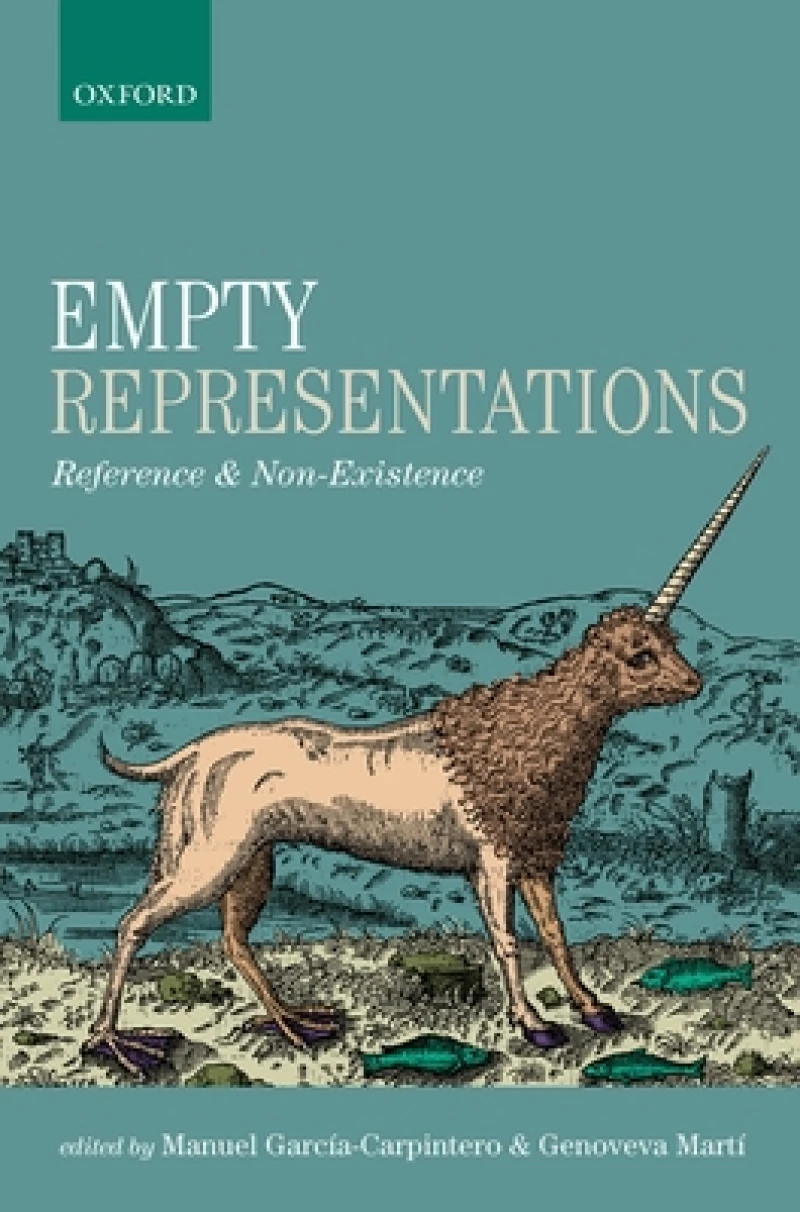
Empty Representations : Reference and Non-Existence
Book Details
Format
Hardback or Cased Book
ISBN-10
0199647054
ISBN-13
9780199647057
Publisher
Oxford University Press
Imprint
Oxford University Press
Country of Manufacture
GB
Country of Publication
GB
Publication Date
Aug 14th, 2014
Print length
368 Pages
Weight
702 grams
Dimensions
23.70 x 16.30 x 2.70 cms
Ksh 19,250.00
Manufactured on Demand
0 in stock
Delivery Location
Delivery fee: Select location
Secure
Quality
Fast
The contents of linguistic and mental representations may seem to be individuated by what they are about. But a problem arises with regard to representation of the non-existent - words and thoughts that are about things that don't exist. Fourteen new essays get to grips with this much-debated problem.
It is the linguistic job of singular terms to pick out the objects that we think or talk about. But what about singular terms that seem to fail to designate anything, because the objects they refer to don''t exist? We can employ these terms in meaningful thought and talk, which suggests that they are succeeding in fulfilling their representational task. A team of leading experts presents new essays on the much-debated problem of empty reference and thought. In the 1960s and 1970s Keith Donnellan, David Kaplan, Saul Kripke and Hilary Putnam initiated a revolution in the then standard conception of reference--a concept at the core of philosophical inquiry. The repercussions of the revolution, particularly felt in metaphysics and epistemology, were soon refined by other influential writers such as Tyler Burge, Gareth Evans, and John Perry. They argued that some linguistic and mental representations have contents individuated by what they are about--by ordinary referents of expressions such as proper names, indexicals, definite descriptions and common nouns, i.e. by planets, people or natural kinds. The view was at odds with a central philosophical presumption at that time: that cognitive and linguistic access to objective reality is indirect and accidental, mediated by general descriptive characterizations, the only constitutive semantic feature of the expressions; hence its ontological and epistemological repercussions. A turning-point in the debate about how linguistic and mental representation reach external contents concerned the nature of empty mental and linguistic representations, framed by means of the very same expressions crucially invoked in the Donnellan-Kaplan-Kripke-Putnam arguments. The papers in this volume address different aspects of reference and thought about the (apparently) non-existent.
Get Empty Representations by at the best price and quality guaranteed only at Werezi Africa's largest book ecommerce store. The book was published by Oxford University Press and it has pages.

