

Book Details
Delivery Location
Delivery fee: Select location
In 1898 the United States became a formal overseas empire and claimed sovereignty over the Philippine islands, justifying its rule in explicitly racial terms. Less than fifty years later, in 1946, Philippine independence was recognized by the United States, even as it continued to exert influence over the domestic and foreign affairs of the newly decolonized Republic. Despite some differences, U.S. control remained racial and imperial.
Enduring Empire shows how U.S. federal state actors translated their ideas of race into state structures. Through innovating constitutional law, bureaucratic administration, and legislation, state actors built a durable and flexible system of racial-imperial rule that not only lasted beyond the period of formal empire but continues to this day. katrina quisumbing king traces debates among U.S. presidents, federal legislators, administrators, and justices about what kind of state the United States should be, the place of nonwhite people in the polity, and the best way to maintain U.S. white hegemony. In charting how state actors'' positions—some nativist, isolationist, and protectionist and others expansionist, interventionist, and imperialist—evolved, quisumbing king identifies key moments when they cemented racial ideas into law and reshaped the terms of U.S. racial-imperial formation.
Get Enduring Empire by katrina quisumbing king at the best price and quality guaranteed only at Werezi Africa's largest book ecommerce store. The book was published by Stanford University Press and it has 362 pages.
Customers Who Bought This Also Bought
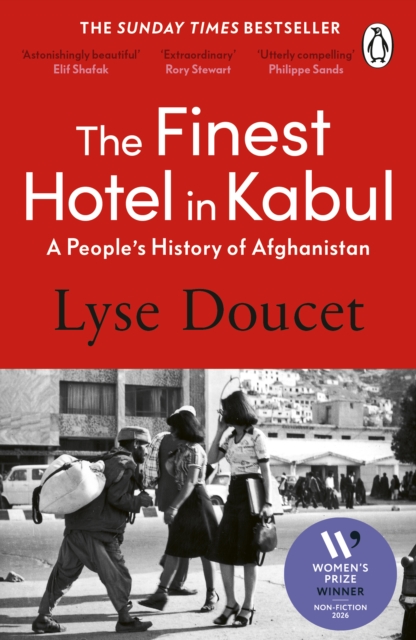
The Finest Hotel in Kabul
KSh 2,150.00

Black Wave
KSh 2,700.00

Migrations
KSh 5,450.00
Art of War / The Book of Lord Shang
KSh 1,100.00

Nexus
KSh 2,350.00

World According to Colour
KSh 2,700.00

Crusade for Justice – The Autobiography of Ida B. Wells, Second Edition
KSh 4,050.00

Modern Classics Road To Wigan Pier
KSh 1,800.00

The Origins of Totalitarianism
KSh 2,700.00
In the Wake
KSh 3,600.00
Question of Palestine
KSh 2,700.00

Palestine
KSh 2,400.00

