
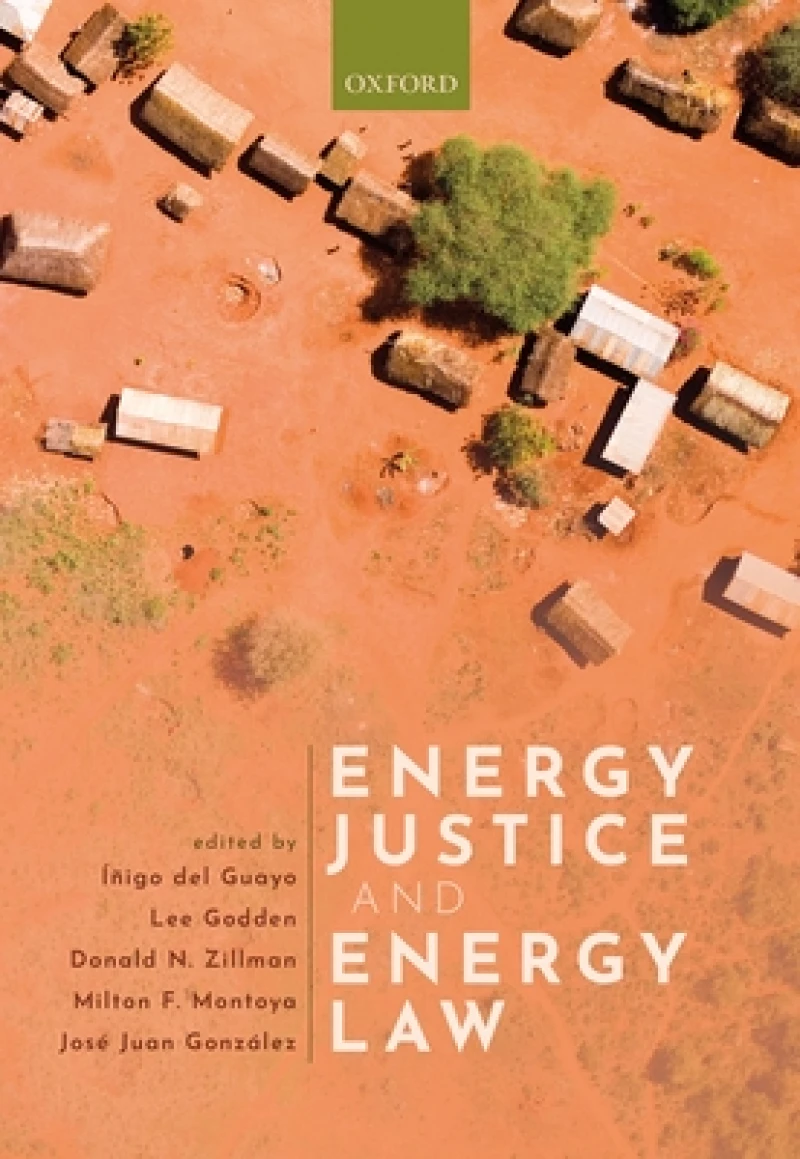
Energy Justice and Energy Law
Book Details
Format
Hardback or Cased Book
ISBN-10
0198860757
ISBN-13
9780198860754
Publisher
Oxford University Press
Imprint
Oxford University Press
Country of Manufacture
GB
Country of Publication
GB
Publication Date
May 21st, 2020
Print length
400 Pages
Weight
892 grams
Dimensions
18.00 x 25.20 x 3.20 cms
Product Classification:
International economic & trade lawPublic international law: economic and tradeInternational environmental lawPublic international law: environmentInternational human rights lawPublic international law: human rightsEnergy & natural resources lawEnergy and natural resources law
Ksh 27,800.00
Werezi Extended Catalogue
0 in stock
Delivery Location
Delivery fee: Select location
Secure
Quality
Fast
Energy justice is increasingly a purposive element of energy law and regulation. This collection explores how laws are constructed and how they could be applied in future to support an international transition in energy regulation in response to the challenges of climate change, whilst ensuring that energy is made available to all.
Energy justice has emerged over the last decade as a matter of vital concern in energy law, which can be seen in the attention directed to energy poverty, and the United Nations Sustainable Development Goals. There are energy justice concerns in areas of law as diverse as human rights, consumer protection, international law and trade, and in many forms of regional and national energy law and regulation. This edited collection explores in detail at four kinds of energy justice. The first, distributive justice, relates to the equitable distribution of the benefits and burdens of energy activities, which is challenged by the existence of people suffering from energy poverty. Secondly, procedural (or participation) justice consists of the right of all communities to participate in decision-making regarding energy projects and policies that affect them. This dimension of energy justice often includes procedural rights to information and access to courts. Under the concept of reparation (or restorative) justice, the book looks at even-handed enforcement of energy statutes and regulations, as well as access to remedies when legal rights are violated. Finally, the collection addresses social justice, with the recognition that energy injustice cannot be separated from other social ills, such as poverty and subordination based on race, gender, or indigeneity. These issues feed into a wider conversation about how we achieve a ''just'' energy transition, as the world confronts the urgent challenges of climate change.
Get Energy Justice and Energy Law by at the best price and quality guaranteed only at Werezi Africa's largest book ecommerce store. The book was published by Oxford University Press and it has pages.

