
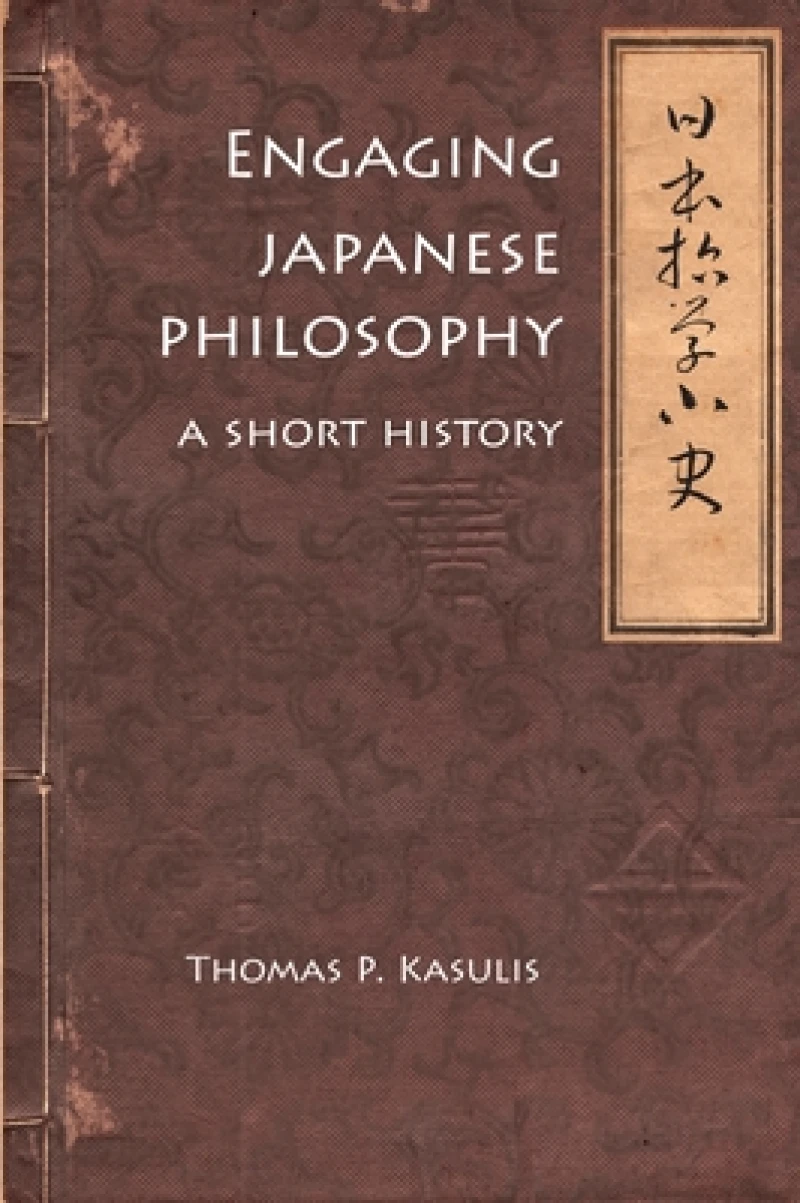
Engaging Japanese Philosophy : A Short History
Book Details
Format
Paperback / Softback
Book Series
Nanzan Library of Asian Religion and Culture
ISBN-10
0824874072
ISBN-13
9780824874070
Publisher
University of Hawai'i Press
Imprint
University of Hawai'i Press
Country of Manufacture
US
Country of Publication
GB
Publication Date
Feb 28th, 2018
Print length
746 Pages
Weight
1,090 grams
Dimensions
15.60 x 23.40 x 4.00 cms
Product Classification:
Oriental & Indian philosophyEast Asian and Indian philosophy
Ksh 5,550.00
Werezi Extended Catalogue
0 in stock
Delivery Location
Delivery fee: Select location
Secure
Quality
Fast
Philosophy challenges our assumptions - especially when it comes to us from another culture. In exploring Japanese philosophy, a dependable guide is essential. The present volume, written by a renowned authority on the subject, offers readers a historical survey of Japanese thought that is both comprehensive and comprehensible.
Philosophy challenges our assumptions—especially when it comes to us from another culture. In exploring Japanese philosophy, a dependable guide is essential. The present volume, written by a renowned authority on the subject, offers readers a historical survey of Japanese thought that is both comprehensive and comprehensible.
Adhering to the Japanese philosophical tradition of highlighting engagement over detachment, Thomas Kasulis invites us to think with, as well as about, the Japanese masters by offering ample examples, innovative analogies, thought experiments, and jargon-free explanations. He assumes little previous knowledge and addresses themes—aesthetics, ethics, the samurai code, politics, among others—not in a vacuum but within the conditions of Japan’s cultural and intellectual history. For readers new to Japanese studies, he provides a simplified guide to pronouncing Japanese and a separate discussion of the language and how its syntax, orthography, and linguistic layers can serve the philosophical purposes of a skilled writer and subtle thinker. For those familiar with the Japanese cultural tradition but less so with philosophy, Kasulis clarifies philosophical expressions and problems, Western as well as Japanese, as they arise.
Half of the book’s chapters are devoted to seven major thinkers who collectively represent the full range of Japan’s historical epochs and philosophical traditions: Kukai, Shinran, Dogen, Ogyu Sorai, Motoori Norinaga, Nishida Kitaro, and Watsuji Tetsuro. Nuanced details and analyses enable an engaged understanding of Japanese Buddhism, Confucianism, Shinto, and modern academic philosophy. Other chapters supply social and cultural background, including brief discussions of nearly a hundred other philosophical writers. (For additional information, cross references to material in the companion volume Japanese Philosophy: A Sourcebook are included.) In his closing chapter Kasulis reflects on lessons from Japanese philosophy that enhance our understanding of philosophy itself. He reminds us that philosophy in its original sense means loving wisdom, not studying ideas. In that regard, a renewed appreciation of engaged knowing can play a critical role in the revitalization of philosophy in the West as well as the East.
Adhering to the Japanese philosophical tradition of highlighting engagement over detachment, Thomas Kasulis invites us to think with, as well as about, the Japanese masters by offering ample examples, innovative analogies, thought experiments, and jargon-free explanations. He assumes little previous knowledge and addresses themes—aesthetics, ethics, the samurai code, politics, among others—not in a vacuum but within the conditions of Japan’s cultural and intellectual history. For readers new to Japanese studies, he provides a simplified guide to pronouncing Japanese and a separate discussion of the language and how its syntax, orthography, and linguistic layers can serve the philosophical purposes of a skilled writer and subtle thinker. For those familiar with the Japanese cultural tradition but less so with philosophy, Kasulis clarifies philosophical expressions and problems, Western as well as Japanese, as they arise.
Half of the book’s chapters are devoted to seven major thinkers who collectively represent the full range of Japan’s historical epochs and philosophical traditions: Kukai, Shinran, Dogen, Ogyu Sorai, Motoori Norinaga, Nishida Kitaro, and Watsuji Tetsuro. Nuanced details and analyses enable an engaged understanding of Japanese Buddhism, Confucianism, Shinto, and modern academic philosophy. Other chapters supply social and cultural background, including brief discussions of nearly a hundred other philosophical writers. (For additional information, cross references to material in the companion volume Japanese Philosophy: A Sourcebook are included.) In his closing chapter Kasulis reflects on lessons from Japanese philosophy that enhance our understanding of philosophy itself. He reminds us that philosophy in its original sense means loving wisdom, not studying ideas. In that regard, a renewed appreciation of engaged knowing can play a critical role in the revitalization of philosophy in the West as well as the East.
Get Engaging Japanese Philosophy by at the best price and quality guaranteed only at Werezi Africa's largest book ecommerce store. The book was published by University of Hawai'i Press and it has pages.

