
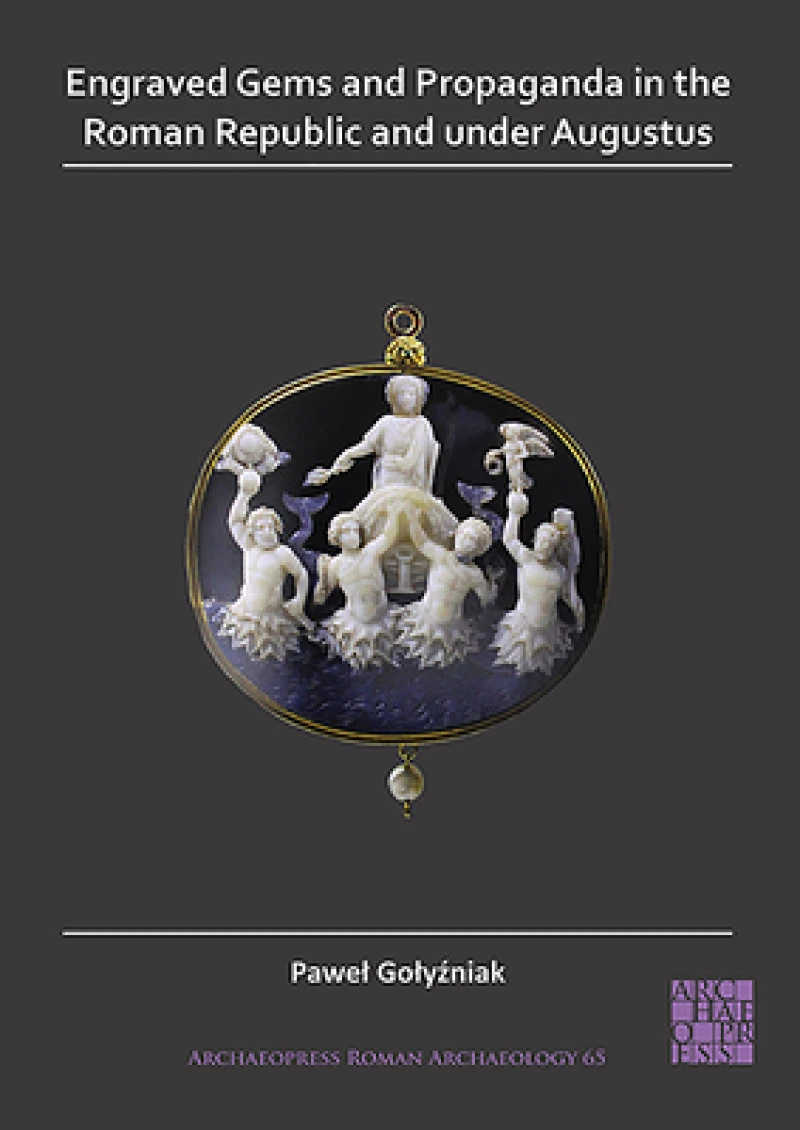
Engraved Gems and Propaganda in the Roman Republic and under Augustus
Book Details
Format
Hardback or Cased Book
Book Series
Archaeopress Roman Archaeology
ISBN-10
1789695392
ISBN-13
9781789695397
Publisher
Archaeopress
Imprint
Access Archaeology
Country of Manufacture
NL
Country of Publication
GB
Publication Date
May 14th, 2020
Print length
618 Pages
Weight
2,392 grams
Dimensions
21.40 x 29.80 x 4.00 cms
Ksh 18,400.00
Temporarily out of stock, due soon
0 in stock
Delivery Location
Delivery fee: Select location
Secure
Quality
Fast
This book studies small but highly captivating artworks from antiquity – engraved gemstones. These objects had multiple applications, and the images upon them captured snapshots of people's beliefs, ideologies, and everyday occupations. They provide a unique perspective on the propaganda of Roman political leaders, especially Octavian/Augustus.
Engraved Gems and Propaganda in the Roman Republic and under Augustus deals with small, but highly captivating and stimulating artwork – engraved gemstones. Although in antiquity intaglios and cameos had multiple applications (seals, jewellery or amulets), the images engraved upon them are snapshots of people''s beliefs, ideologies, and everyday occupations. They cast light on the self-advertising and propaganda actions performed by Roman political leaders, especially Octavian/Augustus, their factions and other people engaged in the politics and social life of the past.
Gems can show both general trends (the specific showpieces like State Cameos) as well as the individual and private acts of being involved in politics and social affairs, mainly through a subtle display of political allegiances, since they were objects of strictly personal use. They enable us to analyse and learn about Roman propaganda and various social behaviours from a completely different angle than coins, sculpture or literature.
The miniaturism of ancient gems is in inverse proportion to their cultural significance. This book presents an evolutionary model of the use of engraved gems from self-presentation (3rd-2nd century BC) to personal branding and propaganda purposes in the Roman Republic and under Augustus (until 14 AD). The specific characteristics of engraved gems, their strictly private character and the whole array of devices appearing on them are examined in respect to their potential propagandistic value and usefulness in social life.
The wide scope of this analysis provides a comprehensive picture covering many aspects of Roman propaganda and a critical survey of the overinterpretations of this term in regard to the glyptic art. The aim is the incorporation of this class of archaeological artefacts into the well-established studies of Roman propaganda, as well as the Roman society in general, brought about by discussion of the interconnections with ancient literary sources as well as other categories of Roman art and craftsmanship, notably coins but also sculpture and relief.
Gems can show both general trends (the specific showpieces like State Cameos) as well as the individual and private acts of being involved in politics and social affairs, mainly through a subtle display of political allegiances, since they were objects of strictly personal use. They enable us to analyse and learn about Roman propaganda and various social behaviours from a completely different angle than coins, sculpture or literature.
The miniaturism of ancient gems is in inverse proportion to their cultural significance. This book presents an evolutionary model of the use of engraved gems from self-presentation (3rd-2nd century BC) to personal branding and propaganda purposes in the Roman Republic and under Augustus (until 14 AD). The specific characteristics of engraved gems, their strictly private character and the whole array of devices appearing on them are examined in respect to their potential propagandistic value and usefulness in social life.
The wide scope of this analysis provides a comprehensive picture covering many aspects of Roman propaganda and a critical survey of the overinterpretations of this term in regard to the glyptic art. The aim is the incorporation of this class of archaeological artefacts into the well-established studies of Roman propaganda, as well as the Roman society in general, brought about by discussion of the interconnections with ancient literary sources as well as other categories of Roman art and craftsmanship, notably coins but also sculpture and relief.
Get Engraved Gems and Propaganda in the Roman Republic and under Augustus by at the best price and quality guaranteed only at Werezi Africa's largest book ecommerce store. The book was published by Archaeopress and it has pages.

