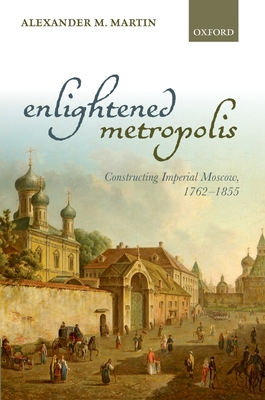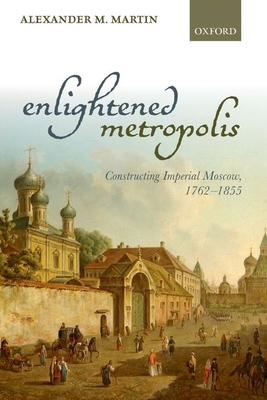
Enlightened Metropolis : Constructing Imperial Moscow, 1762-1855
Book Details
Format
Paperback / softback
Book Series
Oxford Studies in Modern European History
ISBN-10
0198722885
ISBN-13
9780198722885
Publisher
Oxford University Press
Imprint
Oxford University Press
Country of Manufacture
GB
Country of Publication
GB
Publication Date
Oct 9th, 2014
Print length
360 Pages
Weight
554 grams
Dimensions
23.40 x 15.70 x 2.00 cms
Product Classification:
18th century, c 1700 to c 179919th century, c 1800 to c 1899European historyModern history to 20th century: c 1700 to c 1900Social & cultural historyIndustrialisation & industrial historyHistoryEuropean historySocial and cultural historyIndustrialisation and industrial history
KSh 8,900.00
Currently unavailable
0 in stock
Delivery Location
Delivery fee: Select location
Secure
Quality
Fast
Through systematic comparisons with cities in Western Europe, Alexander Martin situates Moscow in the context of the emergence of urban bourgeois civilization in the West, and helps the reader understand both how Moscow became a modern city and why this successful modernization paradoxically helped delegitimize the tsarist regime.
Imperial Russia, is was said, had two capital cities because it had two identities: St. Petersburg was Russia''s "window to Europe," whereas Moscow preserved the nation''s proud historical traditions. Enlightened Metropolis challenges this myth by exploring how the tsarist regime actually tried to turn Moscow into a bridgehead of Europe in the heartland of Russia. Moscow in the eighteenth century was widely scorned as backward and "Asiatic." The tsars thought it a benighted place that endangered their state''s internal security and their effort to make Russia European. Beginning with Catherine the Great, they sought to construct a new Moscow, with European buildings and institutions, a Westernized "middle estate", and a new cultural image as an enlightened metropolis. Drawing on the methodologies of urban, social, institutional, cultural, and intellectual history, Enlightened Metropolis asks: How was the urban environment - buildings, institutions, streets, smells - transformed in the nine decades from Catherine''s accession to the death of Nicholas I? How were the lives of the inhabitants changed? Did a "middle estate" come into being? How similar was Moscow''s modernization to that of Western cities, and how was it affected by the disastrous occupation by Napoleon? Lastly, how were Moscow and its people imagined by writers, artists, and social commentators in Russia and the West from the Enlightenment to the mid-nineteenth century?
Get Enlightened Metropolis by Alexander M. Martin at the best price and quality guaranteed only at Werezi Africa's largest book ecommerce store. The book was published by Oxford University Press and it has 360 pages.
Customers Who Bought This Also Bought

Age of Revolutions
KSh 2,350.00
Eichmann in Jerusalem
KSh 2,350.00

Trouble With Being Born
KSh 2,000.00

Hiroshima
KSh 2,000.00
Freedom
KSh 6,300.00
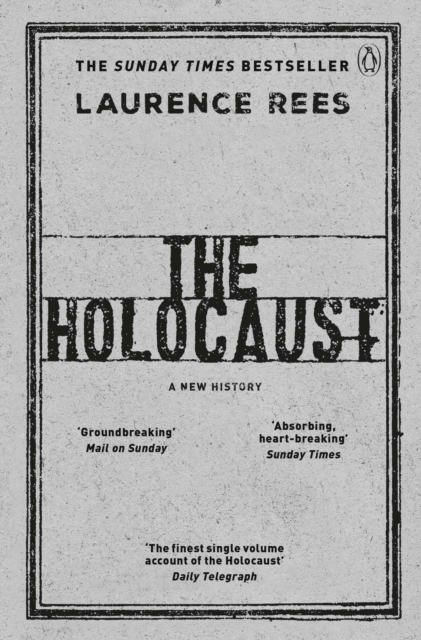
Holocaust
KSh 2,700.00
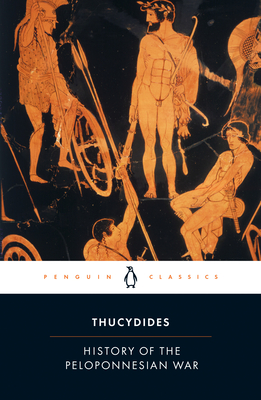
The History of the Peloponnesian War
KSh 2,700.00
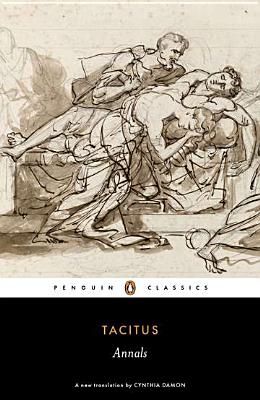
Annals
KSh 2,350.00
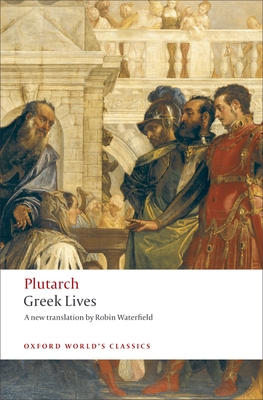
Greek Lives
KSh 2,150.00
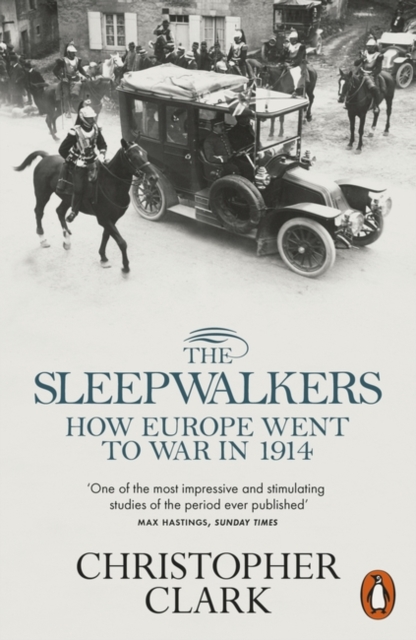
Sleepwalkers
KSh 3,400.00

Napoleon The Great
KSh 3,600.00
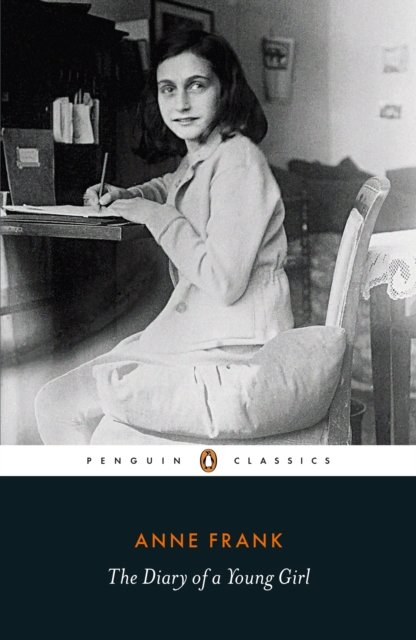
Diary of a Young Girl
KSh 1,800.00