
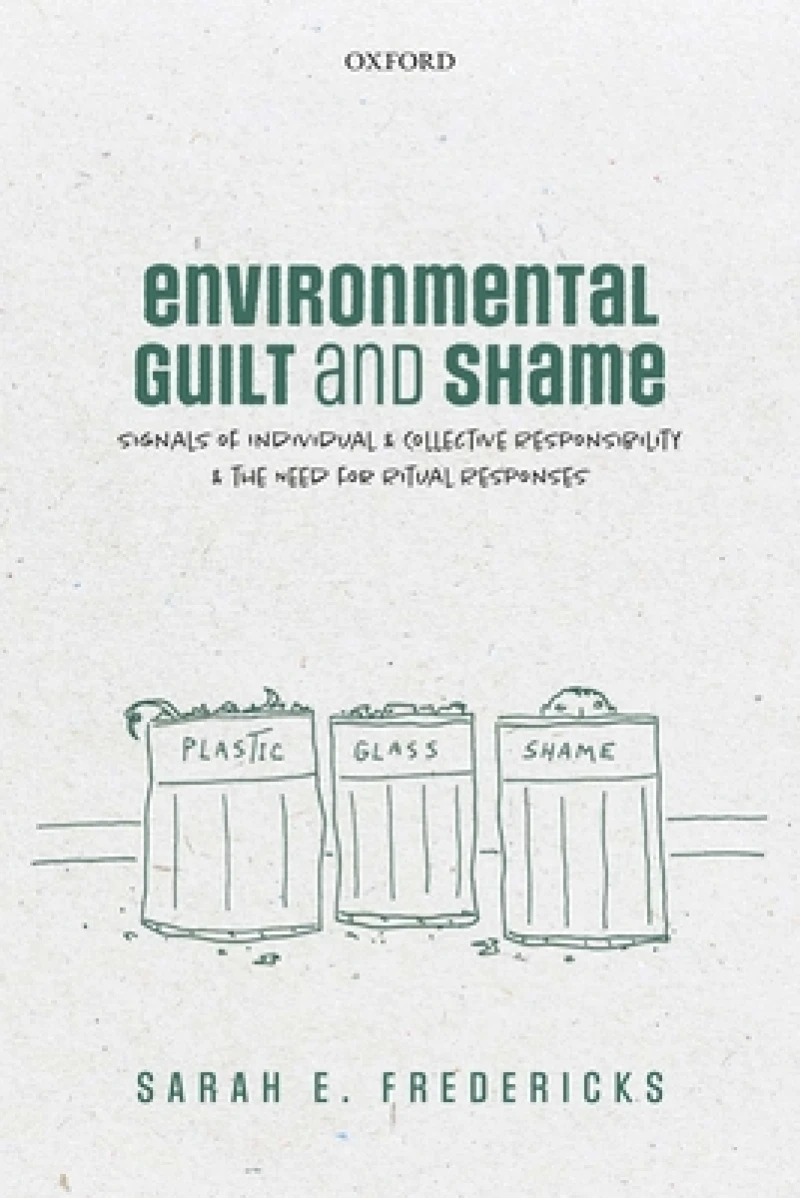
Environmental Guilt and Shame : Signals of Individual and Collective Responsibility and the Need for Ritual Responses
Book Details
Format
Hardback or Cased Book
ISBN-10
0198842694
ISBN-13
9780198842699
Publisher
Oxford University Press
Imprint
Oxford University Press
Country of Manufacture
GB
Country of Publication
GB
Publication Date
Jun 9th, 2021
Print length
238 Pages
Weight
524 grams
Dimensions
16.40 x 24.20 x 2.00 cms
Product Classification:
Ethics & moral philosophyReligious ethicsClimate change
Ksh 18,100.00
Manufactured on Demand
0 in stock
Delivery Location
Delivery fee: Select location
Secure
Quality
Fast
This study shows that many people in the US feel guilt about their everyday life. It explores many ethical questions including whether individuals or collectives are the guilty or shameful parties, whether agents should have these feelings, whether people should induce guilt or shame in others, and how people can respond to such feelings.
Bloggers confessing that they waste food, non-governmental organizations naming corporations selling unsustainably harvested seafood, and veterans apologizing to Native Americans at the Standing Rock Sioux Reservation for environmental and social devastation caused by the United States government all signal the existence of action-oriented guilt and identity-oriented shame about participation in environmental degradation. Environmental Guilt and Shame demonstrates that these moral emotions are common among environmentally friendly segments of the United States but have received little attention from environmental ethicists though they can catalyze or hinder environmental action. Concern about environmental guilt and shame among “everyday environmentalists” reveals the practical, emotional, ethical, and existential issues raised by environmental guilt and shame and ethical insights about guilt, shame, responsibility, agency, and identity. A typology of guilt and shame enables the development and evaluation of these ethical insights.Environmental Guilt and Shame makes three major claims: first, individuals and collectives, including the diffuse collectives that cause climate change, can have identity, agency, and responsibility and thus guilt and shame. Second, some agents, including collectives, should feel guilt and/or shame for environmental degradation if they hold environmental values and think that their actions shape and reveal their identity. Third, a number of conditions are required to conceptually, existentially, and practically deal with guilt and shame''s effects on agents. These conditions can be developed and maintained through rituals. Existing rituals need more development to fully deal with individual and collective guilt and shame as well as the anthropogenic environmental degradation that may spark them.
Get Environmental Guilt and Shame by at the best price and quality guaranteed only at Werezi Africa's largest book ecommerce store. The book was published by Oxford University Press and it has pages.

