
Cart 0
Environmental Monitoring using GNSS
Click to zoom

Share this book

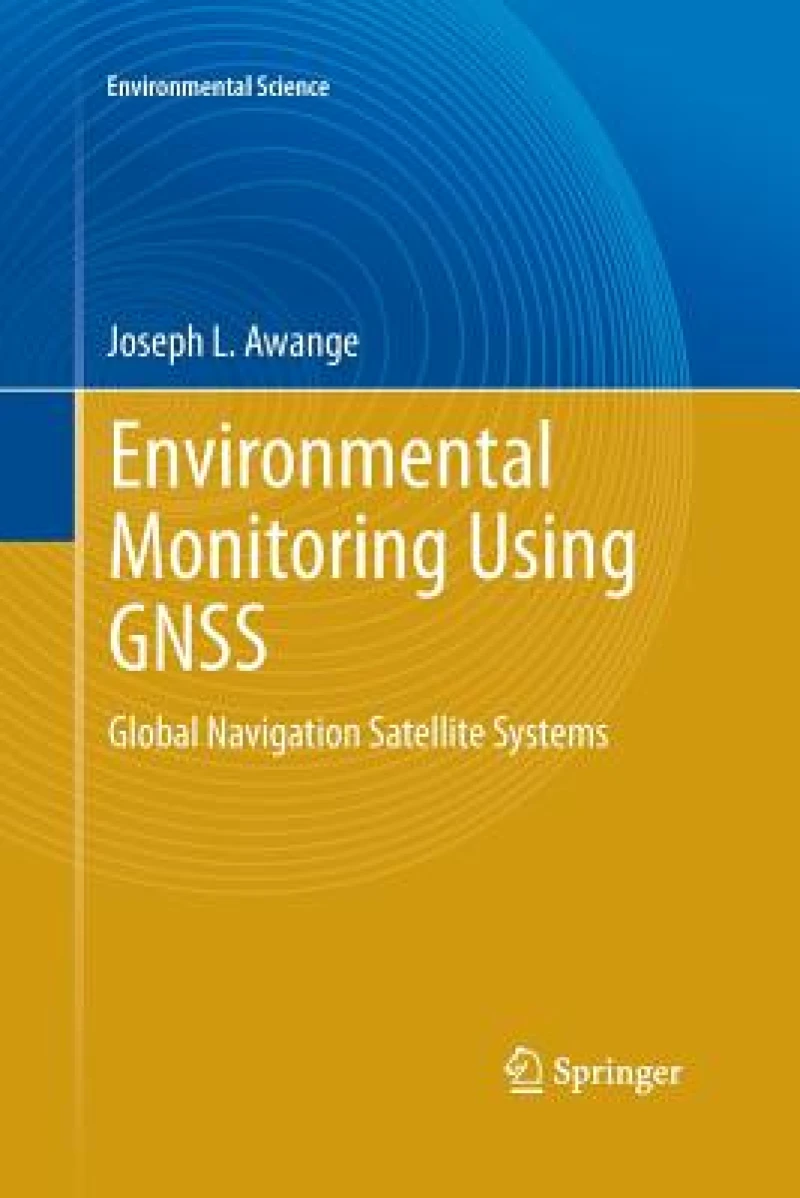
Environmental Monitoring using GNSS : Global Navigation Satellite Systems

Softcover reprint of the original 1st ed. 2012

Book Details

Format Paperback / Softback
ISBN-10 3662518252
ISBN-13 9783662518250
Edition Softcover reprint of the original 1st ed. 2012
Publisher Springer-Verlag Berlin and Heidelberg GmbH & Co. KG
Imprint Springer-Verlag Berlin and Heidelberg GmbH & Co. K
Country of Manufacture DE
Country of Publication GB
Publication Date Aug 23rd, 2016
Print length 382 Pages
Ksh 23,400.00
Werezi Extended Catalogue Delivery in 28 days

Delivery Location

Delivery fee: Select location

Delivery in 28 days

Secure
Quality
Fast
Global Navigation Satellite Systems (GNSS) are revolutionizing the world in a way their original developers never envisaged.  From being military “war” tools, GNSS satellites are rapidly becoming “peace” tools that play a potentially critical role in enabling changing environmental phenomenon that do not permit direct measurements to be remotely observed via their all-weather, highly accurate and continuously updatable positional time series.  This is evident, for example, in their use in emerging environmental monitoring methods that are considered in this book. These include: GPS-based radio telemetry, which is enhancing ecological and conservation monitoring by more accurately mapping animal movements, their behaviours, and  their impact on the environment; GNSS-meteorology, which is contributing to weather and climate change studies;  GNSS-remote sensing, which, for example, allows the rapid monitoring of changes in fresh water resources and cryosphere; Geosensor network techniques, which are earning a crucial role in disaster response management; Epidemiology, for improved efficiency in tracking and studying the spread of infectious diseases and climate change effects on vector-borne diseases; and Economics, to provide data for the econometric modelling of  casual impact of policies. In Environmental Impact Assessments (EIA), Strategic Environmental Assessments (SEA), and Sustainability Assessments (SA), GNSS, together with other spaced-based remote sensing techniques, are emerging, not only as modern tools that connect the developers to the community, but also provide information that support Multi-Criteria Analysis (MCA) methods, which inform decision making and policy formulations. By bringing the two fields of geodesy (the parent of GNSS technology) and environmental studies (potential users of this technology), this bookpresents the concepts of GNSS in a simplified way that can, on the one hand, be understood and utilised by environmentalists, while on the other, outlines its potential applications to environmental monitoring and management for those engaged more with its technology, which hopefully will further energise the already innovative research that is being carried out.  Lastly, this book is most relevant to all the professionals whose work is related to the environment such as hydrologists, meteorologists, epidemiologists, economist, and engineers, to name just a few. A comprehensive yet candid and compelling presentation of Global Navigation Satellite Systems and its application to environmental monitoring and a host of other socio-economic activities. This is an essential and new ground breaking reading for all professional practitioners and even academics seeking to study and become involved in using Global Navigation Satellite Systems in diverse fields ranging from environmental monitoring to economic activities such as monitoring weather and climate in order to design crop failure insurance.  Nathaniel O. Agola, Professor of Business and Financial Economics, Ritsumeikan University, Japan 

Global Navigation Satellite Systems (GNSS) are revolutionizing the world in a way their original developers never envisaged.  From being military “war” tools, GNSS satellites are rapidly becoming “peace” tools that play a potentially critical role in enabling changing environmental phenomenon that do not permit direct measurements to be remotely observed via their all-weather, highly accurate and continuously updatable positional time series.  This is evident, for example, in their use in emerging environmental monitoring methods that are considered in this book. These include: GPS-based radio telemetry, which is enhancing ecological and conservation monitoring by more accurately mapping animal movements, their behaviours, and  their impact on the environment; GNSS-meteorology, which is contributing to weather and climate change studies;  GNSS-remote sensing, which, for example, allows the rapid monitoring of changes in fresh water resources and cryosphere; Geosensor network techniques, which are earning a crucial role in disaster response management; Epidemiology, for improved efficiency in tracking and studying the spread of infectious diseases and climate change effects on vector-borne diseases; and Economics, to provide data for the econometric modelling of  casual impact of policies. In Environmental Impact Assessments (EIA), Strategic Environmental Assessments (SEA), and Sustainability Assessments (SA), GNSS, together with other spaced-based remote sensing techniques, are emerging, not only as modern tools that connect the developers to the community, but also provide information that support Multi-Criteria Analysis (MCA) methods, which inform decision making and policy formulations.

By bringing the two fields of geodesy (the parent of GNSS technology) and environmental studies (potential users of this technology), this book presents the concepts of GNSS in a simplified way that can, on the one hand, be understood and utilised by environmentalists, while on the other, outlines its potential applications to environmental monitoring and management for those engaged more with its technology, which hopefully will further energise the already innovative research that is being carried out.  Lastly, this book is most relevant to all the professionals whose work is related to the environment such as hydrologists, meteorologists, epidemiologists, economist, and engineers, to name just a few.

A comprehensive yet candid and compelling presentation of Global Navigation Satellite Systems and its application to environmental monitoring and a host of other socio-economic activities. This is an essential and new ground breaking reading for all professional practitioners and even academics seeking to study and become involved in using Global Navigation Satellite Systems in diverse fields ranging from environmental monitoring to economic activities such as monitoring weather and climate in order to design crop failure insurance.


Nathaniel O. Agola, Professor of Business and Financial Economics, Ritsumeikan University, Japan


Get Environmental Monitoring using GNSS by at the best price and quality guaranteed only at Werezi Africa's largest book ecommerce store. The book was published by Springer-Verlag Berlin and Heidelberg GmbH & Co. KG and it has pages.


Mind, Body, & Spirit

Price

Ksh 23,400.00

Shopping Cart

Africa largest book store

Sub Total:
Ebooks

Digital Library
Coming Soon

Our digital collection is currently being curated to ensure the best possible reading experience on Werezi. We'll be launching our Ebooks platform shortly.