

Book Details
Format
Paperback / softback
Book Series
Use R!
ISBN-10
3031120558
ISBN-13
9783031120558
Edition
2nd ed. 2023
Publisher
Springer International Publishing AG
Imprint
Springer International Publishing AG
Country of Manufacture
GB
Country of Publication
GB
Publication Date
Dec 14th, 2022
Print length
387 Pages
Weight
612 grams
Dimensions
23.30 x 15.40 x 2.60 cms
KSh 12,600.00
Currently unavailable
0 in stock
Delivery Location
Delivery fee: Select location
Secure
Quality
Fast
Finally, chapters 15 and 16 overview additional statistical methodology useful in studies of infectious disease dynamics. This book can be used as a guide for working with data, models and ‘models-and-data’ to understand epidemics and infectious disease dynamics in space and time.
This book is designed to be a practical study in infectious disease dynamics. It offers an easy-to-follow implementation and analysis of mathematical epidemiology. It focuses on recent case studies in order to explore various conceptual, mathematical, and statistical issues. The dynamics of infectious diseases shows a wide diversity of pattern. Some have locally persistent chains-of-transmission, others persist spatially in consumer-resource metapopulations. Some infections are prevalent among the young, some among the old and some are age-invariant. Temporally, some diseases have little variation in prevalence, some have predictable seasonal shifts and others exhibit violent epidemics that may be regular or irregular in their timing.
Models and ''models-with-data'' have proved invaluable for understanding and predicting this diversity, and thence help improve intervention and control. Using mathematical models to understand infectious disease, dynamics has a very rich history in epidemiology. The field has seen broad expansions of theories as well as a surge in real-life application of mathematics to dynamics and control of infectious disease. The chapters of Epidemics: Models and Data Using R have been organized as follows: chapters 1-10 is a mix and match of models, data and statistics pertaining to local disease dynamics; chapters 11-13 pertains to spatial and spatiotemporal dynamics; chapter 14 highlights similarities between the dynamics of infectious disease and parasitoid-host dynamics; Finally, chapters 15 and 16 overview additional statistical methodology useful in studies of infectious disease dynamics.
This book can be used as a guide for working with data, models and ''models-and-data'' to understand epidemics and infectious disease dynamics in space and time. All the code and data sets are distributed in the epimdr2 R package to facilitate the hands-on philosophy of the text.
Get Epidemics by Ottar N. Bjørnstad at the best price and quality guaranteed only at Werezi Africa's largest book ecommerce store. The book was published by Springer International Publishing AG and it has 387 pages.
Customers Who Bought This Also Bought

Clinical Epidemiology
KSh 23,400.00

The Biopolitics and Bioethics of Health Pseudoscience
KSh 30,950.00

Spatial Data Science
KSh 9,900.00

Medical Biostatistics, Fifth Edition
KSh 41,400.00
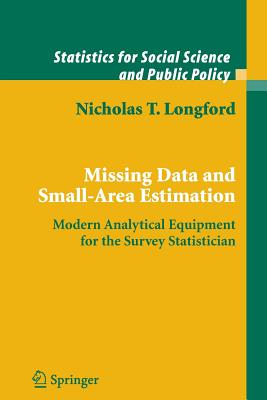
Missing Data and Small-Area Estimation
KSh 16,200.00
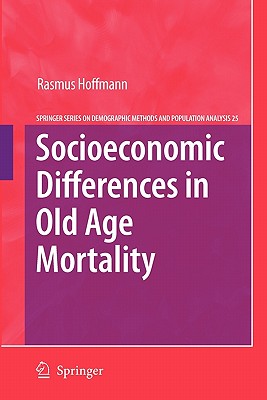
Socioeconomic Differences in Old Age Mortality
KSh 16,200.00

Procedures to Investigate Waterborne Illness
KSh 5,400.00

Frailty and Cardiovascular Diseases
KSh 19,800.00
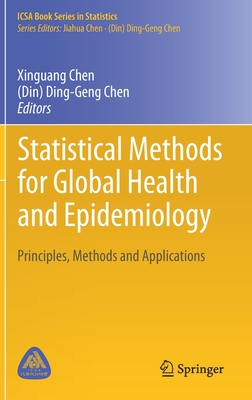
Statistical Methods for Global Health and Epidemiology
KSh 19,800.00

Parasite and Disease Spread by Major Rivers on Earth
KSh 23,400.00

Tamoxifen Tales
KSh 13,850.00

Ecology of Tuberculosis in India
KSh 15,850.00
More in This Genre
Clinical Epidemiology
KSh 23,400.00
The Biopolitics and Bioethics of Health Pseudoscience
KSh 30,950.00
Spatial Data Science
KSh 9,900.00
Medical Biostatistics, Fifth Edition
KSh 41,400.00
Missing Data and Small-Area Estimation
KSh 16,200.00
Socioeconomic Differences in Old Age Mortality
KSh 16,200.00
