
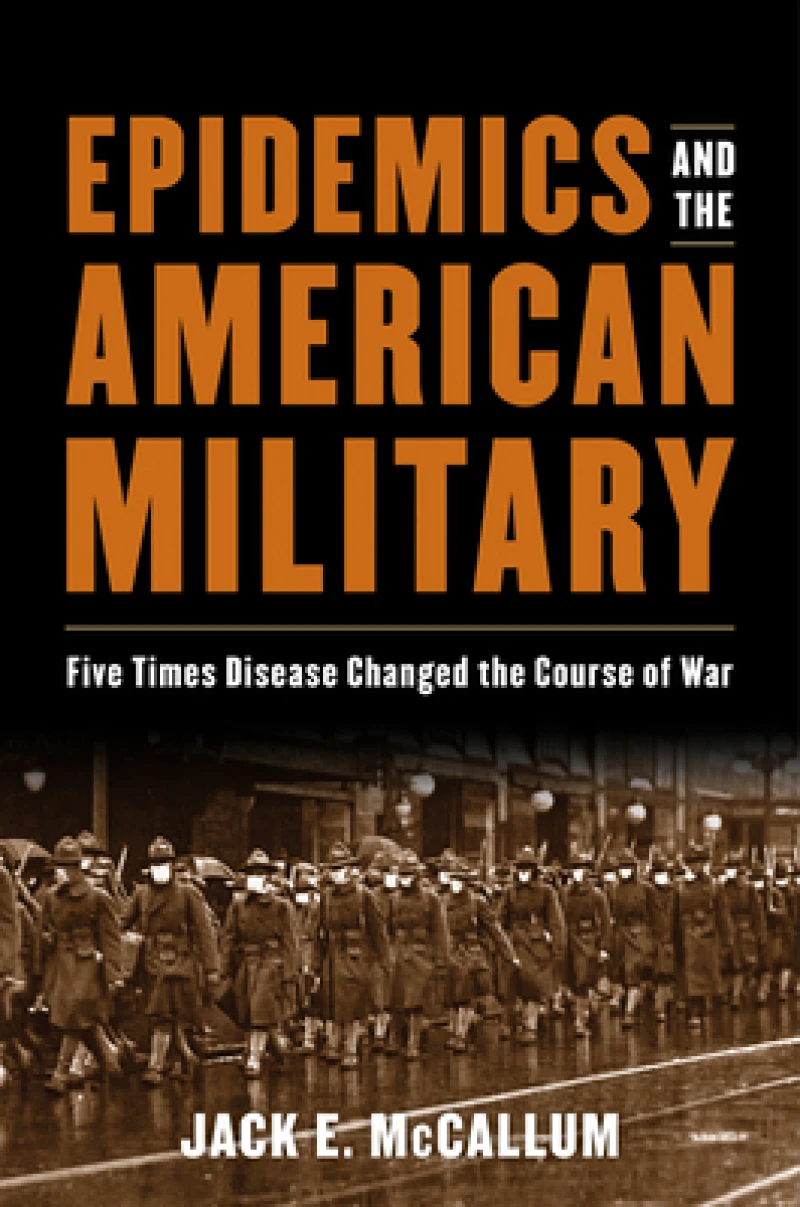
Epidemics and the American Military : Five Times Disease Changed the Course of War
Book Details
Format
Hardback or Cased Book
ISBN-10
1682477304
ISBN-13
9781682477304
Publisher
Naval Institute Press
Imprint
Naval Institute Press
Country of Manufacture
GB
Country of Publication
GB
Publication Date
Nov 2nd, 2023
Print length
288 Pages
Weight
602 grams
Dimensions
16.30 x 23.60 x 2.70 cms
Product Classification:
History of the AmericasMilitary historyInfectious & contagious diseases
Ksh 4,850.00
Werezi Extended Catalogue
0 in stock
Delivery Location
Delivery fee: Select location
Secure
Quality
Fast
In Epidemics and the American Military, Dr. Jack McCallum examines the major role the military has played propagating and controlling disease throughout America’s history.
In Epidemics and the American Military, Dr. Jack McCallum examines the major role the military has played propagating and controlling disease throughout this nation’s history. The U.S. armed forces recruit young people from isolated rural areas and densely populated cities, many of whom have been exposed to a smorgasbord of germs. After training and living in close contact with each other for months, soldiers are shipped across countries and continents and meet civilians and other armies. McCallum argues that if one set out to design a perfect world for an aggressive pathogen, it would be hard to do better than an army at war.
There are four ways to combat epidemic infectious diseases: quarantine, altering the ecology in which infections spread, medical treatment of infection, and immunization. Each has played a specific but often overlooked role in American wars. A case can be made that General George Washington saved the American Revolution when he mandated inoculation of the Continental Army with smallpox. The Union Army might very well have taken Richmond in 1862 had it not been for an epidemic of typhoid fever during the Peninsular Campaign. Yellow fever was a proximate cause of the American invasion of Cuba in 1898, and its control enabled a continued U.S. presence on the island and in the rest of the Caribbean. Had it not been for influenza, German Gen. Erich Ludendorff might well have succeeded in his offensive in the closing years of World War I. Before senior Army and Naval officers recognized the importance of anti-malarial prophylaxis and forced its acceptance by hesitant troops, the World War II Solomon and New Guinea campaigns were in danger of collapsing.
There are four ways to combat epidemic infectious diseases: quarantine, altering the ecology in which infections spread, medical treatment of infection, and immunization. Each has played a specific but often overlooked role in American wars. A case can be made that General George Washington saved the American Revolution when he mandated inoculation of the Continental Army with smallpox. The Union Army might very well have taken Richmond in 1862 had it not been for an epidemic of typhoid fever during the Peninsular Campaign. Yellow fever was a proximate cause of the American invasion of Cuba in 1898, and its control enabled a continued U.S. presence on the island and in the rest of the Caribbean. Had it not been for influenza, German Gen. Erich Ludendorff might well have succeeded in his offensive in the closing years of World War I. Before senior Army and Naval officers recognized the importance of anti-malarial prophylaxis and forced its acceptance by hesitant troops, the World War II Solomon and New Guinea campaigns were in danger of collapsing.
Get Epidemics and the American Military by at the best price and quality guaranteed only at Werezi Africa's largest book ecommerce store. The book was published by Naval Institute Press and it has pages.

