
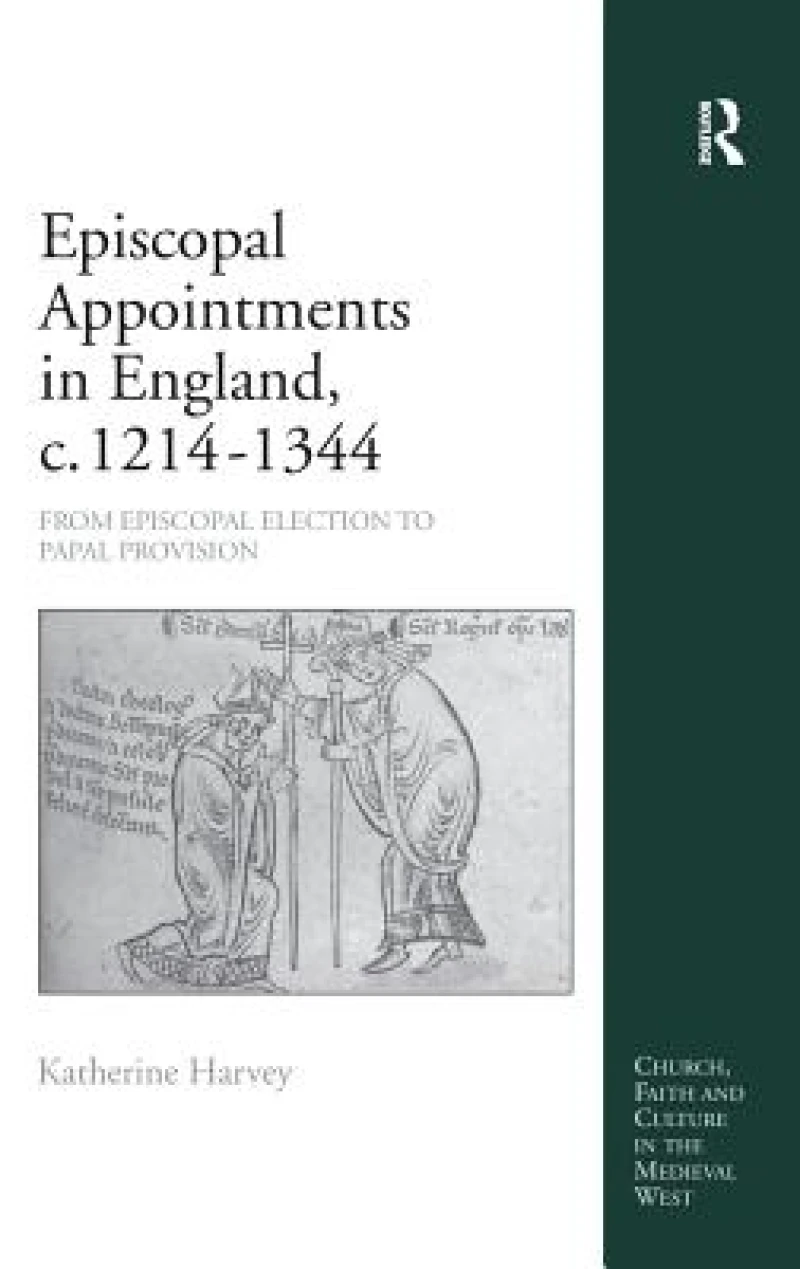
Episcopal Appointments in England, C. 1214 - 1344 : From Episcopal Election to Papal Provision
Book Details
Format
Hardback or Cased Book
Book Series
Church, Faith and Culture in the Medieval West
ISBN-10
1409456153
ISBN-13
9781409456155
Publisher
Taylor & Francis Ltd
Imprint
Routledge
Country of Manufacture
GB
Country of Publication
GB
Publication Date
Jan 10th, 2014
Print length
352 Pages
Weight
796 grams
Dimensions
23.60 x 16.70 x 2.70 cms
Ksh 30,950.00
Werezi Extended Catalogue
0 in stock
Delivery Location
Delivery fee: Select location
Secure
Quality
Fast
Bishops were central figures in medieval society and the circumstances of their appointments are of great historical importance. This book considers the theory and practice of free canonical election in its heyday under Henry III and Edward I, and the nature of and reasons for the subsequent transition to papal provision.
In 1214, King John issued a charter granting freedom of election to the English Church; henceforth, cathedral chapters were, theoretically, to be allowed to elect their own bishops, with minimal intervention by the crown. Innocent III confirmed this charter and, in the following year, the right to electoral freedom was restated at the Fourth Lateran Council. In consequence, under Henry III and Edward I the English Church enjoyed something of a golden age of electoral freedom, during which the king might influence elections, but ultimately could not control them. Then, during the reigns of Edward II and Edward III, papal control over appointments was increasingly asserted and from 1344 onwards all English bishops were provided by the pope. This book considers the theory and practice of free canonical election in its heyday under Henry III and Edward I, and the nature of and reasons for the subsequent transition to papal provision. An analysis of the theoretical evidence for this subject (including canon law, royal pronouncements and Lawrence of Somercote?s remarkable 1254 tract on episcopal elections) is combined with a consideration of the means by which bishops were created during the reigns of Henry III and the three Edwards. The changing roles of the various participants in the appointment process (including, but not limited to, the cathedral chapter, the king, the papacy, the archbishop and the candidate) are given particular emphasis. In addition, the English situation is placed within a European context, through a comparison of English episcopal appointments with those made in France, Scotland and Italy. Bishops were central figures in medieval society and the circumstances of their appointments are of great historical importance. As episcopal appointments were also touchstones of secular-ecclesiastical relations, this book therefore has significant implications for our understanding of church-state interactions during the thirteenth and fourteenth centu
Get Episcopal Appointments in England, C. 1214 - 1344 by at the best price and quality guaranteed only at Werezi Africa's largest book ecommerce store. The book was published by Taylor & Francis Ltd and it has pages.

