
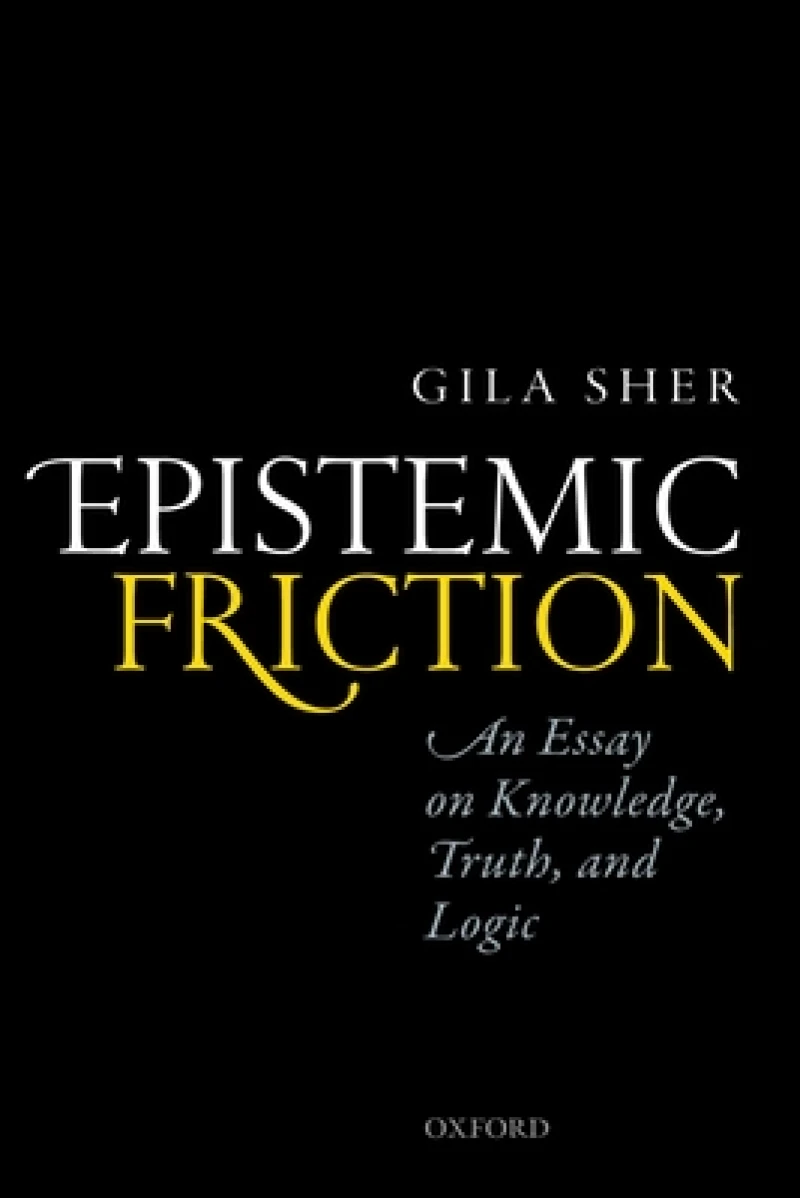
Epistemic Friction : An Essay on Knowledge, Truth, and Logic
by
Gila Sher
Book Details
Format
Paperback / Softback
ISBN-10
0198801564
ISBN-13
9780198801566
Publisher
Oxford University Press
Imprint
Oxford University Press
Country of Manufacture
GB
Country of Publication
GB
Publication Date
Sep 28th, 2017
Print length
390 Pages
Weight
586 grams
Dimensions
23.40 x 15.90 x 2.40 cms
Ksh 7,400.00
Manufactured on Demand
0 in stock
Delivery Location
Delivery fee: Select location
Secure
Quality
Fast
Gila Sher offers an original view of knowledge from the perspective of our basic human epistemic situation, as limited yet resourceful beings, trying to understand the world in all its complexity. She develops an integrated theory of knowledge, truth, and logic, centred on the idea of epistemic friction: knowledge must be constrained by the world.
Gila Sher approaches knowledge from the perspective of the basic human epistemic situation--the situation of limited yet resourceful beings, living in a complex world and aspiring to know it in its full complexity. What principles should guide them? Two fundamental principles of knowledge are epistemic friction and freedom. Knowledge must be substantially constrained by the world (friction), but without active participation of the knower in accessing the world (freedom) theoretical knowledge is impossible. This requires a grounding of all knowledge, empirical and abstract, in both mind and world, but the fall of traditional foundationalism has led many to doubt the viability of this ''classical'' project. The book challenges this skepticism, charting a new foundational methodology, foundational holism, that differs from others in being holistic, world-oriented, and universal (i.e., applicable to all fields of knowledge). Using this methodology, Epistemic Friction develops an integrated theory of knowledge, truth, and logic. This includes (i) a dynamic model of knowledge, incorporating some of Quine''s revolutionary ideas while rejecting his narrow empiricism, (ii) a substantivist, non-traditional correspondence theory of truth, and (iii) an outline of a joint grounding of logic in mind and world. The model of knowledge subjects all disciplines to robust norms of both veridicality and conceptualization. The correspondence theory is at once robust, universal, and flexible, allowing multiple patterns of correspondence, including complex and indirect patterns. Logic''s systematic grounding brings it in line with other disciplines without neglecting its strong necessity, generality, and normativity, which are explained by its semantic formality.
Get Epistemic Friction by at the best price and quality guaranteed only at Werezi Africa's largest book ecommerce store. The book was published by Oxford University Press and it has pages.

