
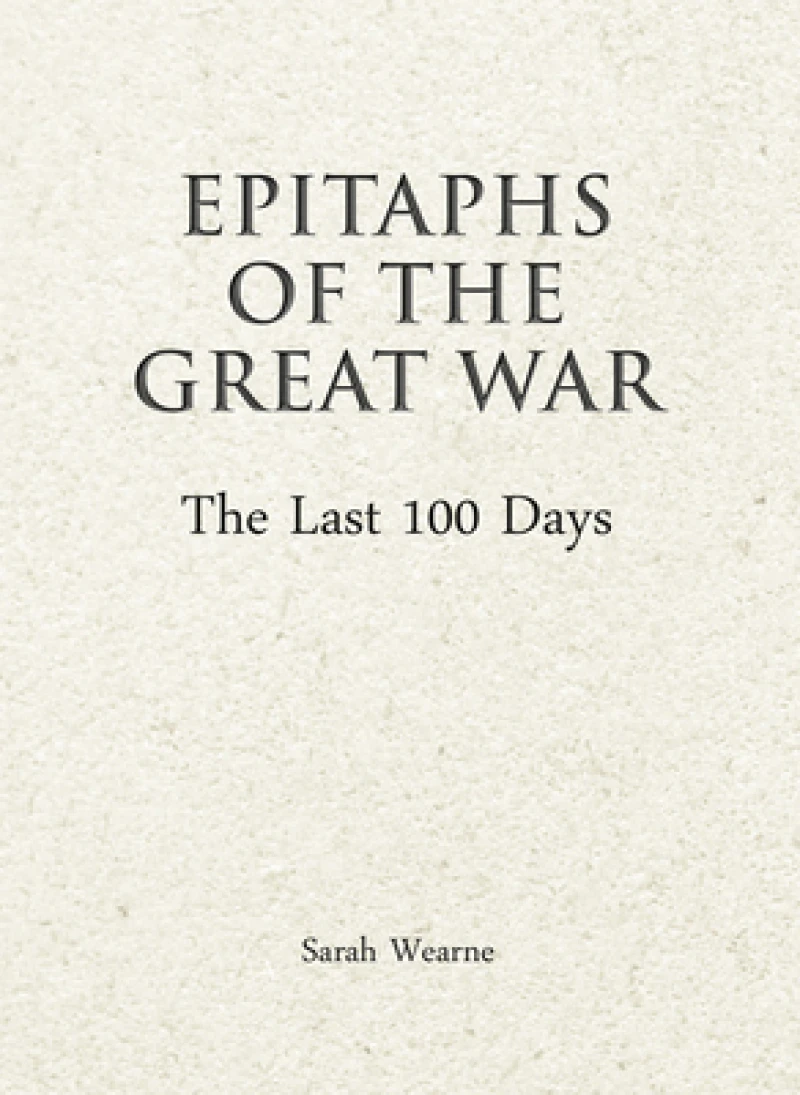
Epitaphs of The Great War: The Last 100 Days
by
Sarah Wearne
Book Details
Format
Hardback or Cased Book
Book Series
Epitaphs of The Great War
ISBN-10
1911604627
ISBN-13
9781911604624
Publisher
Unicorn Publishing Group
Imprint
Uniform Press
Country of Manufacture
GB
Country of Publication
GB
Publication Date
Aug 6th, 2018
Print length
132 Pages
Weight
344 grams
Dimensions
14.00 x 18.40 x 2.30 cms
Product Classification:
20th century history: c 1900 to c 2000First World War
Ksh 2,000.00
Publisher Out of Stock
0 in stock
Delivery Location
Delivery fee: Select location
Secure
Quality
Fast
It’s the casualties that dominate our thinking on the First World War – the dead – all those thousands of soldiers who lie buried on the battlefields of the world. Who were they? Where did they come from? What were they fighting for? How did their families cope? Can we ever know? In the case of the British we can get an idea because Britain, alone among the combatant nations, allowed their next-of-kin space for a personal inscription on the War Grave Commission’s headstones. And these inscriptions give us a piercing glimpse into the minds of the men and women of the British Empire who mourned their dead; into their pride, love, patriotism, dignity, anger, grief, resignation and despair. It’s as if the stones speak – and some of them do: “Remember whatever happens it will have been worth while”; “Mother dear I must go”; “I would not have missed it for anything”, “Why?”. Epitaphs of the Great War – The Last 100 Days is the third instalment in an edited collection ofheadstone inscriptions from the graves of those killed during the Great War. Limited by theImperial War Graves Commission to sixty-six characters – far more restrictive than Twitter’s140-character rule – these inscriptions are masterpieces of compact emotion containing asthey do the distilled essence of thousands of responses to the war. However, their enforcedbrevity means that many inscriptions relied on the reader being able to pick up on thereferences and allusions, or recognise the quotations – and many twenty-first-century readersdo not. In this selection of one hundred inscriptions from the battlefield cemeteries, theauthor, by expanding the context – religious, literary or personal – has been able to give fullvoice to the bereaved. This volume covers those killed in France and Flanders during the period commonly known asthe last 100 days of the war, a period from 8 August to 11 November 1918.
It’s the casualties that dominate our thinking on the First World War – the dead – all those thousands of soldiers who lie buried on the battlefields of the world. Who were they? Where did they come from? What were they fighting for? How did their families cope? Can we ever know? In the case of the British we can get an idea because Britain, alone among the combatant nations, allowed their next-of-kin space for a personal inscription on the War Grave Commission’s headstones. And these inscriptions give us a piercing glimpse into the minds of the men and women of the British Empire who mourned their dead; into their pride, love, patriotism, dignity, anger, grief, resignation and despair. It’s as if the stones speak – and some of them do: “Remember whatever happens it will have been worth while”; “Mother dear I must go”; “I would not have missed it for anything”, “Why?”.
Epitaphs of the Great War – The Last 100 Days is the third instalment in an edited collection ofheadstone inscriptions from the graves of those killed during the Great War. Limited by theImperial War Graves Commission to sixty-six characters – far more restrictive than Twitter’s140-character rule – these inscriptions are masterpieces of compact emotion containing asthey do the distilled essence of thousands of responses to the war. However, their enforcedbrevity means that many inscriptions relied on the reader being able to pick up on thereferences and allusions, or recognise the quotations – and many twenty-first-century readersdo not. In this selection of one hundred inscriptions from the battlefield cemeteries, theauthor, by expanding the context – religious, literary or personal – has been able to give fullvoice to the bereaved. This volume covers those killed in France and Flanders during the period commonly known asthe last 100 days of the war, a period from 8 August to 11 November 1918.
Get Epitaphs of The Great War: The Last 100 Days by at the best price and quality guaranteed only at Werezi Africa's largest book ecommerce store. The book was published by Unicorn Publishing Group and it has pages.

