
Book Details
Format
Hardback or Cased Book
ISBN-10
3030148378
ISBN-13
9783030148379
Edition
2019 ed.
Publisher
Springer Nature Switzerland AG
Imprint
Springer Nature Switzerland AG
Country of Manufacture
GB
Country of Publication
GB
Publication Date
Apr 29th, 2019
Print length
187 Pages
Product Classification:
Economic theory & philosophyLabour economics
Ksh 13,500.00
Werezi Extended Catalogue
0 in stock
Delivery Location
Delivery fee: Select location
Secure
Quality
Fast
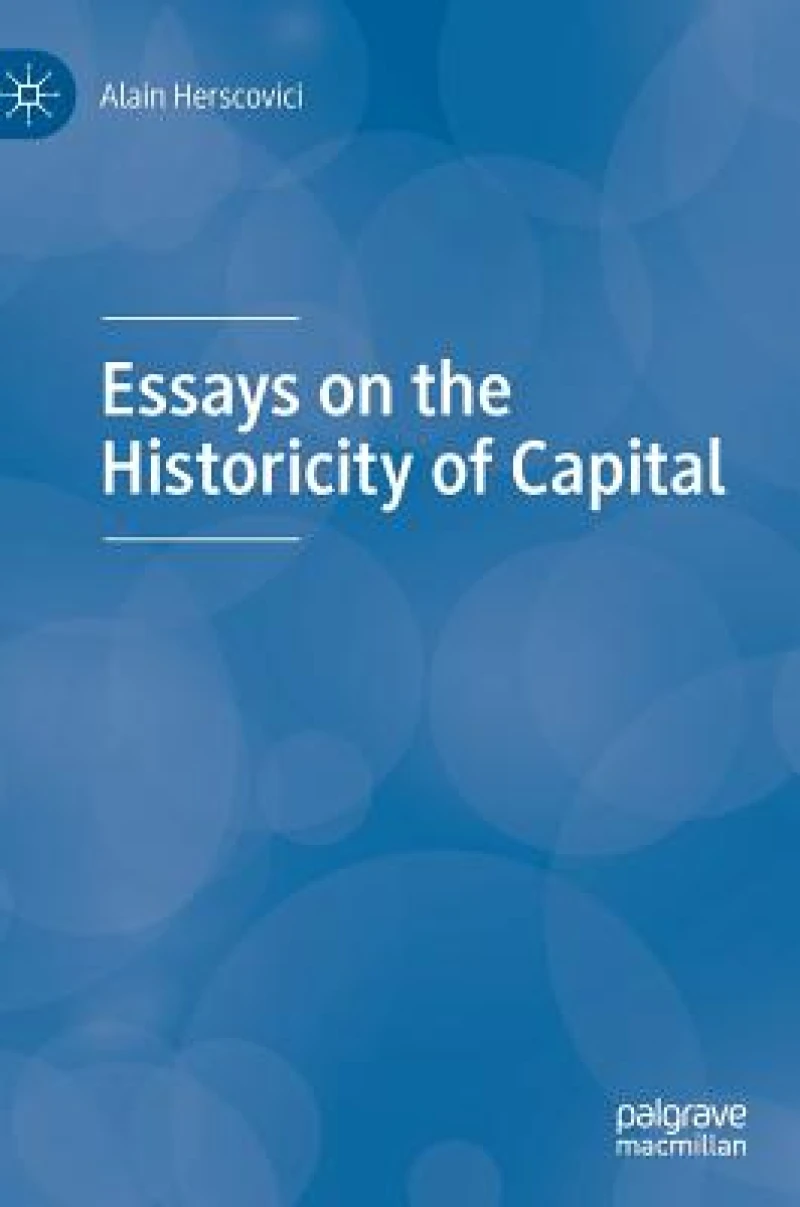
The methodological and epistemological problem this book studies is related to the heterogeneity of capital. Capitals are heterogeneous through time and space; at the same time, various heterogeneous capitals must be aggregated, as shown by Ricardo and Keynes. On the other hand, the value of some quantity of aggregate capital changes over time, as demonstrated by Ricardo, Keynes and Stiglitz. For this purpose, this book considers Ricardo, Keynes and Stiglitz. For each author, capital is heterogeneous: Ricardo, from his labor theory; Keynes from the change in expectations, in regard to the return of such capital; and Stiglitz from the divergences between the different groups’ expectations. Ricardo was the first author who explained why the value of capital cannot be determined independently from distribution variables and consequently why such value changes when distribution variables change — this mechanism was deepened by Sraffa and the neo-Ricardian school. Keynes, with the concept of supply price of capital, explains why such value moves in regard to long-term expectations. Finally, Stiglitz’s analysis is a complementary approach in regard to Keynes’s, insofar as he details the mechanism of speculation observed by Keynes from asymmetries of information. Keynes and Stiglitz’s approaches allow complement Ricardo’s analysis, insofar expectations are absent from Ricardo’s framework. This book argues that epistemological choices allow going beyond the traditional opposition between neo-Ricardian and post-Keynesian approaches, introducing path dependence mechanisms and an “expectational” dimension. From the moment that capital is not a constant value over time and space, it is not possible anymore to consider a well-behaved production function, which this book argues implies refuting all the neoclassical framework, from the stability of the macroeconomic equilibrium and the Marshallian market equilibrium to the convergence towards the steady state.
The methodological and epistemological problem this book studies is related to the heterogeneity of capital. Capitals are heterogeneous through time and space; at the same time, various heterogeneous capitals must be aggregated, as shown by Ricardo and Keynes. On the other hand, the value of some quantity of aggregate capital changes over time, as demonstrated by Ricardo, Keynes and Stiglitz. For this purpose, this book considers Ricardo, Keynes and Stiglitz. For each author, capital is heterogeneous: Ricardo, from his labor theory; Keynes from the change in expectations, in regard to the return of such capital; and Stiglitz from the divergences between the different groups'' expectations. Ricardo was the first author who explained why the value of capital cannot be determined independently from distribution variables and consequently why such value changes when distribution variables change - this mechanism was deepened by Sraffa and the neo-Ricardian school. Keynes, with the concept of supply price of capital, explains why such value moves in regard to long-term expectations. Finally, Stiglitz''s analysis is a complementary approach in regard to Keynes''s, insofar as he details the mechanism of speculation observed by Keynes from asymmetries of information. Keynes and Stiglitz''s approaches allow complement Ricardo''s analysis, insofar expectations are absent from Ricardo''s framework. This book argues that epistemological choices allow going beyond the traditional opposition between neo-Ricardian and post-Keynesian approaches, introducing path dependence mechanisms and an "expectational" dimension.From the moment that capital is not a constant value over time and space, it is not possible anymore to consider a well-behaved production function, which this book argues implies refuting all the neoclassical framework, from the stability of the macroeconomic equilibrium and the Marshallian market equilibrium to the convergence towards the steady state.
Get Essays on the Historicity of Capital by at the best price and quality guaranteed only at Werezi Africa's largest book ecommerce store. The book was published by Springer Nature Switzerland AG and it has pages.

