
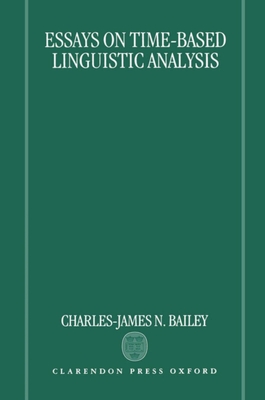
Essays on Time-Based Linguistic Analysis
Book Details
Format
Hardback
ISBN-10
0198242204
ISBN-13
9780198242208
Publisher
Oxford University Press
Imprint
Clarendon Press
Country of Manufacture
GB
Country of Publication
GB
Publication Date
Sep 5th, 1996
Print length
430 Pages
Weight
862 grams
Dimensions
24.20 x 16.40 x 3.10 cms
Product Classification:
linguistics
KSh 42,650.00
Temporarily out of stock, due soon
0 in stock
Delivery Location
Delivery fee: Select location
Secure
Quality
Fast
This is a collection of Professor Bailey's writings on linguistic theory. The author argues for a theory which is time-based, and against the prevailing synchronic approach in linguistic theory. Previously published papers have been revised and updated.
The purpose of this volume is to make easily available a representative selection of Charles-James N. Bailey''s views on linguistic theory. Several previously published papers have been extensively revised and updated for the collection, which also contains two new chapters. The collection is flanked by a new Prologue and Epilogue, and the whole is preceded by Peter Mühlhäusler''s Introduction which offers a critical appraisal of Professor Bailey''s contribution to the field. In the Prologue the author discusses the rationale for a Developmentalist, or time-based, framework for the scientific analysis of languages; in the Epilogue he laborates a new approach to historical linguistics. These initial and final chapters reflect the volume''s twofold emphasis on time-based analysis both in descriptive (multi-dialectal) analyses of languages and in historical analysis. For historical analysis Professor Bailey contrasts his approach with the current paradoxical practice of employing static models that exclude a time parameter - an approach which he characterizes as ''synchronic-idiolectal''. In doing so he offers explanations for matters which have not previously been accounted for in a satisfactory way: why and when languages change, the disruptive effects of language contact in triggering important kinds of change and the role of markedness in complex changes. Concentrating on the sound system and syntax of English, he presents a time-based model with rules for generating highly complex, multiphased phenomena which have been, until now, impervious to linguistic analysis.
Get Essays on Time-Based Linguistic Analysis by Charles-James N. Bailey at the best price and quality guaranteed only at Werezi Africa's largest book ecommerce store. The book was published by Oxford University Press and it has 430 pages.
Customers Who Bought This Also Bought

Creativity in the English Curriculum
KSh 5,650.00

Du contrat social, ou principes du droit politique.
KSh 4,850.00

Réflexions sur L''étude des Langues Asiatiques, Adressées à Sir James Mackintosh, Suivies D''une Lettr
KSh 2,550.00
Readings in Linguistics I & II
KSh 7,700.00
Analysing Sentences
KSh 7,400.00
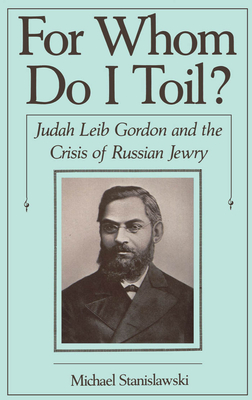
For Whom Do I Toil?
KSh 21,350.00

Lazarillo De Tormes
KSh 1,800.00
Las versiones sefardíes de Robinson Crusoe
KSh 6,850.00
Creativity in the English Curriculum
KSh 30,950.00

English Language Teaching
KSh 30,950.00

Katzen und Kinder: Koprasente Phanomene in virtuellen Meetings
KSh 16,400.00
The Crucible of Carolina
KSh 17,000.00
More in This Genre
Creativity in the English Curriculum
KSh 5,650.00
Du contrat social, ou principes du droit politique.
KSh 4,850.00
Réflexions sur L''étude des Langues Asiatiques, Adressées à Sir James Mackintosh, Suivies D''une Lettr
KSh 2,550.00
Readings in Linguistics I & II
KSh 7,700.00
Analysing Sentences
KSh 7,400.00
For Whom Do I Toil?
KSh 21,350.00
