
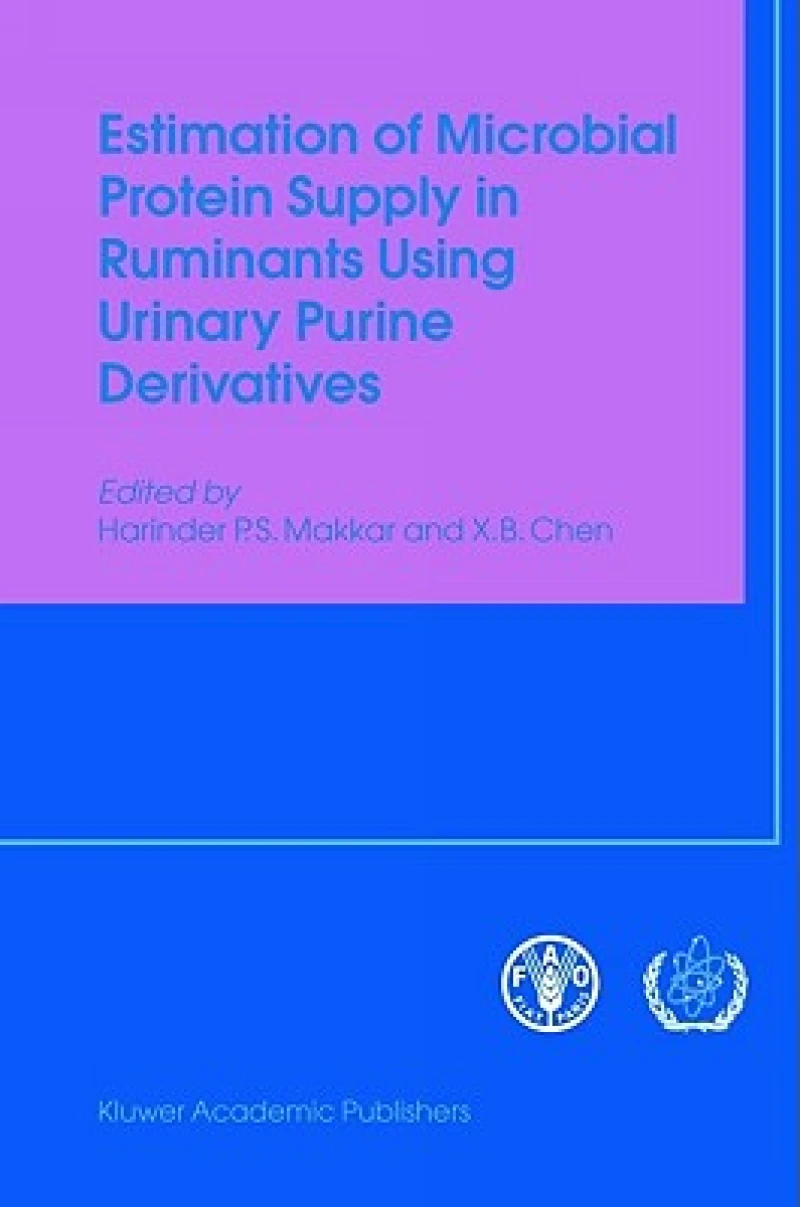
Estimation of Microbial Protein Supply in Ruminants Using Urinary Purine Derivatives
2004 ed.
Book Details
Format
Multiple-Item Product, Part(s) Enclosed
ISBN-10
1402028024
ISBN-13
9781402028021
Edition
2004 ed.
Publisher
Springer-Verlag New York Inc.
Imprint
Springer-Verlag New York Inc.
Country of Manufacture
GB
Country of Publication
GB
Publication Date
Oct 29th, 2004
Print length
212 Pages
Product Classification:
Biology, life sciencesAnimal husbandry
Ksh 16,200.00
Werezi Extended Catalogue
0 in stock
Delivery Location
Delivery fee: Select location
Secure
Quality
Fast
The contribution of microbial protein in meeting the overall requirement for protein in ruminants is significant, but understanding the contribution of microbial protein to the nutrition of ruminant livestock has been hampered by the lack of simple and accurate methods for measuring microbial protein production in vivo.
The Joint FAO/IAEA Division of Nuclear Techniques in Food and Agriculture has a long history of coordinating isotope aided research projects for improving animal productivity in developing countries. These projects have focused on enhancing the efficiency of animal production through better use of locally available feed resources and those that do not compete with human food. As a part of these efforts, the Joint Division has been actively involved in developing and simplifying approaches for measuring microbial protein supply to ruminant livestock. The contribution of microbial protein in meeting the overall requirement for protein in ruminants is significant, but understanding the contribution of microbial protein to the nutrition of ruminant livestock has been hampered by the lack of simple and accurate methods for measuring microbial protein production in vivo. A Consultants’ Meeting was held in 1995 in Vienna to explore the feasibility of using nuclear and related techniques to develop and validate new approaches for measuring microbial protein supply in ruminant animals. Based on the available information, the consultants considered that the purine derivative excretion method, which is non-invasive and both simple to use and inexpensive compared with other available methods, had the potential for use in developing countries. However, development of models for various animal species and breeds and their validation were required before this technique could be advocated for use.
Get Estimation of Microbial Protein Supply in Ruminants Using Urinary Purine Derivatives by at the best price and quality guaranteed only at Werezi Africa's largest book ecommerce store. The book was published by Springer-Verlag New York Inc. and it has pages.

